
Catalogue Search | MBRL


Are you sure you want to remove the book from the shelf?

{{itemTitle}}
969
result(s) for
"Womens apparel"
Sort by:

Impact of Website Attributes on Women’s Apparel Purchase Decisions: A Strategic Marketing Perspective
Website attributes such as usability, security, content quality, and design aesthetics play a critical role in shaping women’s apparel purchasing behavior in online retail. This study examines the strategic impact of these attributes on consumer decision-making through data collected via a structured questionnaire using a 5-point Likert scale. Analytical techniques including multiple regression analysis and ANOVA, performed in SPSS, reveal that all proposed hypotheses are supported. Specifically, (1) Design aesthetics positively influence purchase intentions, (2) Usability factors such as mobile responsiveness and intuitive navigation significantly enhance consumer engagement, (3) High-quality content, including detailed product descriptions and authentic reviews, strengthens consumer trust and purchase decisions, and (4) Security features such as secure payment gateways and robust data protection are essential in maintaining customer confidence. The findings underscore that design aesthetics, usability, and content quality have the strongest impact on purchase behavior, while security remains a foundational trust factor. These results offer valuable implications for management and marketing practitioners, highlighting the importance of optimizing e-commerce platforms to enhance customer satisfaction, increase engagement, and drive sustainable sales growth.
Journal Article

AI-driven innovation in ethnic clothing design: an intersection of machine learning and cultural heritage
This study delves into the innovative application of Artificial Intelligence (AI) and machine learning algorithms in the realm of ethnic fashion design, with a specific emphasis on the Miao women's apparel. We introduce an AI-powered approach that strategically bridges modern technology with traditional elements, denoting a significant stride in the field of fashion design. Our research underscores three major aspects: customization of body shape, fabric selection, and innovative design. An AI-driven statistical methodology was utilized to accurately adapt to the unique body characteristics of Miao women, demonstrating an application of machine learning in pattern recognition. Furthermore, the AI's capacity to analyze the fabric properties was harnessed to optimize material selection, creating a balance between aesthetics and comfort. The innovative use of the Multimodal Unsupervised Image-to-Image Translation (MUNIT) algorithm, an AI tool, generated diverse and trendy designs, thereby enriching the distinctiveness of ethnic apparel. Our study accentuates the synergistic blend of traditional crafting methods and modern technological applications, highlighting the role of AI in the sustainable development of ethnic fashion. Additionally, we also demonstrate the advantages of Made-to-Measure (MTM) approaches, emphasizing the importance of individual customization in contemporary fashion design. This research presents a pioneering exploration at the nexus of AI, pattern recognition, and ethnic fashion design, which has the potential to transform the future of the fashion industry.
Journal Article
Dressing à la Turque
Exploring the significant influences of Turkish dress on French fashion
While French fashion has historically set the bar across the Western world, the cultural influences that inspired it are often obscured. Dressing à la Turque examines the theatrical depictions of Ottoman costumes, or Turkish dress, and demonstrates the French fascination for this foreign culture and its clothing. The impact, however, went far beyond costumes worn for art and theater, as Ottoman-inspired fashions became the most prominent and popular themes in French women's fashion throughout the 18th century.
The newly invented fashion press used Ottoman-inspired styles to reconcile fashion consumption with Enlightenment dress reforms. At the same time, Turkish-inspired fashions were increasingly associated with long-criticized ideas about luxury, stereotypes about the connection between a woman's interest in fashion and \"lascivious\" behavior, and French perceptions of the Ottoman Empire. This backlash is epitomized by the public criticism of Queen Marie-Antoinette, who popularized Turkish-inspired fashion, embraced a lifestyle of excess, and is still remembered for her singular sense of style.
Kendra Van Cleave includes numerous detailed images and dress patterns, enhancing her rich discussion of French styles during this important era.
eBook

Glamour
This book explores the changing meanings of glamour, its relationship to femininity and fashion, and its place in twentieth century social history. It also examines with wit and insight the history and meaning of costume, cosmetics, perfume and fur.
eBook

This is not a grass skirt : on fibre skirts (liku) and female tattooing (veiqia) in nineteenth century Fiji
The Pacific ‘grass skirt’ has provoked debates about the demeaning and sexualised depiction of Pacific bodies. While these stereotypical portrayals associated with ‘nakedness’ are challenged in this book, the complex uses and meanings of the garments themselves are examined, including their link to other body adornments and modifications. In nineteenth-century Fiji, beautiful fibre skirts (liku) in a great variety of shapes and colours were lifetime companions for women. First fitted around puberty when she received her veiqia (tattooing), women’s successive liku were adapted at marriage and during maternity, performing a multiplicity of social functions. This book is based on a systematic investigation of previously understudied liku in museum collections around the world. Through the prism of one garment, multiple ways of looking at dress are considered, including their classification in museums and archives. Also highlighted are associated tattooing (veiqia) practices, perceptions of modesty, the intricacies of intercultural encounters and the significance of collections and cultural heritage today. The book is intended for those interested in often neglected women’s objects and practices in the Pacific, in dress and adornment more generally and in the use of museum collections and archives. It is richly illustrated with rare and previously unpublished paintings and drawings, as well as many examples of liku themselves.
eBook

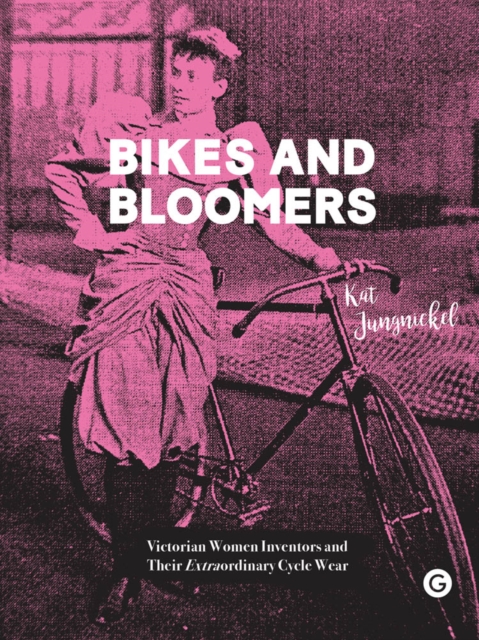
Bikes and Bloomers
The bicycle in Victorian Britain is often celebrated as a vehicle of women's liberation. Less noted is another critical technology with which women forged new and mobile public lives - cycle wear. This illustrated account of women's cycle wear brings together Victorian engineering and radical feminist invention to supply a missing chapter in the history of feminism.
eBook
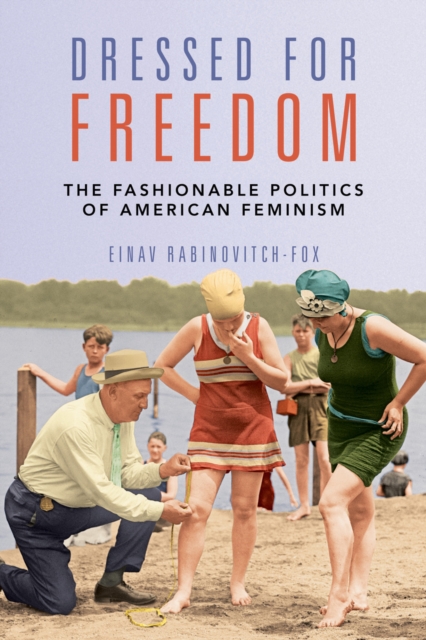
Dressed for Freedom
Often condemned as a form of oppression, fashion could and did
allow women to express modern gender identities and promote
feminist ideas. Einav Rabinovitch-Fox examines how clothes
empowered women, and particularly women barred from positions of
influence due to race or class. Moving from 1890s shirtwaists
through the miniskirts and unisex styles of the 1970s,
Rabinovitch-Fox shows how the rise of mass media culture made
fashion a vehicle for women to assert claims over their bodies,
femininity, and social roles. She also highlights how trends in
women's sartorial practices expressed ideas of independence and
equality. As women employed new clothing styles, they expanded
feminist activism beyond formal organizations and movements and
reclaimed fashion as a realm of pleasure, power, and feminist
consciousness.
A fascinating account of clothing as an everyday feminist
practice, Dressed for Freedom brings fashion into
discussions of American feminism during the long twentieth
century.
eBook

The Competitive Foundations of Localized Learning and Innovation: The Case of Women's Garment Production in New York City
This article considers the relevance of the \"local\" for firm learning in New York City's Garment District. By documenting the design innovation process in the district's women's wear industry and the ways in which designers draw on the district's specialized services and institutions to assist in the process, the article examines how a localized agglomeration or \"cluster\" facilitates the development of shared conventions and practices. It also shows how the district confers benefits on firms in indirect ways. Since apparel manufacturers operate in a U.S. regulatory framework that inhibits cooperation, the Garment District's support institutions serve as production intermediaries, providing firms with a means to monitor and observe rival firms' performances and solutions. As such, the case of the Garment District poses interesting challenges to the prevailing conceptions of the \"local\" as a site for cooperation and suggests the need to rethink the relevance of competition for learning and innovation.
Journal Article
Brooklyn street style : the no-rules guide to fashion
The indispensable, illustrated guide to fashion and life in New York City's most stylish borough--featuring essential shops, restaurants, bars, and more.Brooklyn style is eclectic, creative, and distinct from neighborhood to neighborhood.It's not about chasing labels.It is stylish on its own terms, and it's about dressing for real life.
eBook