
Catalogue Search | MBRL


Are you sure you want to remove the book from the shelf?

{{itemTitle}}
269,572
result(s) for
"Womens studies"
Sort by:

Me, not you
What violence can we do, in the name of fighting sexual violence? This book presents a critique of #MeToo and similar Anglo-American campaigns. These campaigns are dominated by self-described ‘nasty women’, who refuse to be silent and compliant and who name and shame perpetrators in the media. These women also tend to be privileged and white. The book argues that mainstream feminism filters righteous anger about gender inequality through race and class supremacy. This turns ‘me, too’ into ‘me, not you’: an exclusive focus on white women’s pain and protection, and a desire for power and control sated through criminal punishment or institutional discipline. Punitive systems tend to disproportionately target marginalised people, who become collateral damage of the white feminist ‘war machine’. It is also a short step from sacrificing marginalised people to seeing them as enemies, which happens in campaigns against the sex industry and transgender inclusion. In this reactionary feminism, ‘me, not you’ refers to hoarding resources, policing borders and shutting doors. The book concludes that to tackle these dynamics white feminists need to reach towards a more intersectional, connected and abolition-focused politics, taking their lead from feminists of colour and other marginalised people.
eBook

Affective Labor and Feminist Politics
This article discusses the political potential of Michael Hardt’s and Antonio Negri’s influential notion of affective labor for feminist theory and politics. The argument proceeds in two stages. I begin by briefly explicating Hardt’s and Negri’s concept of affective labor and outline what I see as its potential benefits for advancing critical feminist thought and political imagination. In the second part of the article I turn to a critical evaluation of the notion in connection with feminist politics. While I acknowledge the strengths of this concept in characterizing contemporary laboring practices, I nonetheless want to expose its shortcomings in advancing feminist politics. I contend that in order to imagine effective political responses to the problems currently facing us, feminist politics needs theoretical distinctions within the category of affective labor that allow us to advance a political and ethical problematization of our current forms of work.
Journal Article

The Intersectional Approach
Intersectionality, or the consideration of race, class, and gender, is one of the prominent contemporary theoretical contributions made by scholars in the field of women's studies that now broadly extends across the humanities, social sciences, and natural sciences. Taking stock of this transformative paradigm,The Intersectional Approachguides new and established researchers to engage in a critical reflection about the broad adoption of intersectionality that constitutes what the editors call a new \"social literacy\" for scholars.In eighteen essays, contributors examine various topics of interest to students and researchers from a feminist perspective as well as through their respective disciplines, looking specifically at gender inequalities related to globalization, health, motherhood, sexuality, body image, and aging. Together, these essays provide a critical overview of the paradigm, highlight new theoretical and methodological advances, and make a strong case for the continued use of the intersectional approach both within the borders of women's and gender studies and beyond.Contributors:Lidia Anchisi, Gettysburg CollegeNaomi Andre, University of MichiganJean Ait Belkhir, Southern University at New OrleansMichele Tracy Berger, University of North Carolina at Chapel HillKia Lilly Caldwell, University of North Carolina at Chapel HillElizabeth R. Cole, University of MichiganKimberle Crenshaw, University of California, Los AngelesBonnie Thornton Dill, University of MarylandMichelle Fine, Graduate Center, City University of New YorkJennifer Fish, Old Dominion UniversityMako Fitts, Seattle UniversityKathleen Guidroz, Mount St. Mary's UniversityIvette Guzman-Zavala, Lebanon Valley CollegeKaaren Haldeman, Durham, North CarolinaCatherine E. Harnois, Wake Forest UniversityAnaLouise Keating, Texas Woman's UniversityRachel E. Luft, University of New OrleansGary K. Perry, Seattle UniversityJennifer Rothchild, University of Minnesota, MorrisAnn Russo, DePaul UniversityNatalie J. Sabik, University of MichiganJessica Holden Sherwood, University of Rhode IslandYvette Taylor, University of Newcastle, United KingdomNira Yuval-Davis, University of East London
eBook

Getting Lost
Winner of the 2008 Critics' Choice Award presented by the
American Educational Studies Association In this follow-up
to her classic text Troubling the Angels, an experimental
ethnography of women with AIDS, Patti Lather deconstructs her
earlier work to articulate methodology out of practice and to
answer the question: What would practices of research look like
that were a response to the call of the wholly other? She addresses
some of the key issues challenging social scientists today, such as
power relations with subjects in the field, the crisis in
representation, difference, deconstruction, praxis, ethics,
responsibility, objectivity, narrative strategy, and situatedness.
Including a series of essays, reflections, and interviews marking
the trajectory of the author's work as a feminist methodologist,
Getting Lost will be an important text for courses in sociology of
science, philosophy of science, ethnography, feminist methodology,
women and gender studies, and qualitative research in education and
related social science fields.
eBook

Abortion Liberalization in World Society, 1960–2009
Controversy sets abortion apart from other issues studied by world society theorists, who consider the tendency for policies institutionalized at the global level to diffuse across very different countries. The authors conduct an event history analysis of the spread (however limited) of abortion liberalization policies from 1960 to 2009. After identifying three dominant frames (a women's rights frame, a medical frame, and a religious, natural family frame), the authors find that indicators of a scientific, medical frame show consistent association with liberalization of policies specifying acceptable grounds for abortion. Women's leadership roles have a stronger and more consistent liberalizing effect than do countries' links to a global women's rights discourse. Somewhat different patterns emerge around the likelihood of adopting an additional policy, controlling for first policy adoption. Even as support for women's autonomy has grown globally, with respect to abortion liberalization, persistent, powerful frames compete at the global level, preventing robust policy diffusion.
Journal Article

Theories and Methodologies in Postgraduate Feminist Research
This volume centers on theories and methodologies for postgraduate feminist researchers engaged in interdisciplinary research. In the context of globalization, this book gives special attention to cutting-edge approaches at the borders between humanities and social sciences and specific discipline-transgressing fields, such as feminist technoscience studies.
eBook
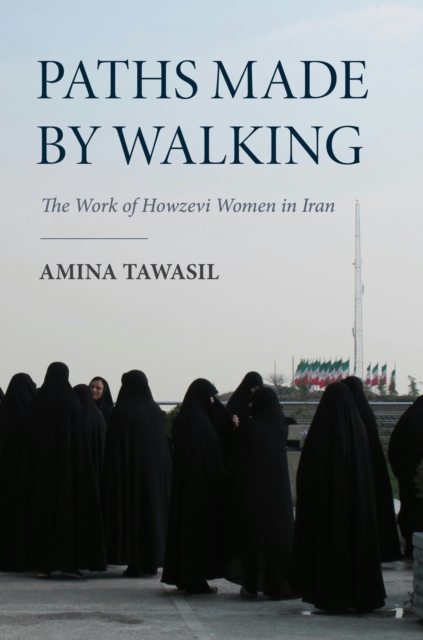
Paths Made by Walking
What can women's scholastic pursuits tell us about what building
an Islamic state looks like for women who are loyal to its project?
And what can an ethnographic study of women who are using Islamic
education to transform their conditions in Iran teach us about our
own humanity?
Paths Made by Walking provides insight into these
questions by examining how Iranian women have participated in
Islamic education since the 1979 revolution. This groundbreaking
ethnography on Iranian howzevi (seminarian) women reveals how
ideologies of womanhood, institutions, and Islamic practices have
played a pivotal role in religiously conservative women's mobility
in the Middle East. Applying over a year of ethnographic fieldwork,
Amina Tawasil analyzes how the Islamic education of seminarian
women has propelled some of them into powerful positions in Iran,
from close ties with the state's supreme leader and chief justice
to membership in the Basij (voluntary military organization). At
the same time, these women often choose to remain \"hidden\" or to
otherwise follow practices that seem inscrutable or illogical from
a framework of politicized resistance. By centering the howzevi
women's senses of self and revealing their complex interpretations
of their beliefs, Tawasil offers a fresh perspective on forms of
feminine identity that do not always mirror supposedly universal
desires for recognition, autonomy, leadership, or authority.
Taking readers into the classrooms, living rooms, and compounds
where howzevi women participate in intellectual discourse,
Paths Made by Walking invites readers to reconsider their
conceptualizations of the women who support the Islamic Republic of
Iran.
eBook

Black Women and Resilience
A critical examination of the health disparities and collective resilience of Black women in the United States.
Black Women and Resilience brings together a wealth of qualitative and quantitative research to help foster broad understanding and advancement of Black women's collective health and wellbeing. Throughout, Kisha Braithwaite Holden, Camara Phyllis Jones, and their contributors use a health equity lens, maintaining that achieving health equity requires valuing all individuals and populations equally, recognizing and rectifying historical injustices, and providing resources according to need. Across four sections, scholars, practitioners, and community leaders address cultural narratives of Black womanhood; significant health issues affecting Black women; trauma, stressors, and strategies for healing; and advocacy for social justice and collective action. Multivocal and multidisciplinary, Black Women and Resilience models and invites exchange across sectors and specializations while consistently centering the experiences and contributions of Black women as catalysts for transformation.
eBook

Everyday Violence
Everyday Violence is based on ten years of scholarly rage against catcalling and aggression directed at women and Lesbian, Gay, Bisexual, Transgender and Queer (LGBTQ) people of New York City. Simone Kolysh recasts public harassment as everyday violence and demands an immediate end to this pervasive social problem. Analyzing interviews with initiators and recipients of everyday violence through an intersectional lens, Kolysh argues that gender and sexuality, shaped by race, class, and space, are violent processes that are reproduced through these interactions in the public sphere. They examine short and long-term impacts and make inroads in urban sociology, queer and trans geographies, and feminist thought. Kolysh also draws a connection between public harassment, gentrification, and police brutality resisting criminalizing narratives in favor of restorative justice. Through this work, they hope for a future where women and LGBTQ people can live on their own terms, free from violence.
eBook

Abortion in Mexico
Abortion in Mexico: A History concisely examines the long
history of abortion from the early postcontact period through the
present day in Mexico by studying the law, criminal and
ecclesiastical trials, medical texts, newspapers, and other popular
publications. Nora E. Jaffary draws on courts' and medical
practitioners' handling of birth termination to advance two central
arguments. First, Jaffary contends, the social, legal, and judicial
condemnation of abortion should be understood more as an aberration
than the norm in Mexico, as legal conditions and long periods of
Mexican history indicate that the law, courts, the medical
profession, and everyday Mexicans tolerated the practice. Second,
the historical framework of abortion differed greatly from its
present representation. The language of fetal personhood and the
notion of the inherent value of human life were not central
elements of the conceptualization of abortion until the late
twentieth century. Until then, the regulation of abortion derived
exclusively out of concerns for pregnant people themselves,
specifically about their embodiment of sexual honor. In
Abortion in Mexico Jaffary presents the first longue
durée examination of this history from a variety of locations
in Mexico, providing a concise yet comprehensive overview of the
practice of abortion and informing readers of just how much the
debate has evolved.
eBook