
Catalogue Search | MBRL


Are you sure you want to remove the book from the shelf?

{{itemTitle}}
74
result(s) for
"Wood-carvers"
Sort by:

Yakuglas' legacy : the art and times of Charlie James
\"Charlie James (1867-1937) was a premier carver and painter from the Kwakwaka'wakw First Nation of British Columbia. Also known by his ceremonial name Yakuglas, he was hawker a prolific artist and activist during a period of severe oppression for First Nations people in Canada.\"-- Provided by publisher.
BOOK

Clitso Dedman, Navajo Carver
Rebecca Valette's Clitso Dedman, Navajo Carver is the
first biography of artist Clitso Dedman (1876-1953), one of the
most important but overlooked Diné (Navajo) artists of his
generation. Dedman was born to a traditional Navajo family in
Chinle, Arizona, and herded sheep as a child. He was educated in
the late 1880s and early 1890s at the Fort Defiance Indian School,
then at the Teller Institute in Grand Junction, Colorado. After
graduation Dedman moved to Gallup, New Mexico, where he worked in
the machine shop of the Atchison, Topeka, and Santa Fe Railway
before opening his first of three Navajo trading posts in Rough
Rock, Arizona. After tragedy struck his life in 1915, he moved back
to Chinle and abruptly changed careers to become a blacksmith and
builder. At age sixty, suffering from arthritis, Dedman turned his
creative talent to wood carving, thus initiating a new Navajo art
form. Although the neighboring Hopis had been carving Kachina dolls
for generations, the Navajos traditionally avoided any permanent
reproduction of their Holy People, and even of human figures.
Dedman was the first to ignore this proscription, and for the rest
of his life he focused on creating wooden sculptures of the various
participants in the Yeibichai dance, which closed the Navajo
Nightway ceremony. These secular carvings were immediately
purchased and sold to tourists by regional Indian traders. Today
Dedman's distinctive and highly regarded work can be found in
private collections, galleries, and museums, such as the Navajo
Nation Museum at Window Rock, the California Academy of Sciences in
San Francisco, and the Arizona State Museum in Tucson. Clitso
Dedman, Navajo Carver , with its extensive illustrations, is
the story of a remarkable and underrecognized figure of
twentieth-century Navajo artistic creation and innovation.
eBook

Loot
\"Abbas is just seventeen years old when he leaves his family to serve in the court of Tipu Sultan, a volatile and unpredictable ruler. An inspired woodcarver, Abbas is apprenticed to a master toy maker in order to build a massive tiger automaton, a gift to celebrate the return of the Sultan's sons from British captivity. Working alongside the legendary French clockmaker Monsieur du Leze, Abbas hones his craft and learns to read French and then meets Jehane, the daughter of one of du Leze's fellow expatriats. When du Leze is finally permitted to return home to Paris, he begs Abbas to accompany him. But by the time Abbas travels to Europe, the palace has been looted by British forces, and the tiger automaton disappears. To prove himself and make a livelihood in Paris--with the lovely Jehane at his side-Abbas must retrieve the tiger from an estate in the English countryside, where it is displayed in a collection of plundered Moorish and Oriental Art\"-- Provided by publisher.
BOOK

Investigating the relationships between anthropometric characteristics, grip strength, hand flexibility and hand performance in woodcarvers
Background
Hand performance is essential for executing manual tasks and is influenced by anthropometric dimensions, grip strength, and flexibility. In the context of woodcarving, these factors significantly impact productivity and injury prevention. This study aims to assess the relationships between hand performance and selected anthropometric dimensions, grip strength, and flexibility among woodcarvers.
Methods
This cross-sectional study involved 120 woodcarvers aged 20–40 years, each with a minimum of one year of experience. Data were collected on demographic variables, hand anthropometric dimensions, grip strength, and wrist flexibility. Hand performance was evaluated through a standardized Purdue pegboard test. Multivariate analysis of variance (MANOVA) was used to analyze the relationships between hand characteristics and hand performance, with statistical significance set at
p
< 0.05.
Results
The analysis revealed significant associations between hand performance and various hand characteristics. Specifically, palmar length was positively correlated with peg placement performance (F = 4.254,
p
= 0.041), whereas grip strength at 180° elbow extension was linked to greater efficiency in assembly tasks (F = 5.201,
p
= 0.024). Additionally, flexibility parameters, including wrist flexion and extension range of motion, correlated with improved hand performance across multiple tasks of the Purdue pegboard test.
Conclusion
The findings underscore the importance of anthropometric dimensions, grip strength, and flexibility in enhancing woodcarving performance. The implementation of ergonomic interventions aimed at improving grip strength and wrist flexibility could increase efficiency and reduce injury risks in manual professions.
Journal Article
Masters of Italian craftsmanship. Episode 3, The land of dreams
This episode explores Umbrian craftsmanship through symbolic places and and age-old traditions, highlighting the profound connection between man and the product of his creativitiy. Each story reveals the passion, commitment and creativity of craftsmen bringing dreams to life, keeping a rich cultural heritage alive: In the Scarzuola, Tomaso Buzzi's ideal city, the tale travels through the art of embroidery on tulle in Panicale; The ceramic mastery of Deruta; The chesnut woodcarving in Melezzole; The historical candle-making in Bevagna.
Streaming Video
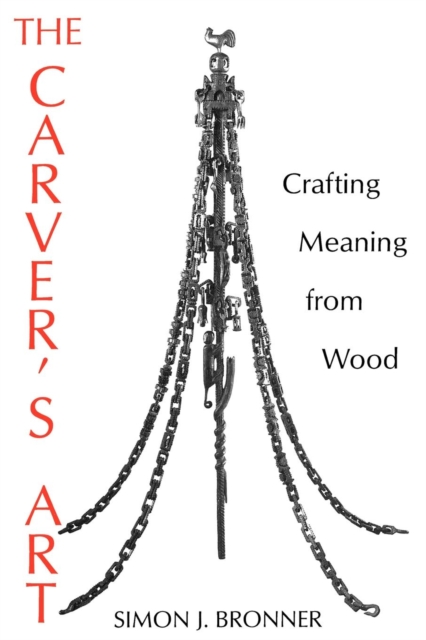
The Carver's Art
Chains carved from a single block of wood, cages whittled with wooden balls rattling inside -- all \"made with just a pocketknife\" -- are among our most enduring folk designs. Who makes them and why? what is their history? what do they mean for their makers, for their viewers, for our society? Simon J. Bronner portrays four wood carvers in southern Indiana, men who had been transplanted from the rural landscapes of their youth to industrial towns. After retiring, they took up a skill they remembered from childhood. Bronner discusses how creativity helped these men adjust to change and how viewers' responses to carving reflect their own backgrounds. By recording the narratives of these men's lives, the stories and anecdotes that laced their conversation, Bronner finds new insight into the functions and symbolism of traditional craft. Including anew illustrated afterword in which the author discusses recent developments in the carver's art, this new edition will appeal to carvers, scholars, and anyone interested in traditional woodworking.
eBook


The carver's art : crafting meaning from wood
Chains carved from a single block of wood, cages whittled with wooden balls rattling inside--all \"made with just a pocketknife\"--are among our most enduring folk designs.Who makes them and why?what is their history?what do they mean for their makers, for their viewers, for our society?Simon J.
eBook

Art, identity and boundaries
The history of his homeland - Democratic Republic of Congo - with the brutalities instigated during the 19th century by King Leopold II of Belgium, continuing through die legacy of colonialism and the ensuing ravages of war and economic missteps in the postcolonial period, leaves deep and tragic residuals of trauma in the memory of the Congolese people.
Journal Article

Modernity, Mestizaje, and Hispano Art: Patrocinio Barela and the Federal Art Project
While the anthropological and archaeological \"discovery\" of the Southwest, the art colonies of Taos and Santa Fe, and the revival of Spanish colonial arts under Anglo patrons are well known, the Hispano artists who straddled multiple art worlds during the early twentieth century are less so.1 The \"recovery\" of Hispano artists - initiated by William Wroth and Charles Briggs and continued more recently by Laurie KaIb and Tey Marianna Nunn - remains far from complete.2 Although we know more about the Hispano artists who achieved regional and national acclaim during this period, most often through the New Deal's WPA-funded Federal Art Project (FAP), Eurocentric aesthetic and anthropological categories of place, tradition, and authenticity have occluded the significance of their work. The state's rural, folk, and indigenous communities in particular served as bulwarks against the modern machine age and as sites for spiritual and cultural rebirth.7 In the midst of America's \"crisis of modernity,\" fears about cultural loss and regional distinctiveness spawned efforts to preserve local ethnic cultures, and Native American and Hispano arts in particular.8 Yet, the Hispano revival derived less momentum regionally and nationally than the Native American revival, because Hispano arts were invariably viewed as utilitarian objects rather than as art.
Journal Article