
Catalogue Search | MBRL


Are you sure you want to remove the book from the shelf?

{{itemTitle}}
25,248
result(s) for
"Woodrow Wilson"
Sort by:

Who was Woodrow Wilson?
First he was known as Tommy, then Woodrow, and eventually, Mr. President. Born on December 28, 1856, in Staunton, Virginia, Thomas Woodrow Wilson was a born leader. He was the president of Princeton University, served as governor of New Jersey after that, and was then elected president of the United States. But not everything was so easy for Wilson. He was ahead of his time in wanting a League of Nations after World War I to help prevent another war like it, but his hopes were dashed when the United States refused to join. Margaret Frith offers a fascinating look at how this magnificent and tragic figure handled debilitating illness, heartbreak, and \"the war to end all wars.\"
BOOK

Making the World Safe for Workers
In this intellectually ambitious study, Elizabeth McKillen explores the significance of Wilsonian internationalism for workers and the influence of American labor in both shaping and undermining the foreign policies and war mobilization efforts of Woodrow Wilson's administration. McKillen highlights the major fault lines and conflicts that emerged within labor circles as Wilson pursued his agenda in the context of Mexican and European revolutions, World War I, and the Versailles Peace Conference. As McKillen shows, the choice to collaborate with or resist U.S. foreign policy remained an important one for labor throughout the twentieth century. In fact, it continues to resonate today in debates over the global economy, wars in Iraq and Afghanistan, and the impact of U.S. policies on workers at home and abroad.
eBook


Statecraft and Salvation
Understanding Woodrow Wilson's approach to international relations requires acknowledgment of his Protestant faith. In Statecraft and Salvation, Milan Babík delivers a fresh analysis of Wilson's progressive international political thought by examining it within the broader context of the American liberal tradition. The progressive belief that the world in general, and Europe in particular, could achieve peace carried with it a secular hope and a Christian eschatological vision for the future. Babík contends that the ultimate result of this belief devolved to serve a more totalitarian agenda. Statecraft and Salvation traces Wilson's \"New Democracy\" to liberal internationalism as an effort distinctly shaped by his faith.
eBook

World War I through the eyes of Woodrow Wilson
\"Go inside the Oval Office during World War I to see the challenges faced by President Woodrow Wilson, how he responded to difficult issues, and how he shaped the country during this pressing time in office\"--Publisher's website.
BOOK

An Anti-thesis of Wilsonian Essay: Searching for an Alternative African Epistemology of Public Administration
The purpose of this paper is to critique the postulation that Woodrow Wilson is regarded as the founder of the Public Administration discipline. Literature on the theory of Public Administration positioned Wilson’s essay on the politics-administration dichotomy as the predominant foundation of the discipline of Public Administration. However, there is evidence that suggests that Wilson’s 1887 essay only became known in American literature in 1926. It is revealed that no one in mainstream social science referred to or quoted Wilson’s essay between the time of its origin and the appearance of the first edition of Leonard White’s Public Administration textbook in 1926. Consequently, as an eclectic discipline, Public Administration was developed by numerous scholars, including Goodnow, Willoughby, Waldo, Taylor, Fayol, Gulick, and Urwick. This debate is relevant in Africa and South Africa in particular, given the growing body of knowledge that basically attempts to infuse Pan Africanism in the discipline of Public Administration. Thus, there is a corpus of knowledge that points to Public Administration having been practiced across the world, even in the pre-mediaeval era. In addition, there are contrasting views on the origin and relevance of Western epistemology in shaping governance on the African continent. The thrust of this paper is premised on the fact that African scholars have succumbed to Eurocentrism, which propagates that Western or European understandings and interpretations of Public Administration are the most important and dominant ways of engaging with the discipline.
Journal Article
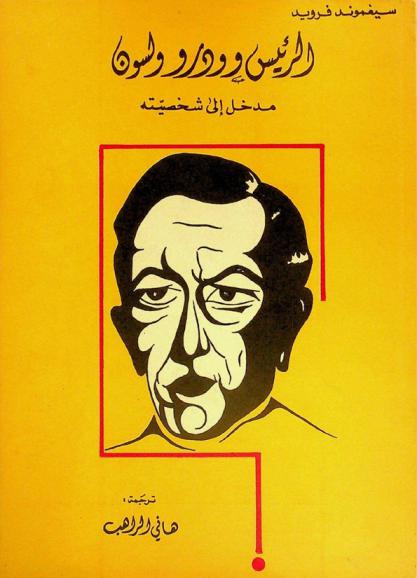
الرئيس وودرو ولسون : مدخل إلى شخصيته
الدراسة التي بين أيدينا ذات أهمية خاصة، فهي تطبيق المذهب التحليل النفسي يقوم به مؤسس المذهب على شخصية كان لها شان في صرح الاحداث السياسية العالمية هي شخصية الرئيس الأمريكي الاسبق ودرو ولسون، وقد ظل هذا النص مجهولا فترة طويلة وقد اقتضى العثور عليه جهدا دام أكثر من عشر سنين، في هذه الدراسة يفسر المعلم نفسه-فروید-كيف يتقمص الطفل شخصية الاب وينبه على الخطر الذي تلحقه شخصية الاب المسيطرة بالابن، كما يؤكد على سلطان الدوافع اللاشعورية التي تحرك الشخصية الانسانية وتتحكم بتصرفاتها. ما هو الكبت ما هو التصعيد ما هو التراجع، بل ما هو معنى الذكورة والأنوثة داخل الشخصية الواحدة ثم كيف توفق الانا بين الصراعات المختلفة داخل الذات.. وغير ذلك، وانه لأمر مقيد حقا أن نرى كيف يؤول واضع النظرية الوقائع المتعلقة بالحياة الانسانية فيؤلف منها شواهد تجريبية تؤيد صحة ملاحظاته. يجد القارئ والمثقف في هذا الكتاب فوائد علمية وتربوية كثيرة لا غنى عنها، وقد وفق المترجم في نقل هذا الأثر الى العربية بلغة واضحة دقيقة لا لبس فيها ولا غموض.
BOOK
The Idea of Europe Between the World Wars: Hopes, Problems, and Paradoxes
The history of the European integration project after the end of the Second World War is familiar.However, the opinions, hopes, expectations, and paradoxes that went into the idea of a common Europe are still notoften investigated or discussed. The topic of what inspired the thinking of people such as Louis Loucheur, RichardCoudenhove-Kalergi, Jean Monnet, Arthur Salter, Gustav Stresemann, Aristide Briand and Altiero Spinelli—that is, people of diverse backgrounds, ways of thinking, and experiences—requires dispassionate and discursiveanalysis. If, at the height of a nationalist frenzy on the European continent, Monnet’s stated objective was to bringabout “a union among people” and not “coalitions between States,” then why was the latter pursued? Similarly,for the British civil servant Arthur Salter, why was it necessary to work on a European project when the country towhich he belonged was, if not outrightly skeptical, not overenthusiastic about it? What compelled Altiero Spinellito draft the famous Ventotene Manifesto advocating a federalist idea of Europe? Or what were the motivationsof Henry Spaak in advising/requesting Monnet to keep the political dimension of the “project” disguised as“economic cooperation” (involving a dismantling of trade barriers)? And was the idea of a common Europe theproduct of the hyper-idealism that came to reside in European thinking in the wake of President Woodrow Wilson’sFourteen Points Declaration? Or was the idea a product of Nazi expansionism? Or was it a counter-response toa putative reemergence of the latter in the unknown future? This paper endeavors to find explanations for someof these questions. In the process, it will also attempt to make sense of the forces and necessities that helpedcrystalize the idea that there was a need for a common European space, a supra state, or as Monnet famously said,“a community of nations.”
Journal Article


Darwin and American public administration Woodrow Wilson's Darwinian argument for administration
This research note addresses a gap in the public administration literature by arguing that a political Darwinism was present in the intellectual origins of American administrative theory. By examining the arguments of Woodrow Wilson, this article demonstrates that Darwinism complemented the German political thought that contributed to the establishment of America's administrative state. The application of Darwinian evolutionary biology to politics was a vital element of Wilson's reconceptualization of the state as a living organism. Darwinism was a key rhetorical tool employed by Wilson in his argument against the Constitution's separation of powers. This note finds that Darwinism was present in the early stages of public administration theory in Wilson's argumentation and persists today in the public administration literature. It concludes by sketching out an agenda for further research on Darwinism's influence on public administration.
Journal Article