
Catalogue Search | MBRL


Are you sure you want to remove the book from the shelf?

{{itemTitle}}
3,180
result(s) for
"Word Play"
Sort by:

Translating a Pun on Proscription
The late antique author Macrobius preserves a pun by Asinius Pollio on the Latin words scribere/proscribere. It is difficult to translate the pun in a way that accurately conveys the full semantic force, social anxiety, and the status dissonance inherent in the unequal relations of power that characterized the Roman elite class. With some imagination. Pagán constructs the kind of situation in which such a quotation may have been uttered, and in so doing, suggests translating scribere/proscribere using the English idioms \"strike up/strike down.\" Gaius Asinius Pollio (75 B.C.E.-5 C.E.), consul in 40 B.C.E., was a leading Roman senator in the final years of the Republic and the beginning of the principate.
Journal Article
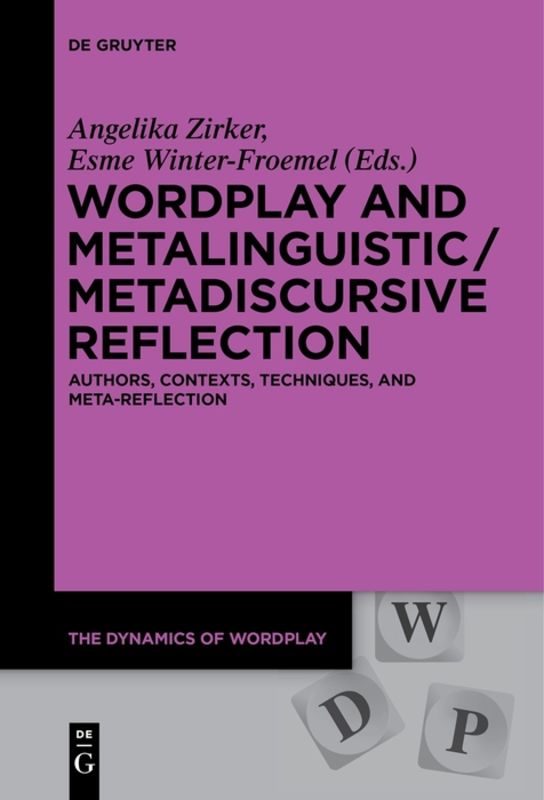
Wordplay and metalinguistic/metadiscursive reflection : authors, contexts, techniques, and meta-reflection
This volume is the first of two bringing together selected contributions from linguistics and literary studies focusing on the variegated manifestations of wordplay in different communicative settings. By investigating basic techniques and ludic traditions, the volumes offer a fresh look on the metalinguistic/metadiscursive dimension of wordplay as well as on its various kinds of interplays.
eBook

Wordplay in Earliest Shakespeare
Shakespeare is unimaginable without wordplay. Although they sometimes challenge their patience, his puns, quibbles, and witty plays on words remain a central, even defining feature of his works. In Samuel Johnson's rich conceit, puns have the uncanny property of enticing Shakespeare from the true way of his journey. Shakespeare's earliest days as a writer were busier still; before and perhaps during the watershed interval of the playhouse closures circa 1592-94, he appears to have composed parts of at least eight works. Taking Johnson's insight seriously, Bruster and McKeown trace wordplay's emergence in the early canon in order to gain a deeper appreciation of the textures as well as the distinctiveness of Shakespeare's compositional habits.
Journal Article
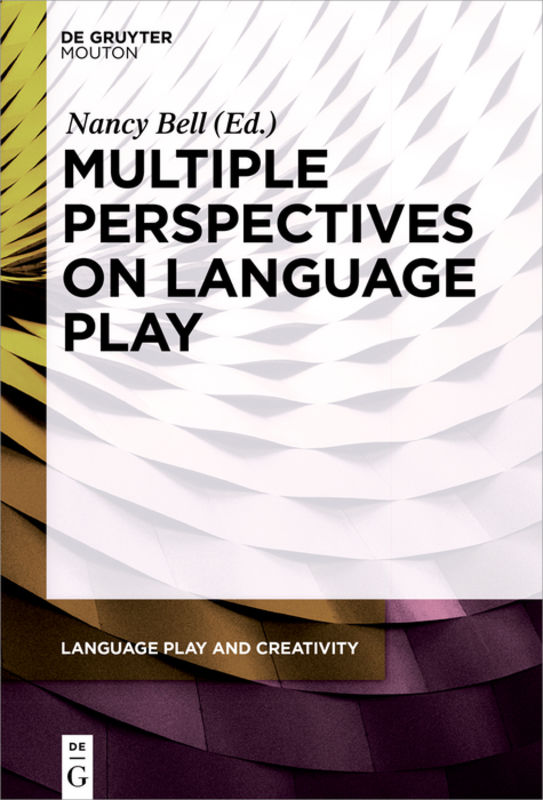
Multiple Perspectives on Language Play
Interest in language play and linguistic creativity has increased in recent years, and the topic has been taken up from a variety of perspectives. In this book, disparate approaches to the topic are brought together, demonstrating that a number of phenomena whose similarities might not have been immediately recognized, have an academic home under the umbrella of language play and linguistic creativity. The contributions to this collection illustrate the variety of questions that can be asked regarding the social, cognitive, emotional, political, and cultural mechanisms and significance of innovative linguistic practices and point to new directions of inquiry. Furthermore, the work exemplifies a variety of ways in which this research can be carried out, as well as the range of contexts in which it might be investigated, including second language classrooms, online settings, and workplaces. Taken together, the chapters serve to illustrate the range of work that we will be accepting in the Language Play and Creativity series; viewed individually, each makes a unique contribution to some aspect of our understanding of creative language use.
eBook
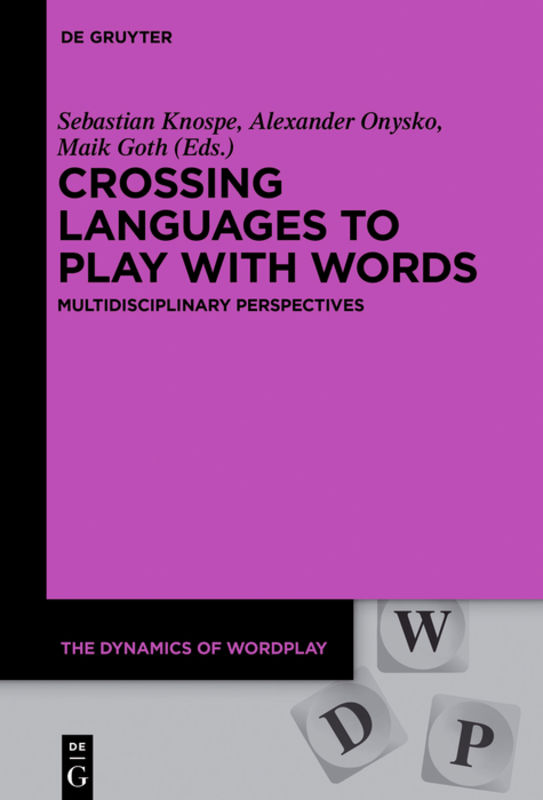
Crossing Languages to Play with Words
Wordplay involving several linguistic codes is an important modality of ludic language. This volume offers a multidisciplinary approach to the topic, discussing examples from different epochs, genres, and communicative situations. The contributions illustrate the multi-dimensionality, linguistic make-up, and the special interactive potential of wordplay across linguistic and cultural boundaries, including the challenging practice of translation.
eBook

Nursery Crimes
Humperdinck (Humpty) Jehoshaphat Aloysius Stuyvesant van Dumpty, “businessman, philanthropist, large egg,” is found dead at the bottom of his wall. “Was he pushed? Suicide? Accident?” In Jasper Fforde’s The Big Over Easy (2005) Detective Inspector Jack Spratt, a nursery rhyme character himself, Head of the underfunded Nursery Crime Division, and Sergeant Mary Mary (the “quite contrary” one) are determined to crack the case. Fforde thus utilizes the idiosyncratic logic of wordplay which usually undermines coherent meaning by turning it into a solid determining factor both in characterization and in promoting plot. Wordplay is used to uncover the clichés of the Crime Fiction genre while submitting it to the constraints of the rhyme. In this article, I investigate the role of wordplay in the blending of genres of crime fiction and the fairy tale/nursery rhyme, focusing on the binding force akin to fate with which literary discourse is adorned in Fforde’s work, and the metafictional discussion this entails.
Journal Article

Spinning Survival with Witch Words: What Mary Daly Taught Me about Theological Language
Though the play of Mary Daly's use of language has been both praised and problematized, theoretical analyses of her linguistic interventions remain largely underdeveloped. This essay aims to make sense of Daly's poetic, playful employment of language by reading it through Judith Butler's notion of performativity. In this essay, Settle argues that Daly's philosophic wordplay is a creative mode of performative linguistics, which is simultaneously mandated and made possible by the repetition of patriarchy's marginalizing acts. At the same time, a careful analysis of Butler's performativity and speech act theory reveals the ways that Daly's linguistic labors have intervened and disrupted the logics and structures of that discourse. Daly's creative manipulation of language, then, continues to perform as an alternative mode of theology beyond patriarchy, and Daly herself—even in her post-theological state—revealed something significant to theology about its own linguistic possibilities.
Journal Article

Sic
If this is true, then the palindrome can be considered poetry based solely on the merits of its formal play. A palindrome embodies the rigor of the chisel—the way you flake it into being, one letter at a time, with the care of a whole hand’s weight. But it is capable of even more than this. Wordplay poetry (or “logological” poetry, as some tight-knit groups of palindromists and anagrammists sometimes refer to it) can give us more than just the pleasure of mechanical skill. It can touch the heart.
Journal Article
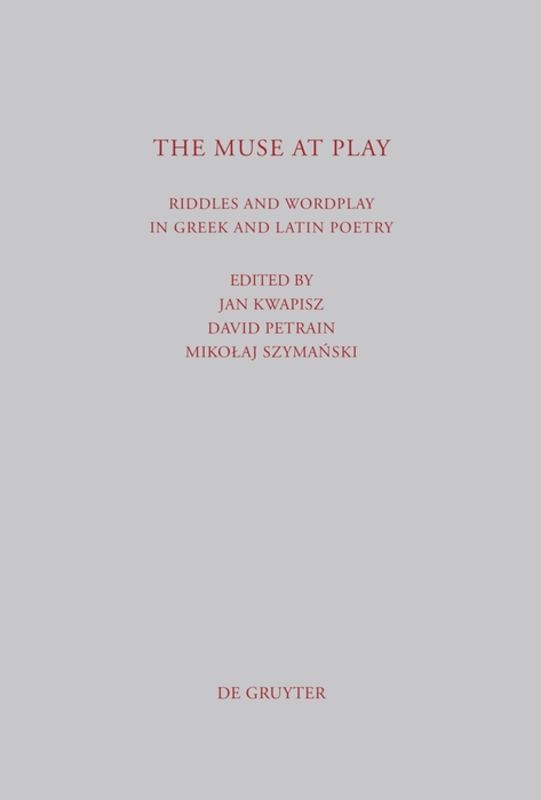
The Muse at Play
In May 2011, a conference on riddles and word games in Greek and Latin poetry took place at the Institute of Classical Studies of the University of Warsaw. The conference was intended as an open forum where specialists working in different fields of classical studies could meet to discuss the varied manifestations of riddles and other technopaegnia - both terms being understood broadly to encompass the full range of play with language in classical antiquity, in keeping with the use made of the two terms in ancient and early modern theoretical discussions. This volume offers revised versions of the papers presented during the conference. Contributions by scholars from Europe and the USA treat a number of interconnected topics, including: ancient and modern attempts to formulate a definition of the riddle; poetic games at Greek symposia; experimentation with language in late classical poetry; riddles in the book cultures of the Hellenistic age and late antiquity; the functions of word games carved in stone, written on papyrus, or inscribed on the wall as graffiti; authors famed for their obscurity, such as Heraclitus and Lycophron; wordplay in Neo-Latin poetry; oracles, magic squares, pattern poetry, palindromes and acrostichs.
eBook

Gilayon and “Apocalypse”: Reconsidering an Early Jewish Concept and Genre
This paper examines various ways in which apocalyptic studies can benefit from the introduction of the term and concept of gilayon, a reconstructed Hebrew counterpart of the Judeo-Greek apocalypse. The term gilayon, which combines the meanings of “revealed book” and “book of revelation,” refers to a central image of early Jewish revealed literature and could serve to define an important corpus, the boundaries of which might well overlap with (but still differ from) what is understood by the “genre apocalypse” in modern research. Moreover, this reconstructed concept uncovers additional meanings and associations, which shed light on texts known as “apocalyptic,” and has explanatory power for many phenomena associated with them. The introduction of gilayon may modify the entire paradigm of our understanding of early Jewish mysticism and help to divert the discussion of textual genres associated with it from a phenomenological to a historical route.
Journal Article