Catalogue Search | MBRL


Are you sure you want to remove the book from the shelf?

{{itemTitle}}
62,771
result(s) for
"Words (language)"
Sort by:
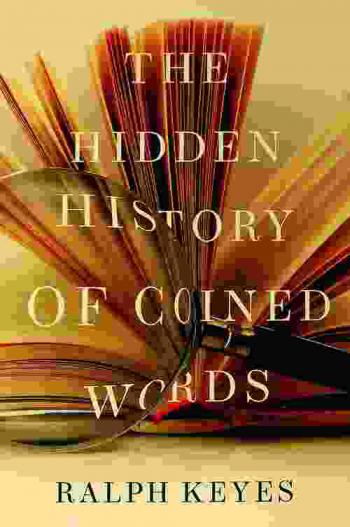
The hidden history of coined words
\"How do words get coined? That question is explored in Ralph Keyes's latest book, The Hidden History of Coined Words. Based on meticulous research, Keyes has determined that successful neologisms are as likely to be created by chance as by intention. A remarkable number of new words were coined whimsically, he's discovered, to taunt, even to prank. Knickers resulted from a hoax, big bang from an insult. Wisecracking produced software, crowdsource, and blog. More than a few neologisms weren't even coined intentionally: they resulted from happy accidents such as typos, mistranslations, and misheard words like bigly and buttonhole, or from an unintended coinage such as Isaac Asimov's robotics. Many of the word coiners Keyes writes about come from unlikely quarters. Neologizers (a Thomas Jefferson coinage) include not just learned scholars and literary lions but cartoonists, columnists, children's authors, and children as well. Wimp, Keyes tells us, originated with an early 20th century book series on The Wymps, goop from a series about The Goops, and nerd from a book by Dr. Seuss. Competing claims to have coined terms like gonzo, mojo, and booty call are assessed, as is epic battles fought between new word partisans, and those who think we have enough words already. A concluding chapter offers pointers on how to coin a word of one's own. Written in a reader-friendly manner, The Hidden History of Coined Words will appeal not just to word lovers but history buffs, trivia contesters, and anyone at all who is interested in a well-informed good read\"-- Provided by publisher.

Loanwords in the World's Languages
This book is the first work to address the question of what kinds of words get borrowed in a systematic and comparative perspective. It studies lexical borrowing behavior on the basis of a world-wide sample of 40 languages, both major languages and minor languages, and both languages with heavy borrowing and languages with little lexical influence from other languages.
The book is the result of a five-year project bringing together a unique group of specialists of many different languages and areas. The introductory chapters provide a general up-to-date introduction to language contact at the word level, as well as a presentation of the project's methodology. All the chapters are based on samples of 1000-2000 words, elicited by a uniform meaning list of 1460 meanings. The combined database, comprising over 70,000 words, is published online at the same time as the book is published. For each word, information about loanword status is given in the database, and the 40 case studies in the book describe the social and historical contact situations in detail.
The final chapter draws general conclusions about what kinds of words tend to get borrowed, what kinds of word meanings are particularly resistant to borrowing, and what kinds of social contact situations lead to what kinds of borrowing situations.
eBook


Dictionary of Arabic loanwords in the languages of Central and East Africa
Dictionary of Arabic Loanwords in the Languages of Central and East Africa analyzes around 3000 Arabic loanwords in more than 50 languages in the area, and completes the work started in a previous similar work on West Africa.
eBook
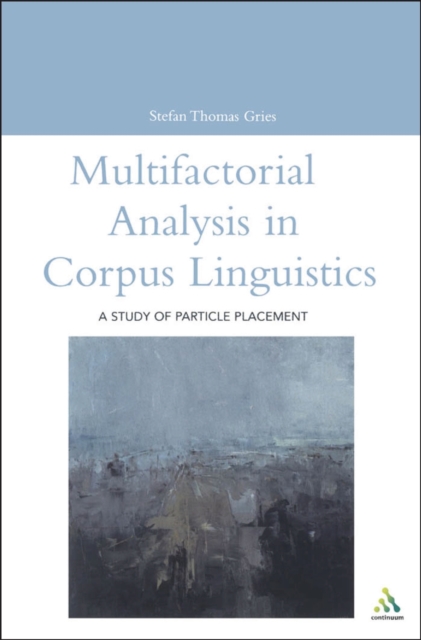
Multifactorial analysis in corpus linguistics : a study of particle placement
This book presents a new analysis of the word-order alternation of English transitive phrasal verbs (aka Particle Movement) from a cognitive-functional and psycholinguistic perspective. Its main objective, however, is a methodological one, namely to demonstrate the superiority of corpus-based, multifactorial and probabilistic approaches towards grammatical phenomena over traditional analyses based on acceptability judgements and minimal pair tests.
eBook
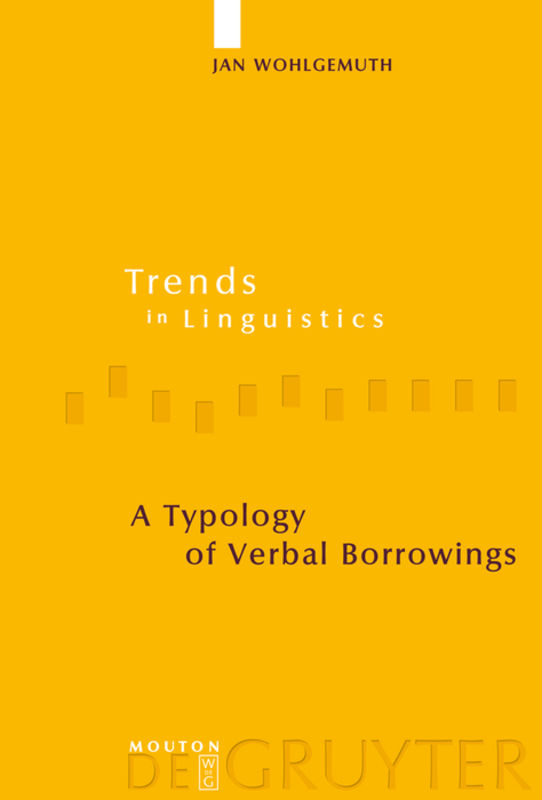
A Typology of Verbal Borrowings
The questions as to why most languages appear to have more trouble borrowing verbs than nouns, and as to the possible mechanisms and paths by which verbs can be borrowed or the obstacles for verb borrowing, have been a topic of interest since the late 19th century. However, no truly substantial typological research had been undertaken in this field before the present study.
The present work is the first in-depth cross-linguistic study on loan verbs and the morphological, syntactic and sociolinguistic aspects of loan verb accommodation. It applies current methodologies on database management, quantitative analysis and typological conventions and it is based on a broad global sample of data from over 400 languages and the typological data from the World Atlas of Language Structures (WALS).
One major result of the present study is the falsification, on empirical grounds, of long-standing claims that verbs generally are more difficult to borrow than other parts of speech, or that verbs could never be borrowed as verbs and always needed a re-verbalization in the borrowing language.
eBook