
Catalogue Search | MBRL


Are you sure you want to remove the book from the shelf?

{{itemTitle}}
6,068
result(s) for
"Wordsworth, William (1770-1850)"
Sort by:


William Wordsworth and the Ecology of Authorship
InWilliam Wordsworth and the Ecology of Authorship,Scott Hess explores Wordsworth's defining role in establishing what he designates as \"the ecology of authorship\": a primarily middle-class, nineteenth-century conception of nature associated with aesthetics, high culture, individualism, and nation. Instead of viewing Wordsworth as an early ecologist, Hess places him within a context that is largely cultural and aesthetic. The supposedly universal Wordsworthian vision of nature, Hess argues, was in this sense specifically male, middle-class, professional, and culturally elite-factors that continue to shape the environmental movement today.
eBook

Wordsworth's monastic inheritance : poetry, place, and the sense of community
\"The first extended examination of the influence of monasticism on Wordsworth's writing. Covering the poet's development between 1806 and 1822, it considers how a series of sources describing medieval monastic life in the north of England influenced Wordsworth's thinking about regional attachment, trans-historical community, and national cohesion.\"-- Provided by publisher.
Book

Plagiarism and Literary Property in the Romantic Period
In a series of articles published in Tait's Magazine in 1834, Thomas DeQuincey catalogued four potential instances of plagiarism in the work of his friend and literary competitor Samuel Taylor Coleridge. DeQuincey's charges and the controversy they ignited have shaped readers' responses to the work of such writers as Coleridge, Lord Byron, William Wordsworth, and John Clare ever since. But what did plagiarism mean some two hundred years ago in Britain? What was at stake when early nineteenth-century authors levied such charges against each other? How would matters change if we were to evaluate these writers by the standards of their own national moment? And what does our moral investment in plagiarism tell us about ourselves and about our relationship to the Romantic myth of authorship?In Plagiarism and Literary Property in the Romantic Period, Tilar Mazzeo historicizes the discussion of late eighteenth- and early nineteenth-century plagiarism and demonstrates that it had little in common with our current understanding of the term. The book offers a major reassessment of the role of borrowing, textual appropriation, and narrative mastery in British Romantic literature and provides a new picture of the period and its central aesthetic contests. Above all, Mazzeo challenges the almost exclusive modern association of Romanticism with originality and takes a fresh look at some of the most familiar writings of the period and the controversies surrounding them.
eBook

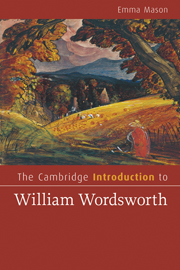
The Cambridge Introduction to William Wordsworth
William Wordsworth is the most influential of the Romantic poets, and remains widely popular, even though his work is more complex and more engaged with the political, social and religious upheavals of his time than his reputation as a 'nature poet' might suggest. Outlining a series of contexts - biographical, historical and literary - as well as critical approaches to Wordsworth, this Introduction offers students ways to understand and enjoy Wordsworth's poetry and his role in the development of Romanticism in Britain. Emma Mason offers a completely up-to-date summary of criticism on Wordsworth from the Romantics to the present and an annotated guide to further reading. With definitions of technical terms and close readings of individual poems, Wordsworth's experiments with form are fully explained. This concise book is the ideal starting point for studying Lyrical Ballads, The Prelude, and the major poems as well as Wordsworth's lesser known writings.
eBook

The Cambridge introduction to William Wordsworth
\"William Wordsworth is the most influential of the Romantic poets, and remains widely popular, even though his work is more complex and more engaged with the political, social and religious upheavals of his time than his reputation as a 'nature poet' might suggest. Outlining a series of contexts - biographical, historical and literary - as well as critical approaches to Wordsworth, this Introduction offers students ways to understand and enjoy Wordsworth's poetry and his role in the development of Romanticism in Britain. Emma Mason offers a completely up-to-date summary of criticism on Wordsworth from the Romantics to the present and an annotated guide to further reading. With definitions of technical terms and close readings of individual poems, Wordsworth's experiments with form are fully explained. This concise book is the ideal starting point for studying Lyrical Ballads, The Prelude, and the major poems as well as Wordsworth's lesser known writings\"-- Provided by publisher.
Book

Our common dwelling : Henry Thoreau, transcendentalism, and the class politics of nature
OurCommonDwelling explores why America's first literary circle turned to nature in the 1830s and '40s. When the New England Transcendentalists spiritualized nature, they were reacting to intense class conflict in the region's industrializing cities. Their goal was to find a secular foundation for their social authority as an intellectual elite. New England Transcendentalism engages with works by William Wordsworth, Henry David Thoreau, Ralph Waldo Emerson, Margaret Fuller, Nathaniel Hawthorne, and others. The works of these great authors, interpreted in historical context, show that both environmental exploitation and conscious love of nature co-evolved as part of the historical development of American capitalism.
eBook

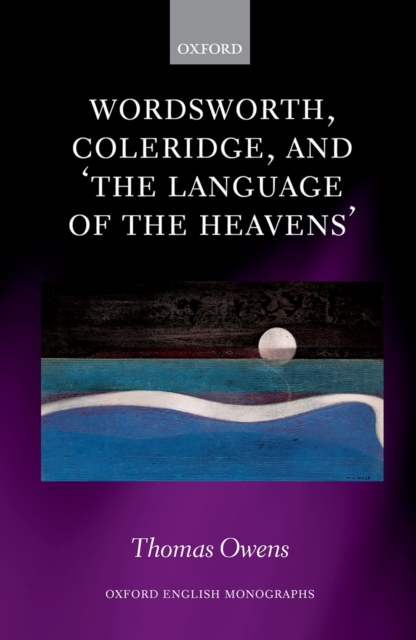
Wordsworth, Coleridge, and 'the language of the heavens'
This book explores some of the exultant visions inspired by Wordsworth’s and Coleridge’s close scrutiny of the night sky, the natural world, and the domains of science. It examines a set of scientific patterns drawn from natural, geometric, celestial, and astronomical sources which Wordsworth and Coleridge used to express their ideas about poetry, religion, literary criticism, and philosophy. It establishes the central important of analogy in their creative thinking. Analogies prompted the poets’ imaginings in geometry and cartography, in nature (representations of the Moon) and natural history (studies of spider-webs, streams, and dew), in calculus and conical refraction, and in the discovery of infra-red and ultraviolet light. Although this is primarily a study of the patterns which inspired their writing, the findings overturn the prevalent critical consensus that Wordsworth and Coleridge did not have the access, interest, or capacity to understand the latest developments in nineteenth-century astronomy and mathematics, which they did in fact possess. This research reinstates many relationships which the poets had with scientists and their sources. Most significantly, the book illustrates that these sources are not simply another context or historical lens through which to engage with Wordsworth’s and Coleridge’s work but are instead a controlling device of the symbolic imagination. Exploring the structures behind Wordsworth’s and Coleridge’s poems and metaphysics stakes out a return to the evidence of the Romantic imagination, not for its own sake, but in order to reveal that their analogical configuration of the world provided them with a scaffold for thinking, an intellectual orrery which ordered artistic consciousness and which they never abandoned.
eBook