
Catalogue Search | MBRL


Are you sure you want to remove the book from the shelf?

{{itemTitle}}
85,577
result(s) for
"Work History."
Sort by:


The Story of Work
The first truly global history of work, an upbeat
assessment from the age of the hunter-gatherer to the present
day We work because we have to, but also because we like
it: from hunting-gathering over 700,000 years ago to the present
era of zoom meetings, humans have always worked to make the world
around them serve their needs. Jan Lucassen provides an inclusive
history of humanity's busy labor throughout the ages. Spanning
China, India, Africa, the Americas, and Europe, Lucassen looks at
the ways in which humanity organizes work: in the household, the
tribe, the city, and the state. He examines how labor is split
between men, women, and children; the watershed moment of the
invention of money; the collective action of workers; and at the
impact of migration, slavery, and the idea of leisure. From peasant
farmers in the first agrarian societies to the precarious existence
of today's gig workers, this surprising account of both cooperation
and subordination at work throws essential light on the
opportunities we face today.
eBook


A History of Social Work in Public Health
Social work is a core health profession with origins deeply connected to the development of contemporary public health in the United States. Today, many of the nation’s 600 000 social workers practice broadly in public health and in other health settings, drawing on a century of experience in combining clinical, intermediate, and population approaches for greater health impact. Yet, the historic significance of this long-standing interdisciplinary collaboration—and its current implications—remains underexplored in the present era. This article builds on primary and contemporary sources to trace the historic arc of social work in public health, providing examples of successful collaborations. The scope and practices of public health social work practice are explored, and we articulate a rationale for an expanded place for social work in the public health enterprise.
Journal Article

Handbook the global history of work
\"Coffee from East Africa, wine from California, chocolate from the Ivory Coast - all those every day products are based on labour, often produced under appalling conditions, but always involving the combination of various work processes we are often not aware of. What is the day-to-day reality for workers in various parts of the world, and how was it in the past? How do they work today, and how did they work in the past? These and many other questions comprise the field of the global history of work - a young discipline that is introduced with this handbook. In 8 thematic chapters, this book discusses these aspects of work in a global and long term perspective, paying attention to several kinds of work. Convict labour, slave and wage labour, labour migration, and workers of the textile industry, but also workers' organisation, strikes, and motivations for work are part of this first handbook of global labour history, written by the most renowned scholars of the profession.\"-- Details from publisher.
Book

The Good Women of the Parish
There was immense social and economic upheaval between the Black Death and the English Reformation, and contemporary writers often blamed this upheaval on immorality, singling out women's behavior for particular censure. Late medieval moral treatises and sermons increasingly connected good behavior for women with Christianity, and their failure to conform to sin. Katherine L. French argues, however, that medieval laywomen both coped with the chaotic changes following the plague and justified their own changing behavior by participating in local religion. Through active engagement in the parish church, the basic unit of public worship, women promoted and validated their own interests and responsibilities.Scholarship on medieval women's religious experiences has focused primarily on elite women, nuns, and mystics who either were literate enough to leave written records of their religious ideas and behavior or had access to literate men who did this for them. Most women, however, were not literate, were not members of religious orders, and did not have private confessors. As The Good Women of the Parish shows, the great majority of women practiced their religion in a parish church. By looking at women's contributions to parish maintenance, the ways they shaped the liturgy and church seating arrangements, and their increasing opportunities for collective action in all-women's groups, the book argues that gendered behavior was central to parish life and that women's parish activities gave them increasing visibility and even, on occasion, authority. In the face of demands for silence, modesty, and passivity, women of every social status used religious practices as an important source of self-expression, creativity, and agency.
eBook
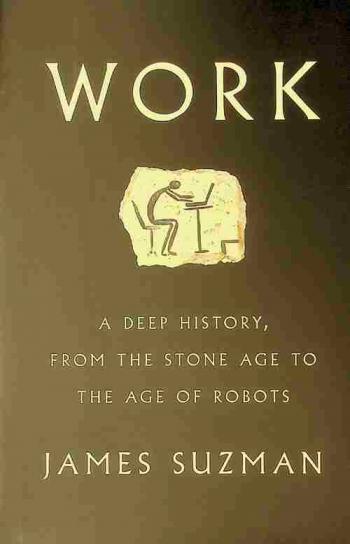
Work : a deep history, from the stone age to the age of robots
\"A revolutionary new history of humankind through the prism of work by leading anthropologist James Suzman\"-- Provided by publisher.

Reorienting the East
Reorienting the Eastexplores the Islamic world as it was encountered, envisioned, and elaborated by Jewish travelers from the Middle Ages to the early modern period. The first comprehensive investigation of Jewish travel writing from this era, this study engages with questions raised by postcolonial studies and contributes to the debate over the nature and history of Orientalism as defined by Edward Said.
Examining two dozen Hebrew and Judeo-Arabic travel accounts from the mid-twelfth to the early sixteenth centuries, Martin Jacobs asks whether Jewish travelers shared Western perceptions of the Islamic world with their Christian counterparts. Most Jews who detailed their journeys during this period hailed from Christian lands and many sailed to the Eastern Mediterranean aboard Christian-owned vessels. Yet Jacobs finds that their descriptions of the Near East subvert or reorient a decidedly Christian vision of the region. The accounts from the crusader era, in particular, are often critical of the Christian church and present glowing portraits of Muslim-Jewish relations. By contrast, some of the later travelers discussed in the book express condescending attitudes toward Islam, Muslims, and Near Eastern Jews. Placing shifting perspectives on the Muslim world in their historical, social, and literary contexts, Jacobs interprets these texts as mirrors of changing Jewish self-perceptions. As he argues, the travel accounts echo the various ways in which premodern Jews negotiated their mingled identities, which were neither exclusively Western nor entirely Eastern.
eBook


Citizens of a Christian Nation
In America after the Civil War, the emancipation of four million slaves and the explosion of Chinese immigration fundamentally challenged traditional ideas about who belonged in the national polity. As Americans struggled to redefine citizenship in the United States, the \"Negro Problem\" and the \"Chinese Question\" dominated the debate. During this turbulent period, which witnessed the Supreme Court'sPlessy v. Fergusondecision and passage of the Chinese Exclusion Act, among other restrictive measures, American Baptists promoted religion instead of race as the primary marker of citizenship. Through its domestic missionary wing, the American Baptist Home Missionary Society, Baptists ministered to former slaves in the South and Chinese immigrants on the Pacific coast. Espousing an ideology of evangelical nationalism, in which the country would be united around Christianity rather than a particular race or creed, Baptists advocated inclusion of Chinese and African Americans in the national polity. Their hope for a Christian nation hinged on the social transformation of these two groups through spiritual and educational uplift. By 1900, the Society had helped establish important institutions that are still active today, including the Chinese Baptist Church and many historically black colleges and universities.Citizens of a Christian Nationchronicles the intertwined lives of African Americans, Chinese Americans, and the white missionaries who ministered to them. It traces the radical, religious, and nationalist ideology of the domestic mission movement, examining both the opportunities provided by the egalitarian tradition of evangelical Christianity and the limits imposed by its assumptions of cultural difference. The book further explores how blacks and Chinese reimagined the evangelical nationalist project to suit their own needs and hopes. Historian Derek Chang brings together for the first time African American and Chinese American religious histories through a multitiered local, regional, national, and even transnational analysis of race, nationalism, and evangelical thought and practice.
eBook