
Catalogue Search | MBRL


Are you sure you want to remove the book from the shelf?

{{itemTitle}}
133
result(s) for
"Work environment Fiction."
Sort by:

The insatiables
\"When Halley Faust is handed the opportunity to move two steps up the corporate ladder, she laces up her shoes and starts climbing. But her covert battles with coworkers - equal parts funny and cringe-worthy - leave everyone wondering: how far do you have to go to achieve success?\"--Provided by publisher.
Book

Beyond the Silver Screen: Exploring Future Public Life Through Sociological Film Analysis
This study seeks to interrogate prospective configurations of public life through science fiction films, particularly by addressing the effects of technological advances and changes on society. In the study’s methodology, 27 films were assessed using the sociological film analysis method. In these films, an analysis was conducted on thematic elements, encompassing aspects such as the physical environment, socio-cultural structures, public life, technological infrastructure, and dynamics of human relationships. As a result, a codex of thematic codes was meticulously crafted. The main findings indicate that the films contain scenarios that discuss the boundaries of public space and reflect future social structures. The emphasis appears to be on how and to what extent technology is used. This research presents novel ideas and a platform for discussion for urban planning, architecture, social sciences, and film studies. The originality of this study lies in its analysis of cinematographic content from a sociological standpoint, providing an in-depth perspective on the future of public life and adding a new dimension to the existing body of knowledge on the subject.
Plain Language Summary
Understanding the Future of Public Life through Movies: A Sociological Perspective
This study explores what public life might look like in the future through the lens of science fiction movies, with a focus on how technological advancements and societal changes affect us. In our research, we analyzed 27 films using a method that examines films from a sociological perspective. We looked at themes in these movies, including the physical environment, social and cultural structures, public life, technological infrastructure, and the dynamics of human relationships. From this analysis, we created a detailed set of thematic categories. The main findings show that these films present scenarios discussing the limits of public spaces and envision future social formations. A key aspect highlighted is the extent and manner in which technology is utilized. This research offers new insights and a basis for discussion in the fields of urban planning, architecture, social sciences, and film studies. What makes this study unique is its approach to analyzing movie content from a sociological viewpoint, providing a deep look into the future of public life and adding a new dimension to our understanding of the topic.
Journal Article

Behind her back
StoryWorld is the nation's favourite morning show, and producer Liz Lyon wants to keep it that way. Her job is to turn real-life stories into thrilling TV - and keep a lid on the cauldron of conflicts and resentments that constantly simmers off-stage. But that's easier said than done. The Director of Programmes hasn't forgiven Liz for blackmailing him last year. The News Editor wants to destroy Liz because she knows his secrets. And Liz's lead presenter has returned from maternity leave to find she's now sharing the sofa with her hated male rival... In this gripping novel of power, rivalry and betrayal, Jane Lythell draws on her experiences of working in the glamorous, pressurised world of live TV.
Book

Patricia Leavy’s Spark as a Novel and Metaphor for Creative Interdisciplinary Research
Spark by Patricia Leavy follows Sociology Professor Peyton Wilde as she travels to remote Iceland to participate in a mysterious scholarly seminar. Set in a moody grand manor with an enigmatic host and an eclectic cast of characters, the story blends intellectual intrigue with personal discovery and highlights the strength of Leavy’s social fiction: her characterisation, her use of motifs, and her attention to questions at the heart of scholarly work. This article reflects on the research tensions, interpersonal differences and everyday materialities that animate the story and raise valuable questions for interdisciplinary collaboration. For those interested in fiction and research, whether through creative writing or literary analysis, Spark shows how to blend social research and storytelling in vibrant, imaginative and poetic ways. It demonstrates the possibilities of fusing these realms to create a compelling and thought-provoking narrative.
Journal Article


Crimetime: Toughness, Gender, and Genre in Philippine Detective Fiction
This article reads Maria L.M. Fres-Felix's collection of stories featuring Filipina detective SJ Tuason, Crimetime, to explore Tuason's performance of gender-neutral toughness as a policing mechanism in Quezon City. Tuason uses toughness to expose and combat the culturally specific systems of corruption in the Philippines that contribute to antifeminist structures and violent crimes against women.
Journal Article

Motivation for writing long online reviews: a big data analysis of an anime community
PurposeBased on self-determination theory (SDT), this study aims to determine the motivation factors of reviewers writing long reviews in the anime industry.Design/methodology/approachThis study analyzes 171,188 online review data collected from an online anime community (MyAnimeList.net).FindingsThe findings show that intensity of emotions, experience in writing reviews and helpful votes in past reviews are the most important factors and positively influence review length. The overall rating of the anime moderates the effects of some motivation factors. Moreover, reviewers commenting on their favorite or nonfavorite anime also have varied motivation factors. Furthermore, this study has addressed the p-value problem due to the large sample size.Research limitations/implicationsThis study provides a comprehensive and theoretical understanding of reviewers' motivation for writing long reviews.Practical implicationsOnline communities can incorporate the insights from this study into website design and motivate reviewers to write long reviews.Originality/valueMany past studies have investigated what reviews are more helpful. Review length is the most important factor of review helpfulness and positively affects it. However, few studies have examined the determinants of review length. This study attempts to address this issue.
Journal Article
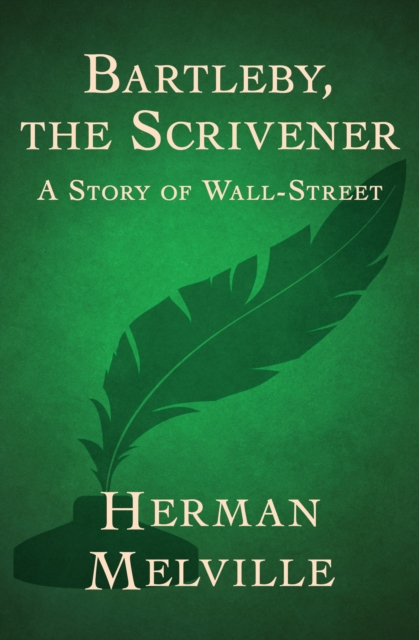
Bartleby, the Scrivener
The classic tale of existential despair A Wall Street lawyer specializing in bonds and mortgages hires a respectable young man to copy legal documents by hand. At first, the new scrivener approaches his duties with a calm efficiency. Then comes the day when his response to a new assignment is, \"I would prefer not to.\" The mysterious phrase soon becomes Bartleby's reply to everything asked of him, and his surrender to inertia is both maddening and inexorable. Torn between frustration and pity, anger and sorrow, his employer desperately tries to save Bartleby, but the cause is as doomed to disappointment as life itself. A strange and haunting fable that continues to resonate a century and a half after it was first published, Bartleby, the Scrivener is a masterpiece of American literature. This ebook has been professionally proofread to ensure accuracy and readability on all devices.
eBook

Distribution, Recognition, and Participation: The Paradigm for the Human Right to a Sustainable Environment and Eco-justice in Mahasweta Devi’s Eco-critical Writing
Fifty-one years ago, in April 2023, the first Chipko protest saw
Adivasis,
or indigenous Indian women, embracing trees to prevent the logging of the green Himalayan forests. The Chipko Movement got its name from the Hindi word ‘
chipko
’ meaning ‘to hug’ or ‘to cling to’ when the indigenous communities of India exhibited their close ties of existence with nature. This grassroots environmental non-violent movement supports the preservation of human rights enumerated in the UDHR (
1948
) like the rights to freedom, social justice, economic equity, and access to social and international order, as well as the right to a clean and sustainable environment as in the UN Human Rights Council Resolution 48/13 (October 2021). Social worker Mahasweta Devi (1926–2016) lived with these
Adivasi
communities and documented their oral narratives. This paper unravels the call for the human right to eco-justice in her stories and novellas and show how Devi creates an imaginative community that can embrace characters, authors, and readers in their quest for the human right to a sustainable environment. Devi’s experiences with the Indigenous folks speaks to the dire need to reframe environmental justice. This paper explores how her fiction is not just an ethno-historical-fictional account but is one propelled by the narrative sleight of hand of a postcolonial social worker, writer, and human rights activist. In colonial times, these communities were perceived as ‘uncivilized’ with the colonial masters striving to bring ‘order’ over ‘chaos’. Their existence remains precarious with the present-day postcolonial government implementing dam-building projects in the name of greater common good. This paper considers how Devi’s eco-critical writing underscored the need to reframe environmental justice in postcolonial times by referring to David Schlosberg’s paradigm ‘distribution, recognition, and participation’, where all stakeholders should partake in the distribution of environmental harm, recognize and annihilate injury to voiceless actors who depend on the produce of the Earth for their daily sustenance, and participate in preserving and cherishing the Earth.
Journal Article

You and CO2: a Public Engagement Study to Engage Secondary School Students with the Issue of Climate Change
School students are growing up in a world with a rapidly changing climate, the effects of which will become increasingly apparent during their lifetimes. We designed and pilot tested “You and CO
2
”, a STEAM program designed to encourage students to reflect on their personal impact on the environment, while also appreciating their place within society to bring about positive societal change. Over three interlinked workshops, students analyzed the carbon footprints of some everyday activities, which they then explored in more detail through interacting with a bespoke piece of digital fiction,
No World 4 Tomorrow
. The program culminated with students producing their own digital fictions, allowing them the freedom to explore the themes from the previous workshops with a setting and focus of their choice. We reflect here on the experience of running the You and CO
2
program and on the themes that emerged from the students’ original digital fictions.
Journal Article