
Catalogue Search | MBRL


Are you sure you want to remove the book from the shelf?

{{itemTitle}}
193,278
result(s) for
"Work environments"
Sort by:

Dying for an iPhone : Apple, Foxconn, and the lives of China's workers
Suicides, excessive overtime, hostility and violence on the factory floor in China. Drawing on vivid testimonies from rural migrant workers, student interns, managers and trade union staff, Dying for an iPhone is a devastating expose of two of the world's most powerful companies: Foxconn and Apple.As the leading manufacturer of iPhones, iPads and Kindles, and employing one million workers in China alone, Taiwanese-invested Foxconn's drive to dominate global electronics manufacturing has aligned perfectly with China's goal of becoming the world leader in technology. This book reveals the human cost of that ambition and what our demands for the newest and best technology mean for workers.Foxconn workers have repeatedly demonstrated their power to strike at key nodes of transnational production, challenge management and the Chinese state, and confront global tech behemoths. Dying for an iPhone allows us to assess the impact of global capitalism's deepening crisis on workers.
eBook

Effects of Nurse Staffing and Nurse Education on Patient Deaths in Hospitals With Different Nurse Work Environments
Context: Better hospital nurse staffing, more educated nurses, and improved nurse work environments have been shown to be associated with lower hospital mortality. Little is known about whether and under what conditions each type of investment works better to improve outcomes. Objective: To determine the conditions under which the impact of hospital nurse staffing, nurse education, and work environment are associated with patient outcomes. Design, Setting, and Participants: Outcomes of 665 hospitals in 4 large states were studied through linked data from hospital discharge abstracts for 1,262,120 general, orthopedic, and vascular surgery patients, a random sample of 39,038 hospital staff nurses, and American Hospital Association data. Main Outcome Measures: A 30-day inpatient mortality and failure-to-rescue. Results: The effect of decreasing workloads by 1 patient/nurse on deaths and failure-to-rescue is virtually nil in hospitals with poor work environments, but decreases the odds on both deaths and failures in hospitals with average environments by 4%, and in hospitals with the best environments by 9% and 10%, respectively. The effect of 10% more Bachelors of Science in Nursing Degree nurses decreases the odds on both outcomes in all hospitals, regardless of their work environment, by roughly 4%. Conclusions: Although the positive effect of increasing percentages of Bachelors of Science in Nursing Degree nurses is consistent across all hospitals, lowering the patient-to-nurse ratios markedly improves patient outcomes in hospitals with good work environments, slightly improves them in hospitals with average environments, and has no effect in hospitals with poor environments.
Journal Article

Organizing relationships : traditional and emerging perspectives on workplace relationships
“Organizing Relationships makes a contribution to the discipline in its treatment of this area from multiple perspectives, in its deliberate engagement/suggestions of future research directions, and its functional purpose of bringing together extant research on this important topic in a coherent and organized way. It adds cumulatively to our knowledge of organizational communication and relationships, it fits within the horizon of the established parameters of our field while opening new areas for engagement, and, moreover, it is a very interesting read. It will, no doubt, become a touchstone for the field of organizational communication.” —Janie Hardin Fritz, Duquesne University “This book represents an important step to a relational approach to organizational behavior (communication) by pulling together many different areas/types of relationships. It will be a ‘must’ book to anyone who teaches relationships in organization or broadly relational/applied organizational communication.” —Jaesub Lee, University of Houston The first book in the field to provide a comprehensive, interdisciplinary treatment of workplace relationships, Organizing Relationships: Traditional and Emerging Perspectives on Workplace Relationships explores both negative and positive workplace relationships, including supervisor–subordinate relationships, peer relationships, workplace friendships, romantic workplace relationships, and customer–client relationships. Author Patricia M. Silas, a recognized scholar in the field, examines workplace relationships from multiple theoretical perspectives, including postpositivism, social construction theory, critical theory, and structuration theory. She helps readers understand the unique influences of the workplace on relationship processes and dynamics. Key Features Examines the role of workplace relationships as information-sharing, resource-distributing, decision-making, and support systems and highlights their importance to both organizational and individual well-being Includes cases in each chapter that demonstrate the usefulness of approaching real-world workplace problems and issues from multiple perspectives Helps readers broaden and enrich the ways they think about workplace relationships and their roles in organizational processes Provides an innovative agenda for future research Organizing Relationships is appropriate for upper-level undergraduate and graduate courses in Workplace Relationships, Relational Communication, Applied Interpersonal Communication, Organizational Communication, Communication Management, Operations/Human Resource Management, Organizational Psychology, and Organizational Sociology.
eBook

An Evidence-Based Model of Work Engagement
Employees who are engaged in their work are fully connected with their work roles. They are bursting with energy, dedicated to their work, and immersed in their work activities. This article presents an overview of the concept of work engagement. I discuss the antecedents and consequences of engagement. The review shows that job and personal resources are the main predictors of engagement. These resources gain their salience in the context of high job demands. Engaged workers are more open to new information, more productive, and more willing to go the extra mile. Moreover, engaged workers proactively change their work environment in order to stay engaged. The findings of previous studies are integrated in an overall model that can be used to develop work engagement and advance job performance in today's workplace.
Journal Article

Not All Fun and Games
Motivated by the goal of understanding the labour conditions of workers in the videogame industry and their participatory power to create decent work, Not All Fun and Games is a critical examination of a global entertainment juggernaut with revenues that top film, television, and music production combined. Jobs in the industry are heralded as the vanguard of the new economy, governments offer lucrative tax credits to lure game studios to their regions, and game developers often express commitment and passion for their work. Yet, the industry is also known for its toxic workplaces. To understand these disparities and gain insight into twenty-first-century labour conditions, Marie-Josée Legault and Johanna Weststar have carried out a comprehensive mixed-methods study of the North American industry over the past fifteen years. They combine detailed survey data from thousands of game developers with over one hundred qualitative interviews to systematically reveal labour issues such as precarity, lack of workforce diversity, unpredictable schedules, unpaid overtime, low unionization rates, worker burnout, and significant pay inequality. Updating the theoretical concept of citizenship at work, the authors connect these labour issues to a fundamental lack of voice and representation in the workplace. They determine that videogame workers and others in contemporary project-based work environments lack agency in regulating their work and lack fundamental protections. Not All Fun and Games comprehensively documents conditions in the North American industry and highlights ways to counter workers' lack of voice and representation in their workplaces to better create healthy, equitable, and inclusive workplaces.
eBook
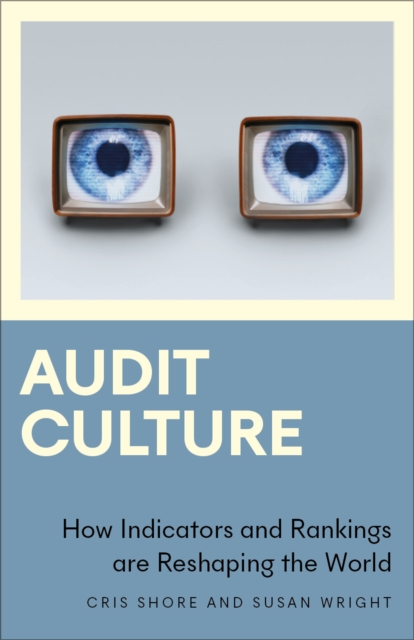
Audit Culture
All aspects of our work and private lives are increasingly measured and managed. But how has this 'audit culture' arisen and what kind of a world is it producing?
Cris Shore and Susan Wright provide a timely account of the rise of the new industries of accounting, enumeration and ranking from an anthropological perspective, drawing on political economy, ethnographic observation and genealogical excavation.
Audit Culture is the first book to systematically document and analyse these phenomena and their implications for democracy.
The book explores how audit culture operates across a wide range of fields, including health, higher education, NGOs, finance, the automobile industry and the military. The authors build a powerful critique of contemporary public sector management in an age of neoliberal market-making, privatisation and outsourcing. They conclude by offering a raft of suggested actions to reverse its damaging effects on communities, reclaim professional autonomy, and restore the democratic accountability that audit culture is systematically undermining.
eBook

Leadership matters in crisis-induced digital transformation: how to lead service employees effectively during the COVID-19 pandemic
PurposeThe COVID-19 pandemic has, besides the health concerns, caused an unprecedented social and economic crisis that has particularly hit service industries hard. Due to extensive safety measures, many service employees have to work remotely to keep service businesses running. With limited literature on leadership and virtual work in the service context, this paper aims to report on leadership effectiveness regarding employees' work performance in virtual settings brought on by the COVID-19 pandemic.Design/methodology/approachDrawing on the input–process–outcome (IPO) framework, this research investigates the effectiveness of leadership on service employees' work performance mediated by work-related tension, autonomy, and group cohesiveness. Furthermore, this study explores moderating effects of the service provider's digital maturity. To test the derived model, the authors collected survey data from 206 service employees who, due to the COVID-19 pandemic, unexpectedly had to transform to a virtual work environment. The authors analyzed the data using partial least squares structural equation modeling (PLS-SEM).FindingsThe results indicated that it took task- and relation-oriented leadership behavior to maintain service employees' work performance in a virtual environment during crisis situations. Further, results indicated mediating effects of service employees' individual job autonomy and team cohesiveness; surprisingly, work-related tension did not impact employees' work performance. Results offered service businesses guidance on how to effectively lead in times of crisis when service employees predominantly work in virtual environments.Originality/valueThis is the first empirical study to show how leadership affects service employees' work performance in a virtual work environment during crisis times. Thus, the study contributes to the scarce literature on the impact of leadership in service firms that have to operate in such a setting.
Journal Article

The Danish Psychosocial Work Environment Questionnaire (DPQ)
Objectives The aim of this study was to describe the development and the content of the Danish Psychosocial Work Environment Questionnaire (DPQ) and to test its reliability and validity. Methods We describe the identification of dimensions, the development of items, and the qualitative and quantitative tests of the reliability and validity of the DPQ. Reliability and validity of a 150 item version of the DPQ was evaluated in a stratified sample of 8958 employees in 14 job groups of which 4340 responded. Reliability was investigated using internal consistency and test-retest reliability. The factorial validity was investigated using confirmatory factor analysis (CFA). For each multi-item scale, we undertook CFA within each job group and multi-group CFA to investigate factorial invariance across job groups. Finally, using multi-group multi-factor CFA, we investigated whether scales were empirically distinct. Results Internal consistency reliabilities and test-retest reliabilities were satisfactory. Factorial validity of the multi-item scales was satisfactory within each of the 14 job groups. Factorial invariance was demonstrated for 10 of the 28 multi-item scales. The hypothesis that the scales of the DPQ were empirically distinct was supported. The final DPQ version consisted of 119 items covering 38 different psychosocial work environment dimensions. Conclusions Overall, the DPQ is a reliable and valid instrument for assessing psychosocial working conditions in a variety of job groups. The results indicate, however, that questions about psychosocial working conditions may be understood differently across job groups, which may have implications for the comparability of questionnaire-based measures of psychosocial working conditions across job groups.
Journal Article

Physical workload and risk of long-term sickness absence in the general working population and among blue-collar workers: prospective cohort study with register follow-up
ObjectiveTo determine the prospective association between physical workload—in terms of specific physical exposures and the number of exposures—and long-term sickness absence (LTSA).MethodsUsing cox-regression analyses, we estimated the risk of register-based incident LTSA (at least 3 consecutive weeks) from self-reported exposure to different physical workloads among 11 908 wage earners from the general working population (Danish Work Environment Cohort Study year 2000 and 2005).ResultsThe incidence of LTSA was 8.9% during two-year follow-up. Spending 25% or more of the total work time with a bent or twisted back (HR 1.59 (95% CI 1.39 to 1.83)), arms above shoulder height (HR 1.35 (95% CI 1.14 to 1.59)), squatting or kneeling (HR 1.30 (95% CI 1.09 to 1.54)), pushing/pulling or lifting/carrying (HR 1.40 (95% CI 1.22 to 1.62)) and standing in the same place for 50% or more of total work time (HR 1.19 (95% CI 1.00 to 1.42), were risk factors for LTSA when adjusted for baseline age, gender, psychosocial work environment, lifestyle, musculoskeletal and mental disorders, and socioeconomic status. HR increased from 1.25 (95% CI 1.04 to 1.51) for one to 1.94 (95% CI 1.56 to 2.41) for four combined physical workloads. Results largely remained stable in subgroup analyses including only blue-collar workers (n=5055). Population attributable risks for LTSA from one or more physical workloads were 26% and 40% in the general working population and among blue-collar workers, respectively.ConclusionsSeveral of the investigated types of physical workload were risk factors for LTSA when exceeding 25% of the work time. A higher number of combined physical workloads was associated with progressively increased risk. Our study underscores the importance of physical workload as risk factors for LTSA in the general working population as well as among blue-collar workers.
Journal Article

Going Underground: Bootlegging and Individual Innovative Performance
To develop innovations in large, mature organizations, individuals often have to resort to underground, “bootleg” research and development (R&D) activities that have no formal organizational support. In doing so, these individuals attempt to achieve greater autonomy over the direction of their R&D efforts and to escape the constraints of organizational accountability. Drawing on theories of proactive creativity and innovation, we argue that these underground R&D efforts help individuals to develop innovations based on the exploration of uncharted territory and delayed assessment of embryonic ideas. After carefully assessing the direction of causality, we find that individuals’ bootleg efforts are associated with achievement of high levels of innovative performance. Furthermore, we show that the costs and benefits of bootlegging for innovation are contingent on the emphasis on the enforcement of organizational norms in the individual’s work environment; we argue and demonstrate empirically that the benefits of an individual’s bootlegging efforts are enhanced in work units with high levels of innovative performance and which include members who are also engaged in bootlegging. However, during periods of organizational change involving formalization of the R&D process, individuals who increase their bootlegging activities are less likely to innovate. We explore the implications of these findings for our understanding of proactive and deviant creativity.
Journal Article