
Catalogue Search | MBRL


Are you sure you want to remove the book from the shelf?

{{itemTitle}}
114,011
result(s) for
"Work groups"
Sort by:


Enhancing the Effectiveness of Team Science
The past half-century has witnessed a dramatic increase in the scale and complexity of scientific research. The growing scale of science has been accompanied by a shift toward collaborative research, referred to as \"team science.\" Scientific research is increasingly conducted by small teams and larger groups rather than individual investigators, but the challenges of collaboration can slow these teams' progress in achieving their scientific goals. How does a team-based approach work, and how can universities and research institutions support teams?
Enhancing the Effectiveness of Team Science synthesizes and integrates the available research to provide guidance on assembling the science team; leadership, education and professional development for science teams and groups. It also examines institutional and organizational structures and policies to support science teams and identifies areas where further research is needed to help science teams and groups achieve their scientific and translational goals. This report offers major public policy recommendations for science research agencies and policymakers, as well as recommendations for individual scientists, disciplinary associations, and research universities. Enhancing the Effectiveness of Team Science will be of interest to university research administrators, team science leaders, science faculty, and graduate and postdoctoral students.
eBook

American relief aid and the Spanish Civil War
\" The Spanish Civil War created a conflict for Americans who preferred that the United States remain uninvolved in foreign affairs. Despite the country's isolationist tendencies, opposition to the rise of fascism across Europe convinced many Americans that they had to act in support of the Spanish Republic. While much has been written about the war itself and its international volunteers, little attention has been paid to those who coordinated these relief efforts at home. American Relief Aid and the Spanish Civil War tells the story of the political campaigns to raise aid for the Spanish Republic as activists pushed the limits of isolationist thinking. Those concerned with Spain's fate held a range of political convictions (including anarchists, socialists, liberals, and communists) with very different understandings of what fascism was. Yet they all agreed that fascism's advance must be halted. With labor strikes, fund-raising parties, and ambulance tours, defenders of Spain in the United States sought to shift the political discussion away from isolation of Spain's elected government and toward active assistance for the faltering Republic. Examining the American political organizations affiliated with this relief effort and the political repression that resulted as many of Spain's supporters faced the early incarnations of McCarthyism's trials, Smith provides new understanding of American politics during the crucial years leading up to World War II. By also focusing on the impact the Spanish Civil War had on those of Spanish ethnicity in the United States, Smith shows how close to home the seemingly distant war really hit. \"-- Provided by publisher.
Book

Distributed Situation Awareness
This book presents an exhaustive review and evaluation of contemporary theoretical perspectives on SA and of a range of SA measurement approaches. A novel theory of DSA in complex sociotechnical systems is presented, followed by an original methodology for assessing SA and DSA in command and control environments. It contains several naturalistic case studies of command and control scenarios undertaken in numerous military domains, as well as one involving multiple high-consequence civilian domains.
eBook

Shared leadership : reframing the hows and whys of leadership
Shared Leadership: Reframing the Hows and Whys of Leadership brings together the foremost thinkers on the subject and is the first book of its kind to address the conceptual, methodological, and practical issues for shared leadership. Its aim is to advance understanding along many dimensions of the shared leadership phenomenon: its dynamics, moderators, appropriate settings, facilitating factors, contingencies, measurement, practice implications, and directions for the future. The volume provides a realistic and practical discussion of the benefits, as well as the risks and problems, associated with shared leadership. It will serve as an indispensable guide for researchers and practicing managers in identifying where and when shared leadership may be appropriate for organizations and teams.
eBook
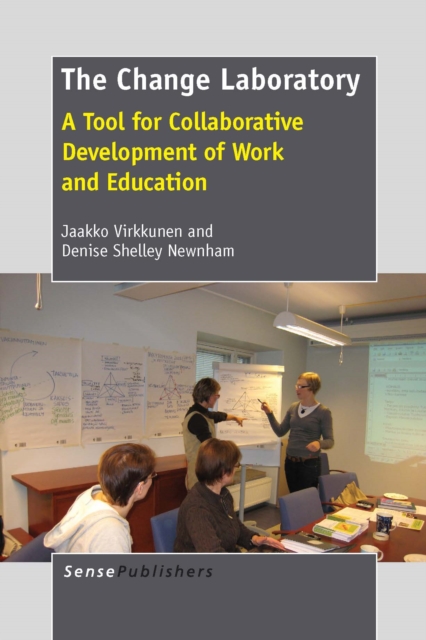
The Change Laboratory
The Change Laboratory is a method for formative intervention in work communities that supports this kind of organizational learning. It is a path breaker in the area of work place learning due to its strong theoretical and research basis and the way that it integrates the change of organizational practices and individuals' learning. It provides a way to develop practitioners' transformative agency and capacity for creating and implementing new conceptual and practical tools for mastering their joint activity.
eBook

Agile Retrospectives, Second Edition
In an uncertain and complex world, learning is more important than ever before.In fact, it can be a competitive advantage.Teams and organizations that learn rapidly deliver greater IPSer value faster and more reliably.Furthermore, those teams are more engaged, more productive, and more satisfied.
eBook

Crisis-Ready Teams
Prepare any team for peak performance when crisis comes. Crisis-Ready Teams explains how any team, and any team leader, in any industry or sector, can prepare in advance to manage crises that suddenly pull people together to address high-magnitude events that could seriously harm their organizations. The book is based on extensive, unprecedented research on crisis team dynamics, key success behaviors, and why some teams perform so much better than others. Leading scholars Mary J. Waller and Seth A. Kaplan recorded and statistically analyzed audio and video recordings of hundreds of hours of crisis simulations involving flight crews, nuclear power plant control rooms, mine rescues, emergency room doctors and nurses, etc. Based on this empirical research, and other academic literature on how teams perform in crises, the authors show how crisis teams and leaders can cement crucial behaviors through attention to team composition and communication, especially in the first few minutes of a crisis. The book provides a valuable framework and research data for scholars studying crises and teams in organizations. It is also appropriate for MBA or executive education instruction on crisis management and leadership.
eBook

Creating Shared Understanding in Heterogeneous Work Groups: Why It Matters and How to Achieve It
Shared understanding has been claimed to be crucial for effective collaboration of researchers and practitioners. Heterogeneity in work groups further strengthens the challenge of integrating understanding among diverse group members. Nevertheless, shared understanding and especially its formation are largely unexplored. After conceptualizing shared understanding, we apply collaboration engineering to derive a validated collaboration process module (compound thinkLet \"MindMerger\") to systematically support heterogeneous work groups in building shared understanding. We conduct a large-scale action research study at a German car manufacturing company. The evaluation indicates that with the use of MindMerger, team learning behaviors occur, and shared understanding of the tasks in complex work processes increases among experienced diverse tool and dye makers. Thus, the validated compound thinkLet MindMerger provides designers of collaborative work practices with a reusable module of activities to solve clarification issues in group work early on. Furthermore, findings from the field study contribute to the conceptualization of the largely unexplored phenomenon of shared understanding and its formation.
Journal Article

Agile Retrospectives: A Practical Guide for Catalyzing Team Learning and Improvement
In an uncertain and complex world, learning is more important than ever before. In fact, it can be a competitive advantage. Teams and organizations that learn rapidly deliver greater customer value faster and more reliably. Furthermore, those teams are more engaged, more productive, and more satisfied. The most effective way to enable teams to learn is by holding regular retrospectives. Unfortunately, many teams only get shallow results from their retrospectives. This book is filled with practical advice, techniques, and real-life examples that will take retrospectives to the next level--whether your team is co-located, hybrid, or remote. This book will help team leads, scrum masters, and coaches engage their teams to learn, improve, and deliver greater results.For nearly two decades, scrum masters, team leads, and coaches have relied on the first edition of Agile Retrospectivesas an essential resource to facilitate better retrospectives. This edition builds on recent research, reflects the authors' experiences over two decades, and shares wisdom gleaned from the global retrospective community. Find practical advice to level up retrospective skills. Address the challenges of remote and hybrid retrospectives head on. Take advantage of expanded guidance on designing and facilitating retrospectives--based on the questions and concerns of practitioners worldwide. Gain insight into choosing a broad or narrow focus for retrospectives. Explore how to use both objective and subjective data to enable more effective conversations. Learn how to make decisions that stick.Understand the importance of psychological safety and how to foster it in retrospectives. Elevate issues and engage managers in systemic change.Learn from many real-life stories that demonstrate how our advice has impacted retrospectives at organizations around the globe. Finally, find a set of recommended flows that reveal the authors' thought process in designing retrospectives for scenarios teams faced in real life.
eBook