
Catalogue Search | MBRL


Are you sure you want to remove the book from the shelf?

{{itemTitle}}
85,023
result(s) for
"Work of art"
Sort by:
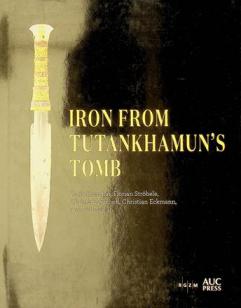
Iron from Tutankhamun's tomb
\"\"A century after Howard Carter and Lord Carnarvon's sensational discovery in 1922 of the virtually intact tomb of Tutankhamun in the Valley of the Kings, the boy-king and his treasures continue to fascinate people all over the world. Although nearly 5,400 objects accompanied the young pharaoh on his journey to the afterlife, many of them have not been investigated in detail. Iron from Tutankhamun's Tomb analyzes nineteen iron artifacts from the tomb in depth for the first time. This group consists of sixteen small iron chisels set into wooden handles, an Eye of Horus amulet, a miniature headrest, and the blade of a richly decorated golden dagger. The most important of these were placed in close proximity to the king's mummy, emphasizing the high value attributed to this rare material in late Bronze Age Egypt-a time when iron smelting was not yet known in the land of the Nile. Written by a research team of archaeologists, scientists, and conservators, this comprehensive study explores in fascinating detail the context and meaning of these artifacts, while establishing for the first time that Tutankhamun's iron came from meteorites. They complete their examination with the results of chemical analyses, offering in the process a rich overall understanding of iron and its significance in ancient Egypt.
Book

Anatomy of the Painting: The Study of the Serbian Orthodox Icon from the Turn of the Seventeenth to the Eighteenth Century
The paper presents the results of the multi-analytical study of the painting on a panel from the icon collection of the Gallery of Matica srpska museum in Novi Sad, Serbia. It is part of the research aiming to set the methodology for the museum’s database on artistic materials and techniques present in the collection. Computer tomography (CT) scanning was used to understand the structure of the wooden panel support. Ultraviolet (UV) and infrared (IC) imaging, as well as visible (VIS) macro photography, were used to study the paint layer, both the original part and restoration treatments, as well as the coat of varnish. Energy dispersive X-ray fluorescence (EDXRF) and Fourier-transform infrared (FTIR) spectroscopy revealed the pigments, binders, and metal leaf, defining the artistic technique. Optical microscopy (OM) and scanning electron microscopy (SEM) with energy-dispersive X-ray spectroscopy (EDS) were used to disclose the stratigraphy and composition of layers in the artwork. The multi-analytical approach confirmed that protein-based binder, gilding, silver leaf, and traditional pigments were used. The data gathered from this research are important for studying the artistic materials and techniques in icon production and defining the methodology setting for the museum collection’s databases as the reference material.
Journal Article

Iron from Tutankhamun's tomb
\"\"A century after Howard Carter and Lord Carnarvon's sensational discovery in 1922 of the virtually intact tomb of Tutankhamun in the Valley of the Kings, the boy-king and his treasures continue to fascinate people all over the world. Although nearly 5,400 objects accompanied the young pharaoh on his journey to the afterlife, many of them have not been investigated in detail. Iron from Tutankhamun's Tomb analyzes nineteen iron artifacts from the tomb in depth for the first time. This group consists of sixteen small iron chisels set into wooden handles, an Eye of Horus amulet, a miniature headrest, and the blade of a richly decorated golden dagger. The most important of these were placed in close proximity to the king's mummy, emphasizing the high value attributed to this rare material in late Bronze Age Egypt-a time when iron smelting was not yet known in the land of the Nile. Written by a research team of archaeologists, scientists, and conservators, this comprehensive study explores in fascinating detail the context and meaning of these artifacts, while establishing for the first time that Tutankhamun's iron came from meteorites. They complete their examination with the results of chemical analyses, offering in the process a rich overall understanding of iron and its significance in ancient Egypt.\"\"-- Provided by publisher.
Book

Talking prices
How do dealers price contemporary art in a world where objective criteria seem absent?Talking Pricesis the first book to examine this question from a sociological perspective. On the basis of a wide range of qualitative and quantitative data, including interviews with art dealers in New York and Amsterdam, Olav Velthuis shows how contemporary art galleries juggle the contradictory logics of art and economics. In doing so, they rely on a highly ritualized business repertoire. For instance, a sharp distinction between a gallery's museumlike front space and its businesslike back space safeguards the separation of art from commerce.
Velthuis shows that prices, far from being abstract numbers, convey rich meanings to trading partners that extend well beyond the works of art. A high price may indicate not only the quality of a work but also the identity of collectors who bought it before the artist's reputation was established. Such meanings are far from unequivocal. For some, a high price may be a symbol of status; for others, it is a symbol of fraud.
Whereas sociological thought has long viewed prices as reducing qualities to quantities, this pathbreaking and engagingly written book reveals the rich world behind these numerical values. Art dealers distinguish different types of prices and attach moral significance to them. Thus the price mechanism constitutes a symbolic system akin to language.
eBook


Improvement of the Non-Destructive Testing of Heritage Mural Paintings Using Stimulated Infrared Thermography and Frequency Image Processing
Within the framework of conservation and assistance for the restoration of cultural property, a method of analysis assistance has been developed to help in the restoration of cultural heritage. Several collaborations have already demonstrated the possibility of defects detection (delamination, salts) in murals paintings using stimulated infrared thermography. One of the difficulties encountered with infrared thermography applied to the analysis of works of art is the remanence of the pictorial layer. This difficulty can sometimes induce detection artifacts and false positives. A method of thermograms post-processing called PPT (pulse phase thermography) is described. The possibilities offered by the PPT in terms of reducing the optical effects associated with the pictorial layer are highlighted first with a simulation, and then through experiments. This approach can significantly improve the study of painted works of art such as wall paintings.
Journal Article

14. The Violin in L’histoire Du Soldat – A Metaphor of the Soul
From 1909, Stravinsky manifested a keen interest in composing theatre music, as proves the many and various dedicated scores. Almost all of his large works, from the ballet The Firebird (1909-10) to the one-act opera buffa Mavra (1921-22), are written for the stage. Stravinsky thus worked most of the time with scenic presentations, with questions on movement, dance, gestures or scenic tableaus. He develops a particular theatrical instinct: his works have a good scenic orientation, and the correlation with modernism and the new currents in theatre aesthetics is more than obvious. Critics have already analysed and discussed the parallels with such contemporary theatrical concepts as by Bertold Brecht (1898-1956) or Vsevolod Meyerhold (1874-1940). After three great ballets, whose new conception by Stravinsky and Sergei Diaghilev (1872-1929) brought about a fundamental revolution in dance aesthetics, the composer crystallises his notion of incidental music. The aesthetics of L’Histoire du soldat, a work “to be read, played and danced”, is opposed to that of Richard Wagner (1813-83) and his Gesamtkunstwerk (a work blending various arts, a total work of art): a new artistic idea, frozen in gesture and movement, compressed, finding its concentrated expression. Stravinsky establishes a brilliant draft of the issues of Opera, to which he would from now on dedicate himself. Stravinsky’s theatre music reveals a tendency to introduce new concepts in the works written between Sacre du printemps and Pulcinella. A quick look at his stage works before and after L’histoire is necessary in order to fit it in his artistic view.
Journal Article

A Delicate Matter
Eighteenth-century France witnessed an unprecedented
proliferation of materially unstable art, from oil paintings that
cracked within years of their creation to enormous pastel portraits
vulnerable to the slightest touch or vibration. In A Delicate
Matter , Oliver Wunsch traces these artistic practices to the
economic and social conditions that enabled them: an ascendant
class of art collectors who embraced fragile objects as a means of
showcasing their disposable wealth.
While studies of Rococo art have traditionally focused on style
and subject matter, this book reveals how the physical construction
of paintings and sculptures was central to the period's
reconceptualization of art. Drawing on sources ranging from
eighteenth-century artists' writings to twenty-first-century
laboratory analyses, Wunsch demonstrates how the technical
practices of eighteenth-century painters and sculptors provoked a
broad transformation in the relationship between art, time, and
money. Delicacy, which began the eighteenth century as a
commodified extension of courtly sociability, was by century's end
reimagined as the irreducible essence of art's autonomous
value.
Innovative and original, A Delicate Matter is an
important intervention in the growing body of scholarship on
durability and conservation in eighteenth-century French art. It
challenges the art historical tendency to see decay as little more
than an impediment to research, instead showing how physical
instability played a critical role in establishing art's meaning
and purpose.
eBook
12. To be, Or Not to be (Informed)? An Unthinkable Choice
The reported research refers to the implications of Information Theory, Information and Communication Technologies and Applied Ontologies, in the educational process, in general, with specific attention to artistic education. We emphasize the major role of the informational methods for knowledge organisation, calling on such concepts as shared use and interoperability of information, in the context of the recent teaching and learning paradigms shift. Three contributions with significant potential are introduced: an extension of the navigationist paradigm and two formal methods, aiming at improved information processing for teaching and learning in the arts, with a new perspective on the definition of the work of art.
Journal Article
Destroyed—Disappeared—Lost—Never Were
To write about works that cannot be sensually perceived involves
considerable strain. Absent the object, art historians must stretch
their methods to, or even past, the breaking point. This concise
volume addresses the problems inherent in studying medieval works
of art, artifacts, and monuments that have disappeared, have been
destroyed, or perhaps never existed in the first place.
The contributors to this volume are confronted with the full
expanse of what they cannot see, handle, or know. Connecting object
histories, the anthropology of images, and historiography, they
seek to understand how people have made sense of the past by
examining objects, images, and architectural and urban spaces.
Intersecting these approaches is a deep current of reflection upon
the theorization of historical analysis and the ways in which the
past is inscribed into layers of evidence that are only ever
revealed in the historian's present tense.
Highly original and theoretically sophisticated, this volume
will stimulate debate among art historians about the critical
practices used to confront the formative presence of destruction,
loss, obscurity, and existential uncertainty within the history of
art and the study of historical material and visual cultures.
In addition to the editors, the contributors to this volume are
Michele Bacci, Claudia Brittenham, Sonja Drimmer, Jaś Elsner, Peter
Geimer, Danielle B. Joyner, Kristopher W. Kersey, Lena Liepe,
Meekyung MacMurdie, and Michelle McCoy.
eBook