
Catalogue Search | MBRL


Are you sure you want to remove the book from the shelf?

{{itemTitle}}
41,608
result(s) for
"Work stress"
Sort by:

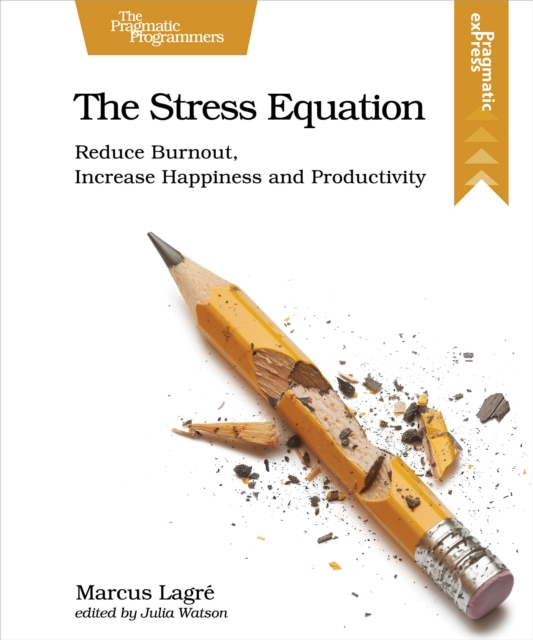
The Stress Equation: Reduce Burnout, Increase Happiness and Productivity
Workplace stress is not the weakness of individuals; it's caused by systemic problems. Armed with the insights in this book, you can identify, analyze, and systematically reduce the factors that lead to poor health, low productivity, and personal burnout. This book gives you a framework for understanding stress, and a vocabulary to make it easier to discuss it among colleagues. Stress can be fixed; find out how.The interviewer asks, \"How well do you cope with stress?\" Your response should be, \"Let's fix your environment so we don't have to.\"Work-related stress is one of the leading causes of mental illness among white-collar workers. It hurts companies, projects, and (most importantly) people! Stress is a burden that's created when teams stop working well. The Stress Equation is a model and a tool to help talk about stress as a systemic issue. By exploring how pressure, complexity, and security interact in software teams, we move focus away from the individual, so that we can talk about stress from a team and organizational perspective. By exploring external factors, we discuss how to solve problems rather than cope with the consequences. Whether you're an individual feeling stressed or a manager who can help, you'll learn the causes of, fixes for, and how to talk about stress. We regulate pressure by how we decide how much work we have to do and when it needs to be finished. Complexity is decided by how we handle our product and organization design. Our security is less about our pay and benefits, and more about the support and trust we feel.Stress should not be a given. Instead, it's a symptom of a diseased organization. With this book, you can begin the healing process.What You Need:No special requirements.
eBook


How to Thrive at Work
Tried and tested strategies to promote mindfulness, motivation and productivity at work, this book helps you face the demands of your job whatever your working environment and whatever stage you are at in your career.
eBook


Work-related stress and future sick leave in a working population seeking care at primary health care centres: a prospective longitudinal study using the WSQ
Background
Studying the relationship between work-related stress and sick leave is valuable in identifying and assessing employees at risk of sick leave, but also in developing interventions and taking actions for workers’ health. The overall aim of this study was to analyse the association between work-related stress, measured with the work stress questionnaire (WSQ), and registered sick leave in a working population seeking care at primary health care centres in Sweden.
Methods
A prospective longitudinal study was performed with 232 employed patients aged 18–64 years seeking care for mental and/or physical health complaints at seven primary health care centres. Bivariate logistic regression analysis adjusted for educational level, occupational class and marital status was performed using questionnaire data on work-related stress and sociodemographic factors collected between May 2015 until January 2016 together with registered sick leave data from a national database.
Results
High stress due to indistinct organization and conflicts was reported by 21% (
n
= 49), while 45% (
n
= 105) reported high stress due to individual demands and commitment. Thirty-six percent were on sick leave for 15 days or more during 12 months after baseline. The odds of being on registered sick leave during this period was approximately twice as high for patients perceiving high stress due to indistinct organization and conflicts (OR 2.25, 95% CI 1.18;4.26), high stress due to individual demands and commitment (OR 2.21, 95% CI 1.28;3.82), low influence at work (OR 2.07, 95% CI 1.20;3.57), or high interference between work and leisure time (OR 2.19, 95% CI 1.27;3.80). Perceiving high stress due to both indistinct organization and conflicts as well as individual demands and commitment quadrupled the odds of sick leave, OR 4.15 (95% CI 1.84; 9.38).
Conclusions
Work-related stress and sick leave were prevalent among the patients. Perceiving one or more of the work-related stressors and stress increased the odds of registered sick leave between two to four times. Hence, to capture the dynamic interaction between the individual and the work environment, a wide spectrum of factors must be considered. In addition, primary health care could be a suitable arena for preventing sick leave due to work-related stress.
Trial registration
ClinicalTrials.gov. Identifier:
NCT02480855
. Registered 20 May 2015.
Journal Article


Role of yoga in managing the consequences of work stress—a review
The purpose of this study is to systematically review the literature on the role of yoga in managing the consequences of work stress to examine the current body of knowledge in this field and to provide directions for future research in this domain. A comprehensive literature search of 14 databases using 12 different search term combinations in the area of ‘yoga and work stress’ was carried out till the period January 2022 following the PRISMA guidelines to select the relevant English-language peer-reviewed SCImago Ranked articles for review. Two broad classification areas were considered to understand the research question of interest in this study: (i) consequences of work stress [which includes—(a) behavioural; (b) physical; and (c) psychological] and; (ii) schools of thought in yoga for work stress management [which includes—(a) Hatha yoga (HY); (b) Vini yoga (VY); (c) Dru yoga (DY); (d) Integrated yoga (IY); (e) Kundalini yoga (KUY); (f) Kripalu yoga (KRY); (g) Iyengar yoga; (h) Ashtanga yoga (AY); (i) Power yoga (PY); and (j) Yoga (General)]. The main contribution of this study is that it is the first of its kind comprehensive review in the area of ‘yoga and its role in managing the consequences of work stress’ collating the dispersed knowledge in this area by indicating the various understudied stand-alone and combined consequences of work stress and the less researched schools of thought in yoga and yoga practices administered to manage these consequences of work stress, to provide promising avenues for further examination for the development of this research field.
Journal Article

How we work : live your purpose, reclaim your sanity, and embrace the daily grind
\"A practical guide to thriving at work, based on a popular course offered at the Standford Graduate School of Business\"--Dust jacket flap.
Book

Associations between Coping Profile and Work Performance in a Cohort of Japanese Employees
This study aimed to investigate the effects of coping profiles on work performance. Data were collected during a 2-year prospective cohort study of 1359 employees in Japan. Participants completed a self-administered questionnaire in 2018 (T1; baseline) and again in 2020 (T2; followup; followup rate: 69.8%) to enable the assessment of work performance, perceived stress, and stress coping profiles at T1 and T2. Multivariate logistic regression models and causal mediation analysis were performed to identify the effects of coping profiles on work performance. Covariates included age, sex, company, job type, employment status, working hours, holidays, and lifestyle behaviors (e.g., smoking, sleep duration). A dysfunctional coping profile (β = −1.17 [95% CI, −2.28 to −0.06], p = 0.039) was negatively associated with work performance. Coping profiles of planning (β = 0.86 [95% CI, 0.07–1.66]) and self-blame (β = −1.33 [95% CI, −1.96 to −0.70], p < 0.001) were significantly associated with work performance. Dysfunctional coping, specifically, self-blame (β = −1.22 [95% CI, −1.83 to −0.61]), mediated the association between stress and work performance. Thus, some coping profiles may lead to an increase or decrease in work performance. The possible impact of coping strategies on workers’ productivity requires further exploration. Furthermore, information on effective coping profiles should be incorporated into occupational health examinations.
Journal Article