
Catalogue Search | MBRL


Are you sure you want to remove the book from the shelf?

{{itemTitle}}
153,155
result(s) for
"World History"
Sort by:

History of the world map by map
\"A uniquely illustrated guide to the history of our world Witness our incredible human story unfold - from the very first people in Africa to the collapse of Communism and beyond - exquisitely charted map by map. Come on a journey through global history, told in more than 130 specially made maps that each offer a window on a key event. Step into the action and follow Ghengis Khan sweeping through China, Napoleon conquering Europe, or two world wars raging across the globe. See empires rise and fall - from the Egyptians and the Aztecs to the British Empire and the Soviet Union. History of the World Map by Map also explains how elements of civilization, such as writing, printing, and tool-making, came into being and spread from one country to another. It tells of the rise of the world's great religions and of human endeavour such as the voyages of early explorers. It charts stories of adversity such as the abolition of slavery, and shows how people have always migrated for a better life, from the very first humans moving across Africa, to millions of 19th-century Europeans crossing the Atlantic in search of the American dream. Endorsed by renowned broadcaster, historian, and author Peter Snow, this is an unmissable visual guide to ancient, medieval, and modern history in all corners of the world. This updated edition contains eight pages of brand new maps, and has been reviewed and updated for diversity and inclusion\"--Publisher's description.
BOOK

The Eastern Mediterranean and the making of global radicalism, 1860-1914
In this groundbreaking book, Ilham Khuri-Makdisi establishes the existence of a special radical trajectory spanning four continents and linking Beirut, Cairo, and Alexandria between 1860 and 1914. She shows that socialist and anarchist ideas were regularly discussed, disseminated, and reworked among intellectuals, workers, dramatists, Egyptians, Ottoman Syrians, ethnic Italians, Greeks, and many others in these cities. In situating the Middle East within the context of world history, Khuri-Makdisi challenges nationalist and elite narratives of Mediterranean and Middle Eastern history as well as Eurocentric ideas about global radical movements. The book demonstrates that these radical trajectories played a fundamental role in shaping societies throughout the world and offers a powerful rethinking of Ottoman intellectual and social history.
eBook


The great interwar crisis and the collapse of globalization
Challenging the standard narrative of Interwar International History, this account establishes the causal relationship between the global political and economic crises of the period, and offers a radically new look at the role of ideology, racism and the leading liberal powers in the events between the First and Second World Wars.
eBook

History of the world map by map
More than 140 detailed maps tell the story of pivotal episodes in world history, from the first human migrations out of Africa to the space race. Custom regional and global maps present the history of the world in action, charting how events traced patterns on land and ocean--patterns of exploration, discovery, or conquest that created empires, colonies, or theaters of war. Thoughtful organization of information will help you follow the story of civilizations through ancient, medieval, and modern times. But not every page is full of maps. At key points in History Map by Map, broad, sweeping introductions provide a chance to step back and look at entire periods, such as World War II, or to explore overarching themes, such as the Industrial Revolution. Picture spreads, meanwhile, focus on epoch-defining moments or developments, such as fascism and communism, and the invention of printing.
Book

The Eastern Origins of Western Civilisation
John Hobson challenges the ethnocentric bias of mainstream accounts of the Rise of the West. It is often assumed that since Ancient Greek times Europeans have pioneered their own development, and that the East has been a passive by-stander in the story of progressive world history. Hobson argues that there were two processes that enabled the Rise of the 'Oriental West'. First, each major developmental turning point in Europe was informed in large part by the assimilation of Eastern inventions (e.g. ideas, technologies and institutions) which diffused from the more advanced East across the Eastern-led global economy between 500–1800. Second, the construction of European identity after 1453 led to imperialism, through which Europeans appropriated many Eastern resources (land, labour and markets). Hobson's book thus propels the hitherto marginalised Eastern peoples to the forefront of the story of progress in world history.
eBook

100 events that made history : memorable moments that shaped the modern world
This book features fun, informative text and illustrations about one hundred events from history that shaped the modern world.
BOOK

The Black campus movement : Black students and the racial reconstitution of higher education, 1965-1972
This book provides the first national study of this intense and challenging struggle which disrupted and refashioned institutions in almost every state. It also illuminates the context for one of the most transformative educational movements in American history through a history of black higher education and black student activism before 1965.
eBook

The Oxford handbook of world history
This is a collection of 32 essays by a stellar collection of distinguished scholars in the field of world history, providing a comprehensive guide to current scholarship and current thinking in one of the most dynamic fields of historical scholarship.
Book
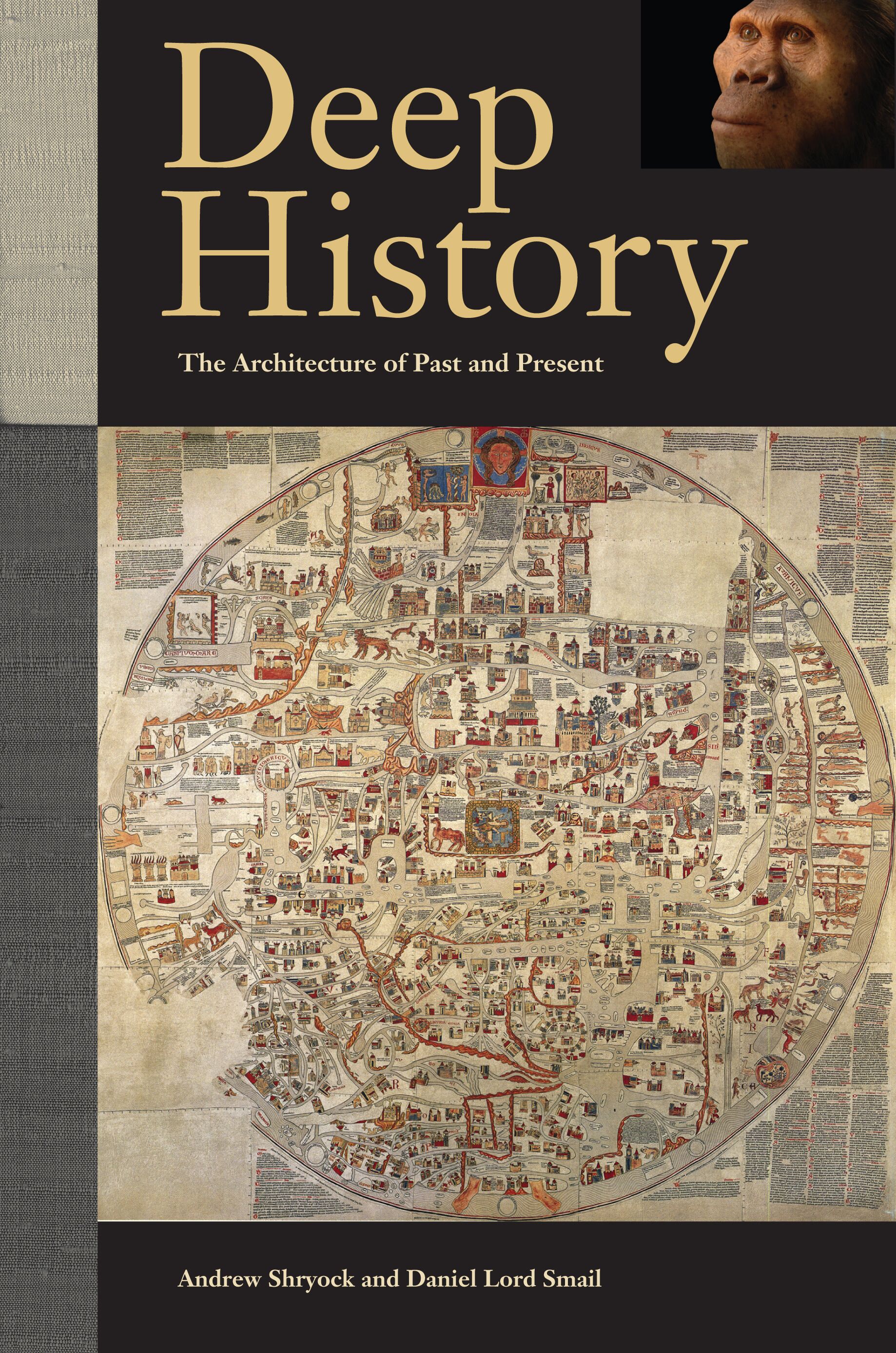
Deep history
Humans have always been interested in their origins, but historians have been reluctant to write about the long stretches of time before the invention of writing. In fact, the deep past was left out of most historical writing almost as soon as it was discovered. This breakthrough book, as important for readers interested in the present as in the past,brings science into history to offer a dazzling new vision of humanity across time. Team-written by leading experts in a variety of fields, it maps events, cultures, and eras across millions of years to present a new scale for understanding the human body, energy and ecosystems, language, food, kinship, migration, and more. Combining cutting-edge social and evolutionary theory with the latest discoveries about human genes, brains, and material culture, Deep History invites scholars and general readers alike to explore the dynamic of connectedness that spans all of human history. With Timothy Earle, Gillian Feeley-Harnik, Felipe Fernández-Armesto, Clive Gamble, April McMahon, John C. Mitani, Hendrik Poinar, Mary C. Stiner, and Thomas R. Trautmann
eBook