
Catalogue Search | MBRL


Are you sure you want to remove the book from the shelf?

{{itemTitle}}
2,677
result(s) for
"World Trade Organization Developing countries"
Sort by:
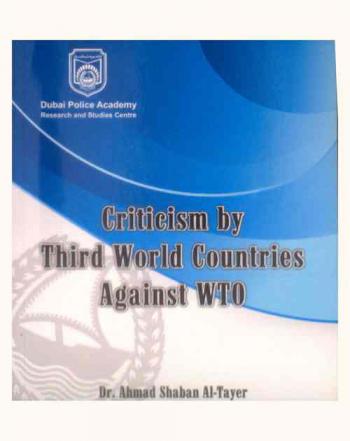
Criticism by third world countries against WTO
This research discusses a short background of the WTO. It provides insights from those who believe that the organization is not to be blamed solely for creating umbalanced situation between the member states of the WTO. The theme in this research includes main topics related to the legal framework of the WTO as one of the important international organizations. The aspects of this theme deal with the rules-based system, legal and political encroachment, overregulation, andthe dispute settlement mechanism. Finally, the research gives out severalrecommendations to the developing countries in relation to free trade.
Book

International Trade and Developing Countries
A keen analysis of how and why countries bargain together in groups in world affairs, and why such coalitions are crucial to individual developing nations. It also reveals the effects these negotiating blocs are having on world affairs.
Successful coalition building has proven to be a difficult and expensive process. Allies are often not obvious and need to be carefully identified. Large numbers do not necessarily entail a proportionate increase in influence. And the weak have the choice of teaming up against or jumping on the bandwagon with the strong. Even after it has been organised, collective action entails costs of many kinds.
This book investigates the relevance and workability of coalitions as instruments of bargaining power for the weak. More specifically, this analyzes the coalition strategies of developing countries at the inter-state level, particularly in the context of international trade.
Given the nature of this enquiry, this new study uses theoretical and empirical methods to complement each other. The theoretical approach draws from a plethora of writings: formal theories of clubs and coalitions, theories of domestic political economy and theories of international relations. The empirical analysis of comparable coalitions becomes necessary to assist in this theorising, so the greater part of the book focuses mainly (though not exclusively) on coalitions involving developing countries on the issue-area of trade in services. Through the case-studies of the Uruguay Round and an analytical overview of more recent coalitions, this text fills an important gap in the literature of international political economy and international relations where most GATT/WTO-based coalitions have eluded record.
This book will be of great interest to all students of international relations, politics and globalization.
eBook


Self-Enforcing Trade: Developing Countries and WTO Dispute Settlement
The World Trade Organization -backbone of today's international commercial relations -requires member countries toself-enforceexporters' access to foreign markets. Its dispute settlement system is the crown jewel of the international trading system, but its benefits still fall disproportionately to wealthy nations. Could the system be doing more on behalf of developing countries? InSelf-Enforcing Trade, Chad P. Bown explains why the answer is an emphatic \"yes.\"
Bown argues that as poor countries look to the benefits promised by globalization as part of their overall development strategy, they increasingly require access to the WTO dispute settlement process to protect their trading interests. Unfortunately, the practical realities of WTO dispute settlement as it currently stands create a number of hurdles that prevent developing countries from enjoying the trading system's full benefits. This book confronts these challenges.
Self-Enforcing Tradeexamines the WTO's \"extended litigation process,\" highlighting the tangle of international economics, law, and politics that participants must master. He identifies the costs that prevent developing countries from disentangling the self-enforcement process and fully using the WTO system as part of their growth strategies. Bown assesses recent efforts to help developing countries overcome those costs, including the role of the Advisory Centre on WTO Law and development focused NGOs. Bown's proposed Institute for Assessing WTO Commitments tackles the largest remaining obstacle currently limiting developing country engagement in the WTO's selfenforcement process -a problematic lack of information, monitoring, and surveillance.
eBook


Poverty and the WTO : impacts of the Doha development agenda
There is considerable debate about the poverty impacts of the Doha Development Agenda currently being negotiated under the auspices of the WTO. This book brings the best scientific methods to bear on this question, taking into account the specific characteristics embodied in the Doha Development Agenda.
eBook

Is the World Trade Organization attractive enough for emerging economies? : critical essays on the multilateral trading system
\"Do countries benefit from their Membership in the WTO? This book addresses this question and examines the role of the WTO in the process of economic development of emerging markets and other developing countries\"--Provided by publisher.
BOOK

Making Global Trade Governance Work for Development
Discussion of the governance of global trade and the multilateral trading system is too often dominated by developed-country scholars and opinion-makers, with inadequate attention given to developing country perspectives. Making Global Trade Governance Work for Development gathers a diversity of developing country views on how to improve the governance of global trade and the WTO to better advance sustainable development and respond to the needs of developing countries. With contributions by senior scholars, commentators and practitioners, the essays combine new, empirically-grounded research with practical insights about the trade policy-making process. They consider the specific governance issues of interest to developing countries and acknowledge the changing dynamics in the global economy and in trade decision-making.
eBook

Trade costs and inclusive growth : case studies presented by WTO chair-holders
\"Trade costs and inclusive growth looks at how implementation of the WTO's Trade Facilitation Agreement (TFA) can help to reduce trade costs and promote growth. The publication brings together contributions from ten participants in the WTO Chairs Programme, which supports trade-related activities by academic institutions in developing countries. The book looks into how the Aid for Trade initiative can assist with implementing the TFA, the importance of mainstreaming trade into national development strategies, and the potential impact of the TFA in various regions\"--Publisher's description.
Book
