
Catalogue Search | MBRL


Are you sure you want to remove the book from the shelf?

{{itemTitle}}
10
result(s) for
"World War, 1914-1918 Campaigns Arabian Peninsula"
Sort by:

The Egyptian Labor Corps
During World War I, the British Empire enlisted half a million young men, predominantly from the countryside of Egypt, in the Egyptian Labor Corps (ELC) and put them to work handling military logistics in Europe and the Middle East. British authorities reneged on their promise not to draw Egyptians into the war, and, as Kyle Anderson shows, the ELC was seen by many in Egypt as a form of slavery. The Egyptian Labor Corps tells the forgotten story of these young men, culminating in the essential part they came to play in the 1919 Egyptian Revolution.Combining sources from archives in four countries, Anderson explores Britain’s role in Egypt during this period and how the ELC came to be, as well as the experiences and hardships these men endured. As he examines the ways they coped—through music, theater, drugs, religion, strikes, and mutiny—he illustrates how Egyptian nationalists, seeing their countrymen in a state akin to slavery, began to grasp that they had been racialized as “people of color.” Documenting the history of the ELC and its work during the First World War, The Egyptian Labor Corps also provides a fascinating reinterpretation of the 1919 revolution through the lens of critical race theory.
eBook


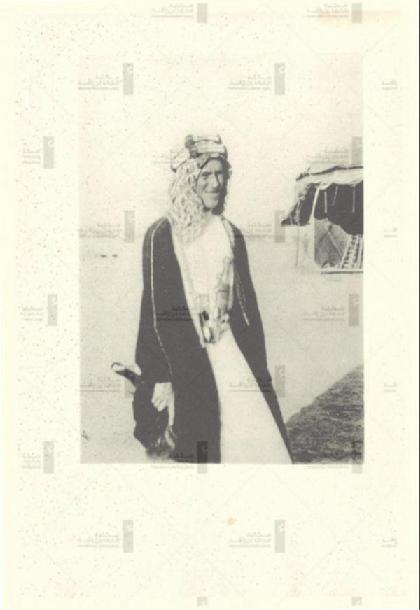


Behind the Lawrence Legend : The Forgotten Few Who Shaped the Arab Revolt
T. E. Lawrence became world-famous as \"Lawrence of Arabia\" after helping Sherif Hussein of Mecca gain independence from Turkey during the Arab Revolt of 1916-18. His achievements, however, would have been impossible without the unsung efforts of a forgotten band of fellow officers and spies. This groundbreaking account by Philip Walker interweaves the compelling stories of Colonel Cyril Wilson and a colorful supporting cast with the narrative of Lawrence and the desert campaign. These men's lost tales provide a remarkable and fresh perspective on Lawrence and the Arab Revolt. While Lawrence and others blew up trains in the desert, Wilson and his men carried out their shadowy intelligence and diplomatic work. His deputies rooted out anti-British soldiers who were trying to sabotage the revolt. Meanwhile, Lieutenant Lionel Gray, a cipher officer, provided a gateway into unknown aspects of the revolt through his previously unpublished photographs and eyewitness writings. Wilson's crucial influence underpinned all these missions and steadied the revolt on a number of occasions when it could have collapsed. Without Wilson and his circle there would have been no \"Lawrence of Arabia.\" Wilson's band mostly fell through the cracks of history into obscurity. Behind the Lawrence Legend reveals their vital impact and puts Lawrence's efforts into context, helping to set the record straight for one of the most beguiling and iconic characters of the twentieth century.
Book