
Catalogue Search | MBRL


Are you sure you want to remove the book from the shelf?

{{itemTitle}}
41
result(s) for
"World War, 1939-1945 Jews Fiction."
Sort by:

Birthright : a novel
The dramatic fight for modern Jewish statehood forms the backdrop of this second book in the Heritage trilogy, a series of epic political thrillers set in Jerusalem.
Book

Remembering Cold Days
Between three and four thousand civilians, primarily Serbian and Jewish, were murdered in the Novi Sad massacre of 1942. Hungarian soldiers and gendarmes carried out the crime in the city and surrounding areas, in territory Hungary occupied after the German attack on Yugoslavia. The perpetrators believed their acts to be a contribution to a new order in Europe, and as a means to ethnically cleanse the occupied lands.
In marked contrast to other massacres, the Horthy regime investigated the incident and tried and convicted the commanding officers in 1943-44. Other trials would follow. During the 1960s, a novel and film telling the story of the massacre sparked the first public open debate about the Hungarian Holocaust.
This book examines public contentions over the Novi Sad massacre from its inception in 1942 until the final trial in 2011. It demonstrates how attitudes changed over time toward this war crime and the Holocaust through different political regimes and in Hungarian society. The book also views how the larger European context influenced Hungarian debates, and how Yugoslavia dealt with memories of the massacre.
eBook


Père Marie-Benoît and Jewish Rescue
Susan Zuccotti narrates the life and work of Père Marie-Benoît, a courageous French Capuchin priest who risked everything to hide Jews in France and Italy during the Holocaust. Who was this extraordinary priest and how did he become adept at hiding Jews, providing them with false papers, and helping them to elude their persecutors? From monasteries first in Marseille and later in Rome, Père Marie-Benoît worked with Jewish co-conspirators to build remarkably effective Jewish-Christian rescue networks. Acting independently without Vatican support but with help from some priests, nuns, and local citizens, he and his friends persisted in their clandestine work until the Allies liberated Rome. After the conflict, Père Marie-Benoît maintained his wartime Jewish friendships and devoted the rest of his life to Jewish Christian reconciliation. Papal officials viewed both activities unfavorably until after the Second Vatican Council (Vatican II), 1962-1965.
To tell this remarkable tale, in addition to her research in French and Italian archives, Zuccotti personally interviewed Père Marie-Benoît, his family, Jewish rescuers with whom he worked, and survivors who owed their lives to his network.
eBook
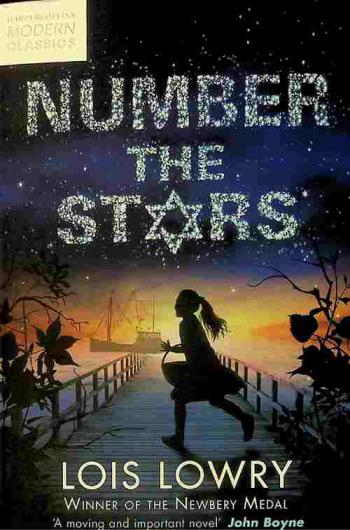
Number the stars
\"How brave are you, little Annemarie?\" It is 1943 and for ten-year-old Annemarie Johansen life in Copenhagen is still relatively normal - school, family, sharing fairy stories with her little sister. But there are dangers and worries too - food shortages and curfews, and the constant presence of Nazi soldiers.
Book

The First to be Destroyed
The Jewish community of the city of Kleczew came into existence in the sixteenth century. It remained large and strong throughout the next four hundred years, and in the eighteenth and nineteenth centuries it constituted 40-60% of the total population. The German army entered Kleczew on September 15, 1939, shortly after the outbreak of World War II. The communities of Kleczew and the vicinity were among the first Jewish collectives in Europe to be totally destroyed. The events presented in this book reveal that the organization of deportations and the methods of mass murder conducted in this district, by Kommando Lange, served as a model that would be applied later in the death camps during the mass extermination of Polish and European Jewry. If so, it was in the woods near Kleczew that the “Final Solution of the Jewish Question” began.
eBook

Twenty and ten
Twenty school children hide ten Jewish children from the Nazis occupying France during World War II.
Book

Representing the Holocaust in Children's Literature
First Published in 2003. Routledge is an imprint of Taylor & Francis, an informa company.
Lydia Kokkola is a Collegium Researcher at the Turku Institute for Advanced Studies(TIAS) University of Turku, Finland. She is also Adjunct Professor of Children's Literature in English at Åbo Akademi University, Finland.
\"Kokkola is committed to ethical criticism. She asks repeatedly how literature affects children’s thinking and beliefs about the Holocaust and fascism. This is a welcome approach, which is at its best, in my view...when it urges us to think seriously about the profound impact that literature can have on young readers...Kokkola combines theory and criticism of children’s literature with Holocaust studies in productive and knowledgeable ways.\" -- The Lion and the Unicorn
\" Lydia Kokkola's study...is keenly narratological, and she often draws on formalist and structuralist approaches as she explicates texts. Like many before her, she is concerned with narratives that simultaneously reveal and conceal as they deal with horrific events, but the kinds of questions she asks focus specifically on how information can be withheld of divulged...Kokkola's approach also brings new dimensions to previous discussions of children's literature and the Holocaust.\" -- Prooftexts: A Journal of Jewish Literary History
eBook
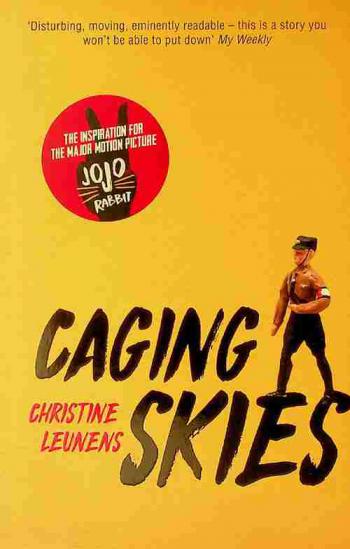
Caging skies
This extraordinary novel is seen through the eyes of Johannes, an avid member of the Hitler Youth in the 1940s. After he is severely injured in a raid, he discovers his parents are hiding a Jewish girl called Elsa behind a false wall in their large house in Vienna.His initial horror turns to interest, then love and obsession. After the disappearance of his parents, Johannes finds he is the only one aware of Elsa's existence in the house, the only one responsible for her survival. Both manipulating and manipulated, Johannes dreads the end of the war: with it will come the prospect of losing Elsa and their relationship, which ranges through passion and obsession, dependence and indifference, love and hate.

The Final Solution
The Final Solution clarifies the key questions surrounding the attempt by the Nazis to exterminate the Jews. Drawing on important new research, these authoritative essays focus on the preconditions and antecedents for the 'Final Solution' and examine the immediate origins of the genocidal decision.
Contributors also examine the responses of peoples and governments in Germany, occupied Europe, the USA and among Jews worldwide. The controversial conversions of this study challenge many of our accepted ideas about the period.
eBook