
Catalogue Search | MBRL


Are you sure you want to remove the book from the shelf?

{{itemTitle}}
155
result(s) for
"World War, 1939-1945 Motion pictures and the war."
Sort by:

When eagles dared : the filmgoers' history of World War II
When Eagles Dared tells the stories of the historical events of World War II and the films that have depicted these events on cinema screens, presenting a guide to history through cinema that compares the cinematic myth with the historical reality. Illustrated with rare posters and stills, it gives a unique view of this war through the lenses of over 50 diverse films including Downfall, Patton, Tora! Tora! Tora!, Anzio, The Thin Red Line, Letters from Iwo Jima, Stalingrad, Battle of the Bulge, Cross of Iron, and A Bridge Too Far. Events discussed include the war in the skies (Battle of Britain and The Dambusters), the sea (Sink the Bismarck!), and the North African desert (The Battle of El Alamein and Tobruk). There are \"special mission\" movies, including Where Eagles Dare and Inglourious Basterds, classic tales of ingenuity (The Great Escape), and human endurance (The Bridge on the River Kwai).
Book

Real war vs. reel war
World War II has been the subject of hundreds, if not thousands, of films produced in the United States alone. From training camp scenes in See Here, Private Hargrove to images of brutal combat in Saving Private Ryan, filmmakers have been tasked with replicating pivotal moments in the war. But sometimes story lines and dramatic manipulations of audiences have led to less-than-faithful re-creations of what men and women have endured during times of conflict. In Real War vs. Reel War: Veterans, Hollywood, and World WarII, Suzanne Broderick looks at how on-screen portrayals hold up against wartime experiences of actual combatants—soldiers, sailors, pilots, code talkers, and prisoners of war. In addition, two women—real-life \"Rosie the Riveters\"—compare depictions of the homefront with their experiences during the war. These members of the Greatest Generation share personal memories and offer commentary on the films that have sought to capture what it was really like. Among the films discussed in this book are such classics as Battleground, Twelve O'Clock High, The Best Years of Our Lives, Since You Went Away, The Sands of Iwo Jima, and The Great Escape, as well as more contemporary films such as Swing Shift and Windtalkers. By providing a \"human\" look at the military, the war effort, and how such people and events were depicted on screen, Real War vs. Reel War makes a unique contribution to the conversation about Hollywood's role in shaping history. This book will appeal to historians, cultural critics, and anyone interested in war cinema.
eBook


Hollywood Enlists!
Frequently referred to as “the Greatest Generation,” Americans of the World War II era were influenced by Hollywood’s depictions of their nation, its role in world affairs, and the virtue of its involvement in the war. Stories of the bravery and heroism of the American military—as well as the moral and political threat posed by the enemy—filled movie screens across the country to garner passionate support for wartime policies. In Hollywood Enlists! Propaganda Films of World War II, Ralph Donald explores how the studios supported the war effort and helped shape the attitudes of an entire generation. Through films the studios appealed to the public’s sense of nationalism, demonized the enemy, and stressed that wartime sacrifices would result in triumph. The author contends that American films of the period used sophisticated, but often overlooked, strategies of propaganda to ideologically unite the country. While these strategies have long been associated with political speeches and writings during the war, little in-depth consideration has been given to their use in the era’s cinema. By examining major motion pictures—including Casablanca, The Flying Tigers, Mrs. Miniver, Sergeant York, They Were Expendable, and many others—Donald illustrates how various propaganda techniques aligned the nation’s entertainment with government aims. Hollywood Enlists! will appeal to readers with interests in war films and motion picture history, as well as politics and social history.
eBook

Front lines of community : Hollywood between war and democracy
Based on the premise that a society?s sense of commonality depends upon media practices, this study examines how Hollywood responded to the crisis of democracy during the Second World War by creating a new genre - the war film. Developing an affective theory of genre cinema, the study?s focus on the sense of commonality offers a new characterization of the relationship between politics and poetics. It shows how the diverse ramifications of genre poetics can be explored as a network of experiential modalities that make history graspable as a continuous process of delineating the limits of community.
Book

Allied Encounters
Analyzes Anglo-American and Italian literary, cinematic and military representations of World War II Italy in order to trace, critique and move beyond the gendered paradigm of redemption that has conditioned understandings of the Allied-Italian encounter.
eBook

Revisiting the French Resistance in cinema, literature, bande dessinée, and television (1942-2012)
\"Explores the fine line between fiction and history and considers how France's cultural production has contributed to shaping the image of the 2French Resistance\"-- Provided by publisher.
Book
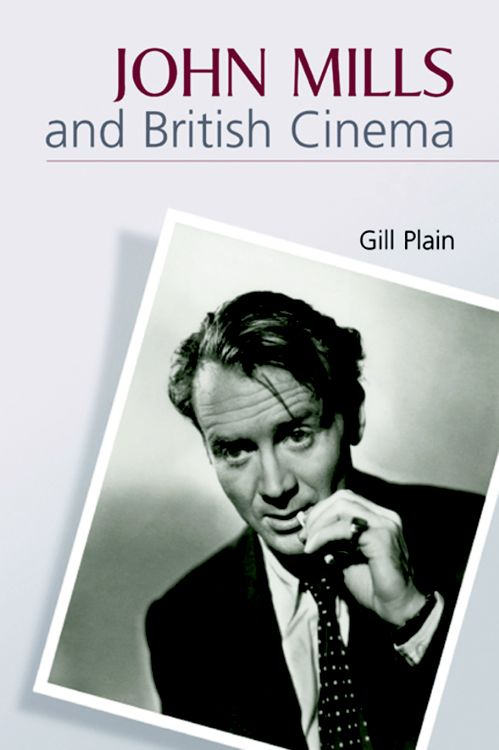
John Mills and British cinema
This book asks how was it possible for an actor to embody national identity and, by exploring the cultural contexts in which Mills and the nation became synonymous, the book offers a new perspective on 40 years of cinema and social change.
eBook


War pictures : cinema, violence, and style in Britain, 1939-1945
In this original and engaging work, author Kent Puckett looks at how British filmmakers imagined, saw, and sought to represent its war during wartime through film. The Second World War posed unique representational challenges to Britain’s filmmakers. Because of its logistical enormity, the unprecedented scope of its destruction, its conceptual status as total, and the way it affected everyday life through aerial bombing, blackouts, rationing, and the demands of total mobilization, World War II created new, critical opportunities for cinematic representation.
Beginning with a close and critical analysis of Britain’s cultural scene, War Pictures examines where the historiography of war, the philosophy of violence, and aesthetics come together. Focusing on three films made in Britain during the second half of the Second World War—Michael Powell and Emeric Pressburger’s The Life and Death of Colonel Blimp (1943), Lawrence Olivier’s Henry V (1944), and David Lean’s Brief Encounter (1945)—Puckett treats these movies as objects of considerable historical interest but also as works that exploit the full resources of cinematic technique to engage with the idea, experience, and political complexity of war. By examining how cinema functioned as propaganda, criticism, and a form of self-analysis, War Pictures reveals how British filmmakers, writers, critics, and politicians understood the nature and consequence of total war as it related to ideas about freedom and security, national character, and the daunting persistence of human violence. While Powell and Pressburger, Olivier, and Lean developed deeply self-conscious wartime films, their specific and strategic use of cinematic eccentricity was an aesthetic response to broader contradictions that characterized the homefront in Britain between 1939 and 1945. This stylistic eccentricity shaped British thinking about war, violence, and commitment as well as both an answer to and an expression of a more general violence.
Although War Pictures focuses on a particularly intense moment in time, Puckett uses that particularity to make a larger argument about the pressure that war puts on aesthetic representation, past and present. Through cinema, Britain grappled with the paradoxical notion that, in order to preserve its character, it had not only to fight and to win but also to abandon exactly those old decencies, those “sporting-club rules,” that it sought also to protect.
eBook