
Catalogue Search | MBRL


Are you sure you want to remove the book from the shelf?

{{itemTitle}}
67
result(s) for
"World War, 1939-1945 Political aspects United States."
Sort by:

Allies in memory : World War II and the politics of American commemoration in Europe, c. 1941-2001
\"Amidst the ruins of postwar Europe, and just as the Cold War dawned, many new memorials were dedicated to those Americans who had fought and fallen for freedom. Some of these monuments, plaques, stained-glass windows and other commemorative signposts were established by agents of the US government, partly in the service of transatlantic diplomacy; some were built by American veterans' groups mourning lost comrades; and some were provided by grateful and grieving European communities. As the war receded, Europe also became the site for other forms of American commemoration: from the sombre and solemn battlefield pilgrimages of veterans, to the political theatre of Presidents, to the production and consumption of commemorative souvenirs. With a specific focus on processes and practices in two distinct regions of Europe--Normandy and East Anglia--Sam Edwards tells a story of postwar Euro-American cultural contact, and of the acts of transatlantic commemoration that this bequeathed\"--From publisher's website.
Book
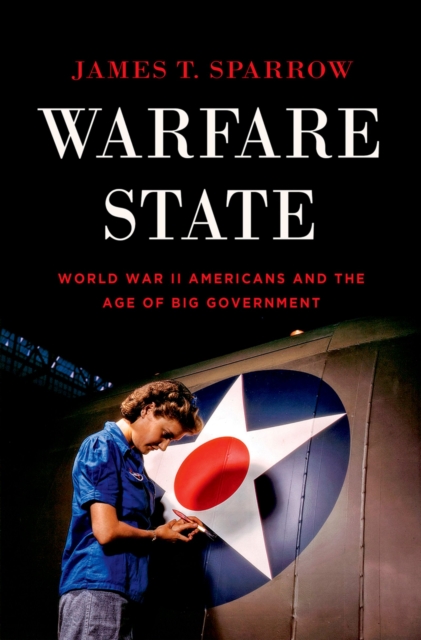
Warfare state : World War II Americans and the age of big government
Warfare State shows how the federal government, in the course of World War II, vastly expanded its influence over American society. Equally important, it looks at how and why Americans adapted to this expansion of authority. Through mass participation in military service, war work, rationing, income taxation and ownership of the national debt in the form of war bonds, ordinary Americans learned to live with the warfare state. They accepted these new obligations because the government encouraged all citizens to think of themselves as personally connected to the battle front.
eBook


Race for empire
Race for Empire offers a profound and challenging reinterpretation of nationalism, racism, and wartime mobilization during the Asia-Pacific war. In parallel case studies—of Japanese Americans mobilized to serve in the United States Army and of Koreans recruited or drafted into the Japanese military—T. Fujitani examines the U.S. and Japanese empires as they struggled to manage racialized populations while waging total war. Fujitani probes governmental policies and analyzes representations of these soldiers—on film, in literature, and in archival documents—to reveal how characteristics of racism, nationalism, capitalism, gender politics, and the family changed on both sides. He demonstrates that the United States and Japan became increasingly alike over the course of the war, perhaps most tellingly in their common attempts to disavow racism even as they reproduced it in new ways and forms.
eBook

War, the American state, and politics since 1898
\"This book examines major foreign conflicts from the Spanish-American War through Vietnam, arguing that international conflicts have strong effects on American political parties, elections, state development, and policymaking. First, major wars expose and highlight problems requiring governmental solutions or necessitating emergency action. Second, despite well-known curtailments of civil liberties, wars often enhance democracy by drawing attention to the contributions of previously marginalized groups and facilitating the extension of fuller citizenship rights to them. Finally, wars affect the party system. Foreign conflicts create crises - many of which are unanticipated - that require immediate attention, supplant prior issues on the policy agenda, and engender shifts in party ideology. These new issues and redefinitions of party ideology frequently influence elections by shaping both elite and mass behavior\"-- Provided by publisher.
Book

Deceit on the Road to War
In Deceit on the Road to War , John M. Schuessler
examines how U.S. presidents have deceived the American public
about fundamental decisions of war and peace. Deception has been
deliberate, he suggests, as presidents have sought to shift blame
for war onto others in some cases and oversell its benefits in
others. Such deceit is a natural outgrowth of the democratic
process, in Schuessler's view, because elected leaders have
powerful incentives to maximize domestic support for war and retain
considerable ability to manipulate domestic audiences. They can
exploit information and propaganda advantages to frame issues in
misleading ways, cherry-pick supporting evidence, suppress damaging
revelations, and otherwise skew the public debate to their benefit.
These tactics are particularly effective before the outbreak of
war, when the information gap between leaders and the public is
greatest.
When resorting to deception, leaders take a calculated risk that
the outcome of war will be favorable, expecting the public to adopt
a forgiving attitude after victory is secured. The three cases
featured in the book-Franklin Roosevelt and World War II, Lyndon
Johnson and the Vietnam War, and George W. Bush and the Iraq
War-test these claims. Schuessler concludes that democracies are
not as constrained in their ability to go to war as we might
believe and that deception cannot be ruled out in all cases as
contrary to the national interest.
In Deceit on the Road to War , John M. Schuessler
examines how U.S. presidents have deceived the American public
about fundamental decisions of war and peace. Deception has been
deliberate, he suggests, as presidents have sought to shift blame
for war onto others in some cases and oversell its benefits in
others. Such deceit is a natural outgrowth of the democratic
process, in Schuessler's view, because elected leaders have
powerful incentives to maximize domestic support for war and retain
considerable ability to manipulate domestic audiences. They can
exploit information and propaganda advantages to frame issues in
misleading ways, cherry-pick supporting evidence, suppress damaging
revelations, and otherwise skew the public debate to their benefit.
These tactics are particularly effective before the outbreak of
war, when the information gap between leaders and the public is
greatest.When resorting to deception, leaders take a calculated
risk that the outcome of war will be favorable, expecting the
public to adopt a forgiving attitude after victory is secured. The
three cases featured in the book-Franklin Roosevelt and World War
II, Lyndon Johnson and the Vietnam War, and George W. Bush and the
Iraq War-test these claims. Schuessler concludes that democracies
are not as constrained in their ability to go to war as we might
believe and that deception cannot be ruled out in all cases as
contrary to the national interest.
eBook


Reinventing World War II
By the 1970s, World War II had all but disappeared from US
popular culture. But beginning in the mid-eighties it reemerged
with a vengeance, and for nearly fifteen years World War II was
ubiquitous across US popular and political culture. In this book,
Barbara A. Biesecker explores the prestige and rhetorical power of
the \"Good War,\" revealing how it was retooled to restore a new kind
of social equilibrium to the United States.
Biesecker analyzes prominent cases of World War II remembrance,
including the canceled exhibit of the Enola Gay at the National Air
and Space Museum in 1995 and its replacement, Steven Spielberg's
Saving Private Ryan , Tom Brokaw's The Greatest
Generation , and the United States Holocaust Memorial Museum.
Situating these popular memory texts within the culture and history
wars of the day and the broader framework of US political and
economic life, Biesecker argues that, with the notable exception of
the Holocaust Memorial Museum, these reinventions of the Good War
worked rhetorically to restore a strong sense of national identity
and belonging fitted to the neoliberal nationalist agenda.
By tracing the links between the popular retooling of World War
II and the national state fantasy, and by putting the lessons of
Foucault, Derrida, Lacan, and their successors to work for a
rhetorical-political analysis of the present, Biesecker not only
explains the emergence and strength of the MAGA movement but also
calls attention to the power of public memory to shape and contest
ethnonational identity today. This book will interest rhetoricians
and historians as well as students and scholars in the fields of US
politics and communication studies.
eBook


The great interwar crisis and the collapse of globalization
Challenging the standard narrative of Interwar International History, this account establishes the causal relationship between the global political and economic crises of the period, and offers a radically new look at the role of ideology, racism and the leading liberal powers in the events between the First and Second World Wars.
eBook