
Catalogue Search | MBRL


Are you sure you want to remove the book from the shelf?

{{itemTitle}}
464,511
result(s) for
"World War II"
Sort by:

Britain's war. Into battle, 1937-1941
\"On June 18th, 1940, invoking their 'finest hour,' Winston Churchill galvanized his countrymen. Poland and France had fallen. Britain was next. Churchill knew, as now did millions of his countrymen, that their island nation alone faced Nazi Germany, and that soon it would be at the center of the greatest struggle of modern times--a struggle whose outcome was by no means predetermined. Historian Daniel Todman undertakes perhaps the greatest saga of the 20th century, often told in parts but never as completely as here. A modest-looking box of war medals kept in a desk opens to reveal the full history of Great Britain in the Second World War. Britain's War : Into Battle, 1937-1941 is the first of two volumes in which Todman offers a brilliantly fresh retelling of the Greatest Generation's narrative. Beginning in the pre-war years, when shadows across the Channel were deepening but most of Britain hoped to avoid a second continental cataclysm, it spans the dawning realization of what lay ahead and the massive and profound changes required to get a country at peace onto a war footing. It then covers the failure of appeasement, the invasion of Poland, the 'phony war,' the fall of France, the miracle of Dunkirk and the pivotal Battle of Britain, the Blitz, and ends with America's entrance into the struggle. The stories of rapid industrialization, social disruption, food rationing, Westminster politics, class snobbery, and the mobilization of a global empire are woven together with the major opening battles to show just how desperately high the stakes of the war were. Todman's epic project does what no other has done, linking economic, strategic, social, cultural, and military history in one compelling narrative. Here, also, are key individuals--the politicians, industrialists, pub owners, housewives, the pilots of the RAF, and the sailors at Dunkirk--caught in the maelstrom that threatened to engulf not just the 'scepter'd isle' but the world itself. Colossal in scale and engrossing in detail, Todman's project brings to vivid life the many dramatic and unexpected disruptions that changed the course of the war in ways none at the time could foresee. Britain's War : Into Battle, 1937-1941 offers readers a full account of the entire conflict as it was experienced by all the people of Britain and its Empire\"-- Provided by publisher.
Book

The Enemy on Display
Eastern European museums represent traumatic events of World War II, such as the Siege of Leningrad, the Warsaw Uprisings, and the Bombardment of Dresden, in ways that depict the enemy in particular ways. This image results from the interweaving of historical representations, cultural stereotypes and beliefs, political discourses, and the dynamics of exhibition narratives. This book presents a useful methodology for examining museum images and provides a critical analysis of the role historical museums play in the contemporary world. As the catastrophes of World War II still exert an enormous influence on the national identities of Russians, Poles, and Germans, museum exhibits can thus play an important role in this process.
eBook

The torqued man : a novel
\"Berlin, September, 1945. Two manuscripts are found in rubble, each one narrating conflicting versions of the life of an Irish spy during the war. One of them is the journal of a German military intelligence officer and anti-Nazi cowed into silence named Adrian de Groot, charting his relationship with his agent, friend, and sometimes lover, an Irishman named Frank Pike. In De Groot's narrative, Pike is a charismatic IRA fighter sprung from prison in Spain to assist with the planned German invasion of Britain, but who never gets the chance to consummate his deal with the devil. Meanwhile, the other manuscript gives a very different account of the Irishman's doings in the Reich. Assuming the alter ego of the Celtic hero Finn McCool, Pike appears here as the ultimate Allied saboteur. His mission: an assassination campaign of high-ranking Nazi doctors, culminating in the killing of Hitler's personal physician ... The two manuscripts spiral around each other, leaving only the reader to know the full truth of Pike and De Groot's relationship, their ultimate loyalties, and their efforts to resist the fascist reality in which they are caught\"--Provided by publisher.
Book

Making Sense of War
InMaking Sense of War,Amir Weiner reconceptualizes the entire historical experience of the Soviet Union from a new perspective, that of World War II. Breaking with the conventional interpretation that views World War II as a post-revolutionary addendum, Weiner situates this event at the crux of the development of the Soviet--not just the Stalinist--system. Through a richly detailed look at Soviet society as a whole, and at one Ukrainian region in particular, the author shows how World War II came to define the ways in which members of the political elite as well as ordinary citizens viewed the world and acted upon their beliefs and ideologies.
The book explores the creation of the myth of the war against the historiography of modern schemes for social engineering, the Holocaust, ethnic deportations, collaboration, and postwar settlements. For communist true believers, World War II was the purgatory of the revolution, the final cleansing of Soviet society of the remaining elusive \"human weeds\" who intruded upon socialist harmony, and it brought the polity to the brink of communism. Those ridden with doubts turned to the war as a redemption for past wrongs of the regime, while others hoped it would be the death blow to an evil enterprise. For all, it was the Armageddon of the Bolshevik Revolution. The result of Weiner's inquiry is a bold, compelling new picture of a Soviet Union both reinforced and enfeebled by the experience of total war.
eBook

A chill in the air : an Italian war diary, 1939-1940
\"A harrowing account of life in Italy in the year leading up to World War II, available in the US for the first time. War in Italy in 1939 was by no means necessary or even beneficial to the country.But in June 1940, Mussolini finally declared war on Britain and France. The awfulinevitability with which Italy stumbled its way into a war for which they were illprepared and largely unenthusiastic is documented here with grace and clarity byone of the twentieth century's great diarists. This diary, which has never been published and was recently found in Iris Origo'sarchives, is the sad and arresting account of the grim absurdities that Italy and theworld underwent as war became more and more unavoidable. Origo, British-bornand living in Italy, was ideally placed to record the events. Extremely engaged withthe world around her, connected to people from all areas of society (from the peasantson her estate to the US ambassador to Italy), she writes of the turmoil, thedanger, and the bleakness of Italy in 1939 and 1940, as war went from a possibilityto a dreadful reality. A chill in the air covers the beginning of a war whose catastrophic effects are documentedin Origo's bestselling War in Val D'Orcia\"-- Provided by publisher.
Book

Reinventing World War II
By the 1970s, World War II had all but disappeared from US
popular culture. But beginning in the mid-eighties it reemerged
with a vengeance, and for nearly fifteen years World War II was
ubiquitous across US popular and political culture. In this book,
Barbara A. Biesecker explores the prestige and rhetorical power of
the \"Good War,\" revealing how it was retooled to restore a new kind
of social equilibrium to the United States.
Biesecker analyzes prominent cases of World War II remembrance,
including the canceled exhibit of the Enola Gay at the National Air
and Space Museum in 1995 and its replacement, Steven Spielberg's
Saving Private Ryan , Tom Brokaw's The Greatest
Generation , and the United States Holocaust Memorial Museum.
Situating these popular memory texts within the culture and history
wars of the day and the broader framework of US political and
economic life, Biesecker argues that, with the notable exception of
the Holocaust Memorial Museum, these reinventions of the Good War
worked rhetorically to restore a strong sense of national identity
and belonging fitted to the neoliberal nationalist agenda.
By tracing the links between the popular retooling of World War
II and the national state fantasy, and by putting the lessons of
Foucault, Derrida, Lacan, and their successors to work for a
rhetorical-political analysis of the present, Biesecker not only
explains the emergence and strength of the MAGA movement but also
calls attention to the power of public memory to shape and contest
ethnonational identity today. This book will interest rhetoricians
and historians as well as students and scholars in the fields of US
politics and communication studies.
eBook

Sand & steel : the D-Day invasion and the liberation of France
\"Peter Caddick-Adams's account of the Allied invasion of France in June 1944 matches the monumental achievement of his book on the Battle of the Bulge, Snow and Steel, which Richard Overy has called the \"standard history of this climactic confrontation in the West.\" Sand and Steel gives us D-Day, arguably the greatest and most consequential military operation of modern times, beginning with the years of painstaking and costly preparation, through to the pitched battles fought along France's northern coast, from Omaha Beach to the Falaise and the push east to Strasbourg. The Allied invasion of Europe involved mind-boggling logistics, including orchestrating the largest flotilla of ships ever assembled. Its strategic and psychological demands stretched the Allies to their limits, testing the strengths of the bonds of Anglo-American leadership. Drawing on first-hand battlefield research, fresh personal testimony, and a commanding grasp of all the archives and literature, Caddick-Adams's book does Operation Overlord full justice. Sand and Steel shows as well how liberating France hinged on two other key elements: the activities of the French Resistance and Operation Dragoon, which involved landing 887 ships along the French Rivera, including seven aircraft carriers and 2,000 plans. It was Dragoon as much as Overlord that inspired resistance fighters throughout France to rise up. The implementation of Dragoon was controversial. Backed by Eisenhower and Stalin the other D-Day invasion was strongly opposed by Churchill, who believed a less costly breakthrough in the Mediterranean was imminent. This volume in Caddick-Adams's epic trilogy of the final year of World War II is the first book to incorporate all the elements of D-Day, and to reveal in full what lay behind eventual Allied victory in Europe.\"-- Provided by publisher.
Book

Territorial Revisionism and the Allies of Germany in the Second World War
A few years after the Nazis came to power in Germany, an alliance of states and nationalistic movements formed, revolving around the German axis. That alliance, the states involved, and the interplay between their territorial aims and those of Germany during the interwar period and World War II are at the core of this volume. This \"territorial revisionism\" came to include all manner of politics and military measures that attempted to change existing borders. Taking into account not just interethnic relations but also the motivations of states and nationalizing ethnocratic ruling elites, this volume reconceptualizes the history of East Central Europe during World War II. In so doing, it presents a clearer understanding of some of the central topics in the history of the War itself and offers an alternative to standard German accounts of the period 1933-1945 and East European nation-states' histories.
eBook

War and revolution in Russia, 1914-22 : the collapse of tsarism and the establishment of Soviet power
This introduction synthesises the wealth of new material available on the Russian Revolution into a clear overview which is ideal for beginners. Leading expert Christopher Read treats the period 1914-1922 as a whole in order to contextualise and better understand the events of 1917 and their impact.
Book
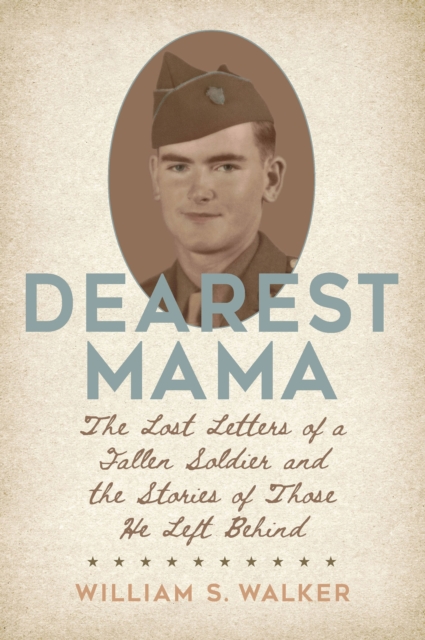
Dearest Mama
A cache of letters leads to a journey of discovery that
reveals the long and lasting consequences of war
William S. Walker never knew his uncle, Fletcher \"Bud\" Blanton.
Blanton had been killed fighting in Europe during World War II
before Walker was born. Walker had heard stories about Bud, but for
most of his life his uncle had existed only as a faded memory. That
path changed when Walker opened a dusty cabinet forgotten in his
garage attic and found a paper sack and a note in his father's
handwriting that read, \"Go through before you throw away.\" The bag
was filled with family photos, correspondence, and a collection of
letters and postcards that his uncle Bud had written to his family
during his time on the frontline as a US Army infantryman in
Europe. The first letter he pulled from the bag opened with the
line, \"Dearest Mama.\" Walker's Dearest Mama is Bud
Blanton's story. More than that it is a deeply personal family
chronicle that resonates for all those left behind when
servicemembers do not return home from combat.
eBook