
Catalogue Search | MBRL


Are you sure you want to remove the book from the shelf?

{{itemTitle}}
7,857
result(s) for
"Wrecking"
Sort by:
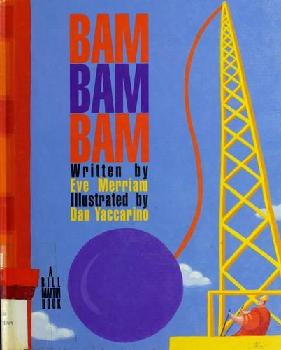
Bam, bam, bam
In this noisy poem, a wrecking ball demolishes old houses and stores to make way for a skyscraper.
White House demolition continues, see the ballroom design
Demolition crews continued tearing down part of the White House East Wing on Oct. 22 to make way for President Donald Trump’s long-planned ballroom.
Streaming Video

The 12 worst shipwrecks of all time
Disasters are fascinating, awe-inspiring, and scary, all at the same time. Lean the facts about many of the worst disasters in human history. Then get some tips on how to prepare for disasters and stay safe.
Book
White House begins demolition to build Trump’s ballroom
Demolition crews on Oct. 20 began tearing down part of the White House East Wing to build President Donald Trump’s long-desired ballroom despite his pledge that construction of the $250 million addition wouldn’t “interfere” with the existing building.
Streaming Video

White House begins demolition to build Trump’s ballroom 2x3
Demolition crews on Oct. 20 began tearing down part of the White House East Wing to build President Donald Trump’s long-desired ballroom.
Streaming Video

Builders & breakers
This picture book about an urban construction site celebrates builders, breakers, and the machines they use.
Book


Shanghai gone : domicide and defiance in a Chinese megacity
\"Shanghai has been demolished and rebuilt into a gleaming megacity in recent decades, now ranking with New York and London as a hub of global finance. But that transformation has come at a grave human cost. This compelling book is the first to apply the concept of domicide--the eradication of a home against the will of its dwellers--to the sweeping destruction of neighborhoods, families, and life patterns to make way for the new Shanghai. Here we find the holdouts and protesters, men and women who have stubbornly resisted domicide and demanded justice. Qin Shao follows, among others, a reticent kindergarten teacher turned diehard petitioner; a descendant of gangsters and squatters who has become an amateur lawyer for evictees; and a Chinese Muslim who has struggled to recover his ancestral home in Xintiandi, an infamous site of gentrification dominated by a well-connected Hong Kong real estate tycoon. Highlighting the wrenching changes spawned by China's reform era, Shao vividly portrays the relentless pursuit of growth and profit by the combined forces of corrupt power and money, the personal wreckage it has left behind, and the enduring human spirit it has unleashed.\" -- Publisher's website.
Book