
Catalogue Search | MBRL


Are you sure you want to remove the book from the shelf?

{{itemTitle}}
6,643
result(s) for
"Writing Technique."
Sort by:

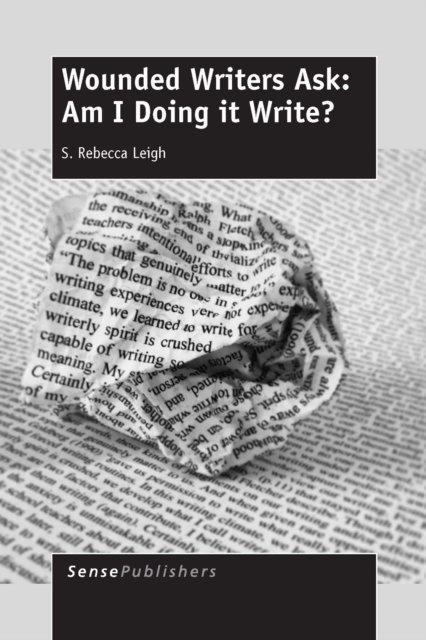
Wounded Writers Ask
This book addresses (and aims to dismantle) writer woundedness, a state of being that prevents students from trusting themselves as capable of writing something they can feel good about. Wounded Writers Ask: Am I Doing it Write? invites students to begin a new writing history through a collection of 48 free-writes that explore list writing, aesthetic writing, word craft, and writing that delves into personal life stories. These free-writes are invitations to develop a lead or improve a story title, to discover a character's name or replace one word for another that is more vivid, to locate a story idea or revise a story's focus. More than this, Wounded Writers Ask: Am I Doing it Write? emphasizes creative consciousness over correctness, where writing is a vehicle for exploring identity and (re)claiming voice across multiple grade levels. This book is for the wounded student writer as much as it is for the wounded classroom teacher as writer, who may feel burdened by his/her own writing history such that he/she struggles with where or how to start. For each free-write, Leigh offers Before Writing, During Writing, and After Writing suggestions with samples of student writing to guide teachers into writing engagements with their students that break down walls and open up new vistas.
eBook

Writing fiction for dummies
Discover the tricks of the trade for writing compelling and concise fiction. Whether you've never written fiction before or are looking to brush up your skills and learn new techniques for crafting your words, this book gives you savvy advice on navigating the writing process.
Book

Writing Feature Articles
Hennessy's classic text tells you everything you need to know about writing successful features. You will learn how to formulate and develop ideas and how to shape them to fit different markets. Now in its fourth edition, Writing Feature Articles has been fully revised and updated to take into account the changing requirements of journalism and media courses. You will also discover how to exploit new technology for both researching and writing online.Learn step-by-step how to plan, research and write articles for a wide variety of 'popular', 'quality' and specialist publications. Discover more and make the advice stick by completing the tasks and reading the keen analysis of extracts from the best of today's writing.Packed with inspirational advice in a friendly, highly readable style, this guide is a must-have for practising and aspiring journalists and writers.
eBook

Write better right now : the reluctant writer's guide to confident communication and self-assured style
In almost any career, you must know how to write--even if it's not part of your job description. But if you are a reluctant writer, producing even the simplest memo may be a struggle. Write Better Right Now is the springboard to get you ahead in any job, passion project, or situation that requires writing skills. No matter what you are called upon to do--blog posts, speeches, web content, press releases, or more--this step-by-step manual gives you the solid techniques you need to get the task done.
Book

Writing at university : a guide for students
Writing at Universityoffers guidance on how to develop the writing you have to do at university along with a greater understanding of what is involved in this complex activity. Writing is seen as a tool for learning as well as a product to be assessed. The importance of what you yourself can bring as a writer to your academic writing is stressed throughout the book.The book looks at an array of writing projects, including essays, reports and dissertations, and analyzes what is expected of each form of assignment. The authors provide examples of student writing and reflections on writing by both tutors and students.This edition includes new sections on: Making an argument and persuading your readerUsing sources creativelyAvoiding plagiarismWriting onlineFurther sources of information about academic writing Writing at Universityis an essential resource for all college and university students, including postgraduates, who wish to develop their academic writing. It will also be an invaluable aid for tutors in supporting their students.
eBook

Pep talks for writers : 52 insights and actions to boost your creative mojo
\"Every writer knows that as rewarding as the creative process is, it can often be a bumpy road. Have hope and keep at it! Designed to kick-start creativity, this handsome handbook from the executive director of National Novel Writing Month gathers a wide range of insights and advice for writers at any stage of their career. From tips about how to finally start that story to helpful ideas about what to do when the words just aren't quite coming out right, Pep Talks for Writers provides motivation, encouragement, and helpful exercises for writers of all stripes\"-- Provided by publisher.
Book
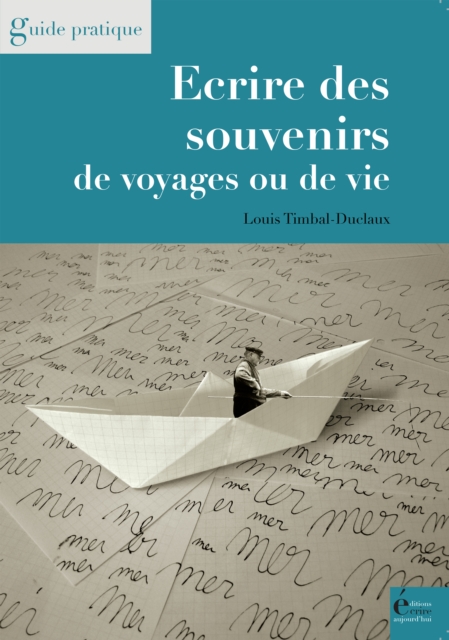
Ecrire des Souvenirs de Voyages Ou de Vie
Vous avez fait un beau voyage seul, en couple ou en groupe, et vous voulez en conserver une trace vivante ?Pour qui ? Pour vous, bien sur, mais aussi sans doute pour les autres participants a ce voyage, pour votre famille, vos amis, vos relations... Et, pourquoi pas, pour vos enfants et petits-enfants, maintenant ou pour plus tard. Vous avez sans doute aussi pris des photos en nombre, a garder en pochettes ou, mieux, a coller dans des albums avec des legendes explicatives. A mon avis, il y a mieux a faire : les accompagner de vrais textes dans lesquels vous relaterez vos emotions, vos impressions vecues... Je vous propose ma methode : n'ecrivez que des fragments des instants marquants, bien choisis et bien travailles, que vous serez ensuite fiers de pouvoir faire circuler, accompagnes ou pas de vos photos. Voulez-vous, enfin, ecrire un roman geographique ou historique ? Un tel travail sera pour vous une base de depart appreciable, pour situer votre decor, votre action et vos personnages. C'est ainsi qu'a procede Claude Michelet quand il a ecrit ses fameux romans a partir de l'histoire de sa propre famille.Une methode claire et concise qui vous permettra de coucher sur le papier certains de vos plus precieux souvenirs.EXTRAITJ'ai lu de nombreux journaux de voyage ecrits par d'autres, mais ils sont rarement satisfaisants. Ils sont trop souvent pleins de details materiels inutiles alors que l'essentiel de la decouverte du pays etranger est peu ou mal communique.Je vous propose ma methode : n'ecrire que des fragments, des instants marquants. Des fragments bien choisis et bien travailles, que vous serez ensuite fiers de pouvoir faire circuler, accompagnes ou pas de vos photos.A PROPOS DE L'AUTEURLouis Timbal-Duclaux a ecrit plus d'une vingtaine de livres sur l'expression ecrite professionnelle ou romanesque. Aujourd'hui retraite, il ecrit et anime des seminaires.
eBook

A stranger's journey : race, identity, and narrative craft in writing
\"Long recognized as a master teacher at writing programs like VONA, the Loft, and the Stonecoast MFA, with A Stranger's Journey, David Mura has written a book on creative writing that addresses our increasingly diverse American literature. Mura argues for a more inclusive and expansive definition of craft, particularly in relationship to race, even as he elucidates timeless rules of narrative construction in fiction and memoir. His essays offer technique-focused readings of writers such as Junot Dâiaz, ZZ Packer, Maxine Hong Kingston, Mary Karr, and Sherman Alexie, while making compelling connections to Mura's own life and work as a Japanese American writer. In A Stranger's Journey, Mura poses two central questions. The first involves identity: How is writing an exploration of who one is and one's place in the world? Mura examines how the myriad identities in our changing contemporary canon have led to new challenges regarding both craft and pedagogy. Here, like Toni Morrison's Playing in the Dark or Jeff Chang's Who We Be, A Stranger's Journey breaks new ground in our understanding of the relationship between the issues of race, literature, and culture. The book's second central question involves structure: How does one tell a story? Mura provides clear, insightful narrative tools that any writer may use, taking in techniques from fiction, screenplays, playwriting, and myth. Through this process, Mura candidly explores the newly evolved aesthetic principles of memoir and how questions of identity occupy a central place in contemporary memoir\" -- Provided by publisher.
Book

Solution-Processable and Eco-Friendly Functionalization of Conductive Silver Nanoparticles Inks for Printable Electronics
The functionalization of conductive inks has been carried out through the decomposition of hydrogen peroxide (H2O2) onto the surface of silver nanoparticles (AgNPs). The ink prepared using this eco-friendly chemical reagent has been characterized structurally, chemically, and morphologically, showing the presence of stable AgNPs with suitable properties as well as the absence of residual contamination. The electrical conductivity of such a solution-processable ink is evidenced for patterns designed on flexible photographic paper substrates, using a refillable fountain pen that is implemented as a printing mechanism for the fabrication of simple printed circuit boards (PCBs). The functionality and durability of the tested systems are demonstrated under various mechanical constraints, aiming to basically reproduce the normal operation conditions of flexible electronic devices. The obtained results indicate that the implementation of these AgNP-based inks is relevant for direct applications in inkjet printing technology, thus paving the way for the use of greener chemicals in ink preparation.
Journal Article