
Catalogue Search | MBRL


Are you sure you want to remove the book from the shelf?

{{itemTitle}}
3
result(s) for
"Yamashita, Karen Tei, 1951- Criticism and interpretation."
Sort by:

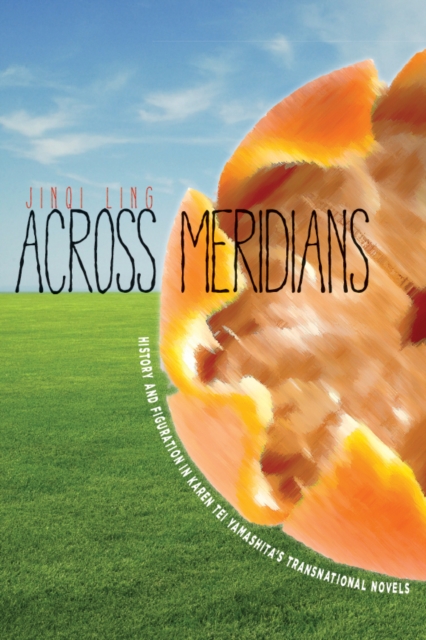
Across Meridians
Over the course of the last two decades, novelist Karen Tei Yamashita has reshaped the Asian American literary imagination in profound ways. InAcross Meridians, Jinqi Ling offers readers the most critically engaged examination to date of Yamashita's literary corpus. Crafted at the intersection of intellectual history, ethnic studies, literary analysis, and critical theory, Ling's study goes beyond textual investigation to intervene in larger debates over postmodern representation, spatial materialism, historical form, and social and academic activism.
Arguing that Yamashita's most important contribution is her incorporation of a North-South vector into the East-West conceptual paradigm, Ling highlights the novelist's re-prioritization, through such a geographical realignment, of socio-economic concerns for Asian American literary criticism. In assessing Yamashita's works as such, Ling designates her novelistic art as a form of new Asian American literary avant-garde that operates from the peripheries of received histories, aesthetics, and disciplines. Seeking not only to demonstrate the importance of Yamashita's transnational art, Ling sets new terms for ongoing dialogues in Asian American literary and cultural criticism. At the same time, he argues for the continuing relevance of Asian American literature as a self-reflexive and self-renewable critical practice.
eBook

Cognitive Mapping, Then and Now: Postmodernism, Indecision, and American Literary Globalism
[...]it may not be too much to say that whether or not contemporary US fiction can be said to play out something like a waning of literary postmodernism's influence, any discussion of postmodernism today is, with notable exceptions, already directed at conceptualizing its exhaustion in advance.2 Thus, in a recent issue of Twentieth-Century Literature, Rachel Adams proposes that contemporary US fiction has borne witness to the emergence of an \"American literary globalism,\" which, in taking \"other spatial and ideological imaginaries as its setting,\" marks both the \"ends of postmodernism\" and the \"ends of America\" (248).
Journal Article