
Catalogue Search | MBRL


Are you sure you want to remove the book from the shelf?

{{itemTitle}}
1,713
result(s) for
"Yiddish literature"
Sort by:

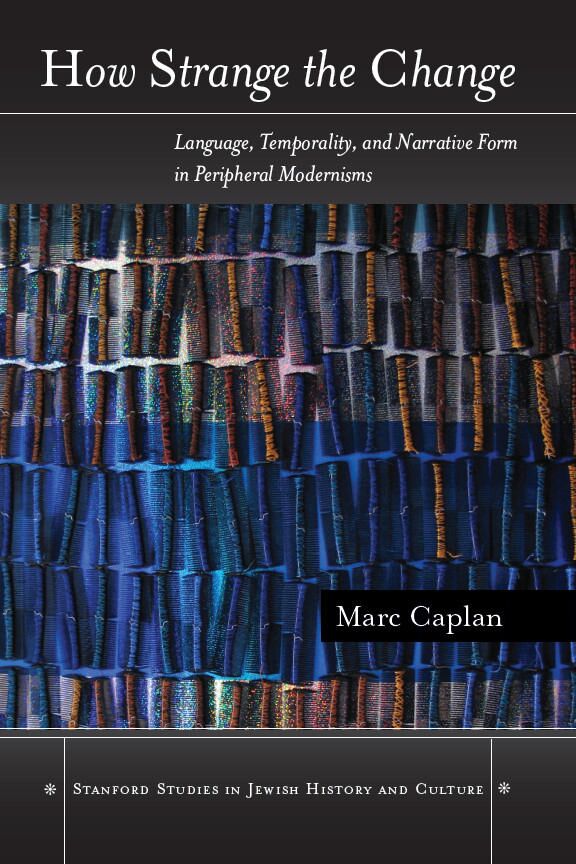
How Strange the Change
In this book, Marc Caplan argues that the literatures of ostensibly marginal modern cultures are key to understanding modernism. Caplan undertakes an unprecedented comparison of nineteenth-century Yiddish literature and twentieth-century Anglophone and Francophone African literature and reveals unexpected similarities between them. These literatures were created under imperial regimes that brought with them processes of modernization that were already well advanced elsewhere. Yiddish and African writers reacted to the liberating potential of modernity and the burdens of imperial authority by choosing similar narrative genres, typically reminiscent of early-modern European literatures: the picaresque, the pseudo-autobiography, satire, and the Bildungsroman. Both display analogous anxieties toward language, caught as they were between imperial, \"global\" languages and stigmatized native vernaculars, and between traditions of writing and orality. Through comparative readings of narratives by Reb Nakhman of Breslov, Amos Tutuola, Yisroel Aksenfeld, Cheikh Hamidou Kane, Isaac Meyer Dik, Camara Laye, Mendele Moykher-Sforim, Wole Soyinka, Y. Y. Linetski, and Ahmadou Karouma, Caplan demonstrates that these literatures' \"belated\" relationship to modernization suggests their potential to anticipate subsequent crises in the modernity and post-modernity of metropolitan cultures. This, in turn, leads him to propose a new theoretical model, peripheral modernism, which incorporates both a new understanding of \"periphery\" and \"center\" in modernity and a new methodology for comparative literary criticism and theory.
eBook
The Meaning of Yiddish
With a rare combination of erudition and insight, the author investigates the major aspects of Yiddish language and culture, showing where Yiddish came from and what it has to offer, even as it ceases to be a \"living\" language. This title is part of UC Press's Voices Revived program, which commemorates University of California Press's mission to seek out and cultivate the brightest minds and give them voice, reach, and impact. Drawing on a backlist dating to 1893, Voices Revived makes high-quality, peer-reviewed scholarship accessible once again using print-on-demand technology. This title was originally published in 1990. Many titles in the Voices Revived program are also newly available as ebooks, offered at a discounted price to support wider access to scholarly work.
eBook

The Holocaust & the Exile of Yiddish
In the early 1930s in Berlin, Germany, a group of leading Eastern
European Jewish intellectuals embarked upon a project to transform
the lives of millions of Yiddish-speaking Jews around the world.
Their goal was to publish a popular and comprehensive Yiddish
language encyclopedia of general knowledge that would serve as a
bridge to the modern world and as a guide to help its readers
navigate their way within it. However, soon after the Algemeyne
entsiklopedye (General Encyclopedia) was announced, Hitler's
rise to power forced its editors to flee to Paris. The scope and
mission of the project repeatedly changed before its final volumes
were published in New York City in 1966. The Holocaust &
the Exile of Yiddish untangles the complicated saga of the
Algemeyne entsiklopedye and its editors. The editors
continued to publish volumes and revise the encyclopedia's mission
while their primary audience, Eastern European Jews, faced
persecution and genocide under Nazi rule, and the challenge of
reestablishing themselves in the first decades after World War II.
Historian Barry Trachtenberg reveals how, over the course of the
middle decades of the twentieth century, the project sparked
tremendous controversy in Jewish cultural and political circles,
which debated what the purpose of a Yiddish encyclopedia should be,
as well as what knowledge and perspectives it should contain.
Nevertheless, this is not only a story about destruction and
trauma, but also one of tenacity and continuity, as the
encyclopedia's compilers strove to preserve the heritage of Yiddish
culture, to document its near-total extermination in the Holocaust,
and to chart its path into the future.
eBook

Soviet and kosher : Jewish popular culture in the Soviet Union, 1923-1939
Kosher pork -- an oxymoron? Anna Shternshis's fascinating study traces
the creation of a Soviet Jewish identity that disassociated Jewishness from Judaism.
The cultural transformation of Soviet Jews between 1917 and 1941 was one of the most
ambitious experiments in social engineering of the past century. During this period,
Russian Jews went from relative isolation to being highly integrated into the new
Soviet culture and society, while retaining a strong ethnic and cultural identity.
This identity took shape during the 1920s and 1930s, when the government attempted
to create a new Jewish culture, national in form and socialist in
content. Soviet and Kosher is the first study of key Yiddish documents that
brought these Soviet messages to Jews, notably the Red Haggadah, a
Soviet parody of the traditional Passover manual; songs about Lenin and Stalin;
scripts from regional theaters; Socialist Realist fiction; and magazines for
children and adults. More than 200 interviews conducted by the author in Russia,
Germany, and the United States testify to the reception of these cultural products
and provide a unique portrait of the cultural life of the average Soviet
Jew.
eBook
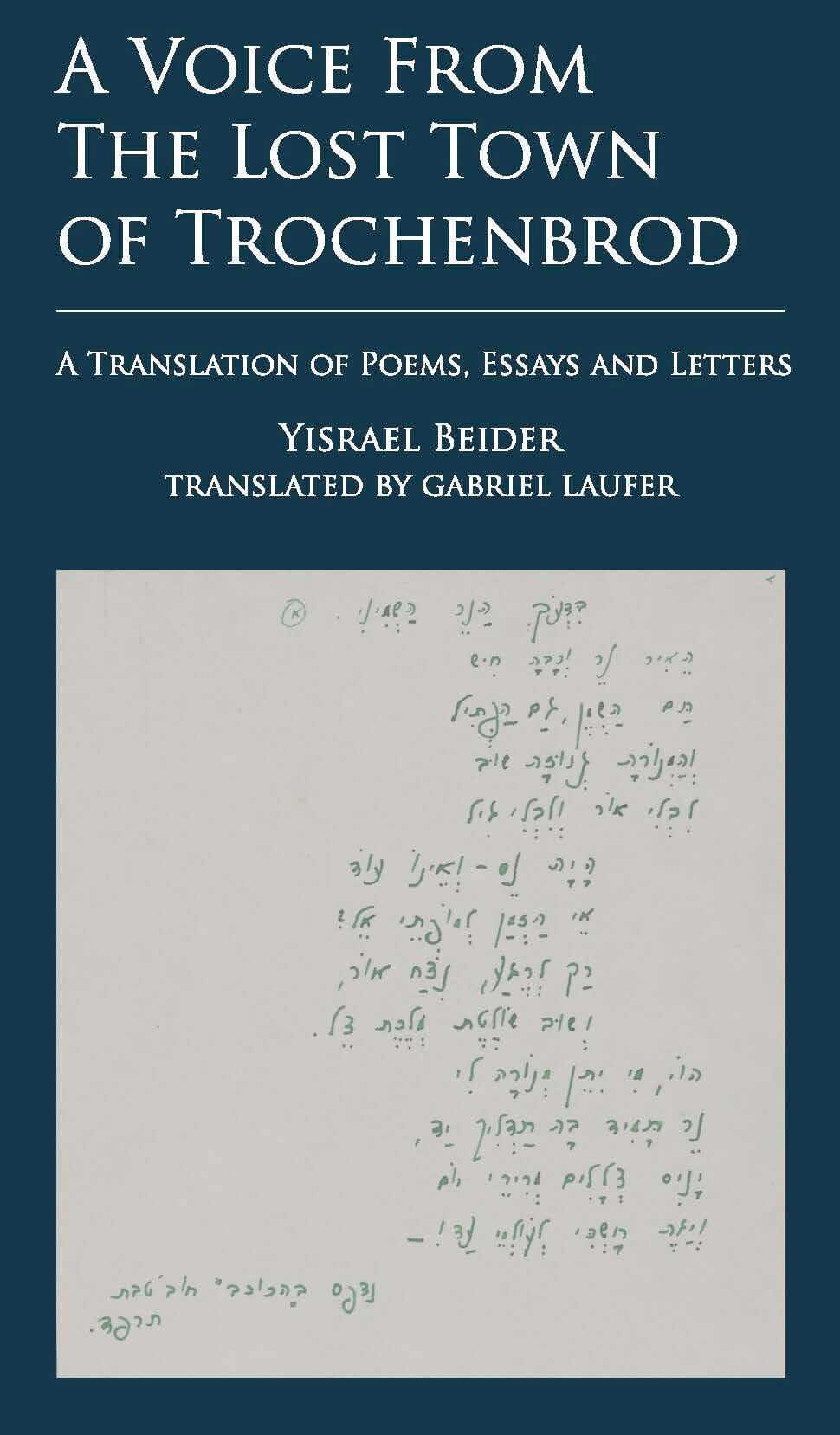
A Voice from The Lost Town of Trochenbrod
The destruction of Trochenbrod, the only exclusively Jewish town outside of Israel, is a mostly overlooked Holocaust tragedy. This book pulls together a collection of extraordinary poems, essays, and letters by Yisrael Beider, a son of Trochenbrod and a descendant of generations of rabbis tracing back to the MAHARAL. Beider perished in the Holocaust, but these writings survived to become rare documents to emerge from Trochenbrod. Although Beider published portions of his work in prominent Hebrew and Yiddish papers, most of his work remains unknown. This translation assembled the entire surviving collection to shed light on Beider’s literary and historical work, and to provide an eyewitness account of life in Trochenbrod and western Ukraine between the two world wars.
eBook

Writing in Tongues
Writing in Tonguesexamines the complexities of translating Yiddish literature at a time when the Yiddish language is in decline. After the Holocaust, Soviet repression, and American assimilation, the survival of traditional Yiddish literature depends on translation, yet a few Yiddish classics have been translated repeatedly while many others have been ignored. Anita Norich traces historical and aesthetic shifts through versions of these canonical texts, and she argues that these works and their translations form an enlightening conversation about Jewish history and identity.
eBook

Music from a Speeding Train
Music from a Speeding Train explores the uniquely Jewish space created by Jewish authors working within the limitations of the Soviet cultural system. It situates Russian- and Yiddish- language authors in the same literary universe—one in which modernism, revolution, socialist realism, violence, and catastrophe join traditional Jewish texts to provide the framework for literary creativity. These writers represented, attacked, reformed, and mourned Jewish life in the pre-revolutionary shtetl as they created new forms of Jewish culture. The book emphasizes the Soviet Jewish response to World War II and the Nazi destruction of the Jews, disputing the claim that Jews in Soviet Russia did not and could not react to the killings of Jews. It reveals a largely unknown body of Jewish literature beginning as early as 1942 that responds to the mass killings. By exploring works through the early twenty-first century, the book reveals a complex, emotionally rich, and intensely vibrant Soviet Jewish culture that persisted beyond Stalinist oppression.
eBook

Modern Jewish Literatures
Is there such a thing as a distinctive Jewish literature? While definitions have been offered, none has been universally accepted. Modern Jewish literature lacks the basic markers of national literatures: it has neither a common geography nor a shared language-though works in Hebrew or Yiddish are almost certainly included-and the field is so diverse that it cannot be contained within the bounds of one literary category. Each of the fifteen essays collected inModern Jewish Literaturestakes on the above question by describing a movement across boundaries-between languages, cultures, genres, or spaces. Works in Hebrew and Yiddish are amply represented, but works in English, French, German, Italian, Ladino, and Russian are also considered. Topics range from the poetry of the Israeli nationalist Natan Alterman to the Russian poet Osip Mandelstam; from turn-of-the-century Ottoman Jewish journalism to wire-recorded Holocaust testimonies; from the intellectual salons of late eighteenth-century Berlin to the shelves of a Jewish bookstore in twentieth-century Los Angeles. The literary world described inModern Jewish Literaturesis demarcated chronologically by the Enlightenment, the Haskalah, and the French Revolution, on one end, and the fiftieth anniversary of the State of Israel on the other. The particular terms of the encounter between a Jewish past and present for modern Jews has varied greatly, by continent, country, or village, by language, and by social standing, among other things. What unites the subjects of these studies is not a common ethnic, religious, or cultural history but rather a shared endeavor to use literary production and writing in general as the laboratory in which to explore and represent Jewish experience in the modern world.
eBook

History of YIVO’s Prewar Archival Collections from 1925 to 2001
This article discusses YIVO's prewar collections, their looting and dispersion during the Holocaust, and the various subsequent efforts to recover them. The article includes a brief overview of YIVO's founding and prewar activities; a discussion of the Nazi looting of YIVO's materials during the Holocaust and the heroic efforts by Jews to save these materials during and after the war; YIVO's shift of its headquarters to New York City in 1939–1940; the US Government restitution of materials to YIVO in 1947; and efforts to reclaim additional materials from Lithuania from 1989 to 2001. The article closes with a brief note on YIVO's newly completed Vilna Collections Project to digitally reunite YIVO's pre-war materials in New York City with materials housed in three Lithuanian repositories.
Journal Article