
Catalogue Search | MBRL


Are you sure you want to remove the book from the shelf?

{{itemTitle}}
264
result(s) for
"Yucatán Peninsula"
Sort by:


Social Identities in the Classic Maya Northern Lowlands
Social Identities in the Classic Maya Northern Lowlands plumbs the archaeological record for what it can reveal about the creation of personal and communal identities in the Maya world. Using new primary data from her excavations at the sites of Yaxuna, Chunchucmil, and Xuenkal, and new analysis of data from Dzibilchaltun in Yucatan, Mexico, Traci Ardren presents a series of case studies in how social identities were created, shared, and manipulated among the lowland Maya.Ardren argues that the interacting factors of gender, age, familial and community memories, and the experience of living in an urban setting were some of the key aspects of Maya identities. She demonstrates that domestic and civic spaces were shaped by gender-specific behaviors to communicate and reinforce gendered ideals. Ardren discusses how child burials disclose a sustained pattern of reverence for the potential of childhood and the power of certain children to mediate ancestral power. She shows how small shrines built a century after Yaxuna was largely abandoned indicate that its remaining residents used memory to reenvision their city during a time of cultural reinvention. And Ardren explains how Chunchucmil's physical layout of houses, plazas, and surrounding environment denotes that its occupants shared an urban identity centered in the movement of trade goods and economic exchange. Viewing this evidence through the lens of the social imaginary and other recent social theory, Ardren demonstrates that material culture and its circulations are an integral part of the discourse about social identity and group membership.
eBook

A historical grammar of the Maya language of Yucatan : 1557-2000
\"Victoria Bricker's painstaking work is based on almost one thousand provenienced notarial documents and letters written by native speakers of Yucatec Maya from the colonial times to the modern day. Because the documents are dated and also specify the town where they were written, Bricker was able to determine when and where grammatical changes first appeared in the language and the trajectory of their movement across the Yucatan peninsula. This exemplary grammar of Yucatec Maya includes examples and careful explanations of the phonological, morphological, and syntactic structures of the language. Bricker's research is distinguished in its treatment of seemingly aberrant spellings of Maya words as clues to the way they were actually pronounced at different times in the past. Her chapters include topics seldom covered, such as deictic particles, affects, and reduplication. Of special interest is a poetic form of reduplication composed of couplets (or triplets) found in documents from each of the centuries, indicating the continuity of this genre from the Colonial to the Modern version of this language\"--Provided by publisher.
Book

Maya tropical forest
The Maya Tropical Forest, which occupies the lowlands of southern Mexico, Guatemala, and Belize, is the closest rainforest to the United States and one of the most popular tourist destinations in the Western Hemisphere. It has been home to the Maya peoples for nearly four millennia, starting around 1800 BC. Ancient cities in the rainforest such as Palenque, Yaxchilan, Tikal, and Caracol draw thousands of tourists and scholars seeking to learn more about the prehistoric Maya. Their contemporary descendants, the modern Maya, utilize the forest's natural resources in village life and international trade, while striving to protect their homeland from deforestation and environmental degradation. Writing for both visitors and conservationists, James Nations tells the fascinating story of how ancient and modern Maya peoples have used and guarded the rich natural resources of the Maya Tropical Forest. He opens with a natural history that profiles the forest's significant animals and plants. Nations then describes the Maya peoples, biological preserves, and major archaeological sites in Mexico, Guatemala, and Belize. Drawing on more than twenty-five years of conservation work in the Maya Tropical Forest, Nations tells first-hand stories of the creation of national parks and other protected areas to safeguard the region's natural resources and archaeological heritage. He concludes with an expert assessment of the forest's future in which he calls for expanded archaeological tourism to create an ecologically sustainable economic base for the region.
eBook


Conflict and Carnage in Yucatán
The Yucatán Peninsula has one of the longest, most
multifaceted histories in the Americas. With the arrival of
Europeans, native Maya with long and successful cultural and
diplomatic traditions of their own had to grapple with outside
forces attempting to impose new templates of life and politics on
them.
Conflict and Carnage in Yucatán provides a
rigorously researched study of the vexed and bloody period of
1855 to 1876, during which successive national governments
implemented, replaced, and restored liberal policies.
Synthesizing an extensive and heterogeneous range of sources,
Douglas W. Richmond covers three tumultuous political upheavals
of this period. First, Mexico’s fledgling republic
attempted to impose a liberal ideology at odds with traditional
Maya culture on Yucatán; then, the French-backed regime of
Emperor Maximilian began to reform Yucatán; and, finally,
the republican forces of Benito Juárez restored the liberal
hegemony. Many issues spurred resistance to these liberal
governments. Instillation of free trade policies, the suppression
of civil rights, and persecution of the Roman Catholic Church
mobilized white opposition to liberal governors. The Mayas fought
the seizure of their communal properties. A long-standing desire
for regional autonomy united virtually all Yucatecans. Richmond
advances the thought-provoking argument that Yucatán both
fared better under Maximilian’s Second Empire than under
the liberal republic and would have thrived more had the Second
Empire not collapsed. The most violent and bloody manifestation
of these broad conflicts was the Caste War (Guerra de Castas),
the longest sustained peasant revolt in Latin American history.
Where other scholars have advocated the simplistic position that
the war was a Maya uprising designed to reestablish a mythical
past civilization, Richmond’s sophisticated recounting of
political developments from 1855 to 1876 restores nuance and
complexity to this pivotal time in Yucatecan history.
Richmond’s
Conflict and Carnage in Yucatán is a welcome
addition to scholarship about Mexico and Yucatán as well as
about state consolidation, empire, and regionalism.
eBook


Detection of Aedes ( Fredwardsius ) vittatus Mosquitoes, Yucatán Peninsula, Mexico, 2025
We report detection of Aedes (Fredwardsius) vittatus mosquitoes in continental North America, in Yucatán, Mexico. Phylogenetic analysis clustered the sequence from mosquitoes collected in Mexico with Caribbean mosquito lineages, suggesting species introduction via the Caribbean. Given its arbovirus competence, urgent inclusion of the Ae. vittatus mosquito in surveillance programs is warranted.
Journal Article
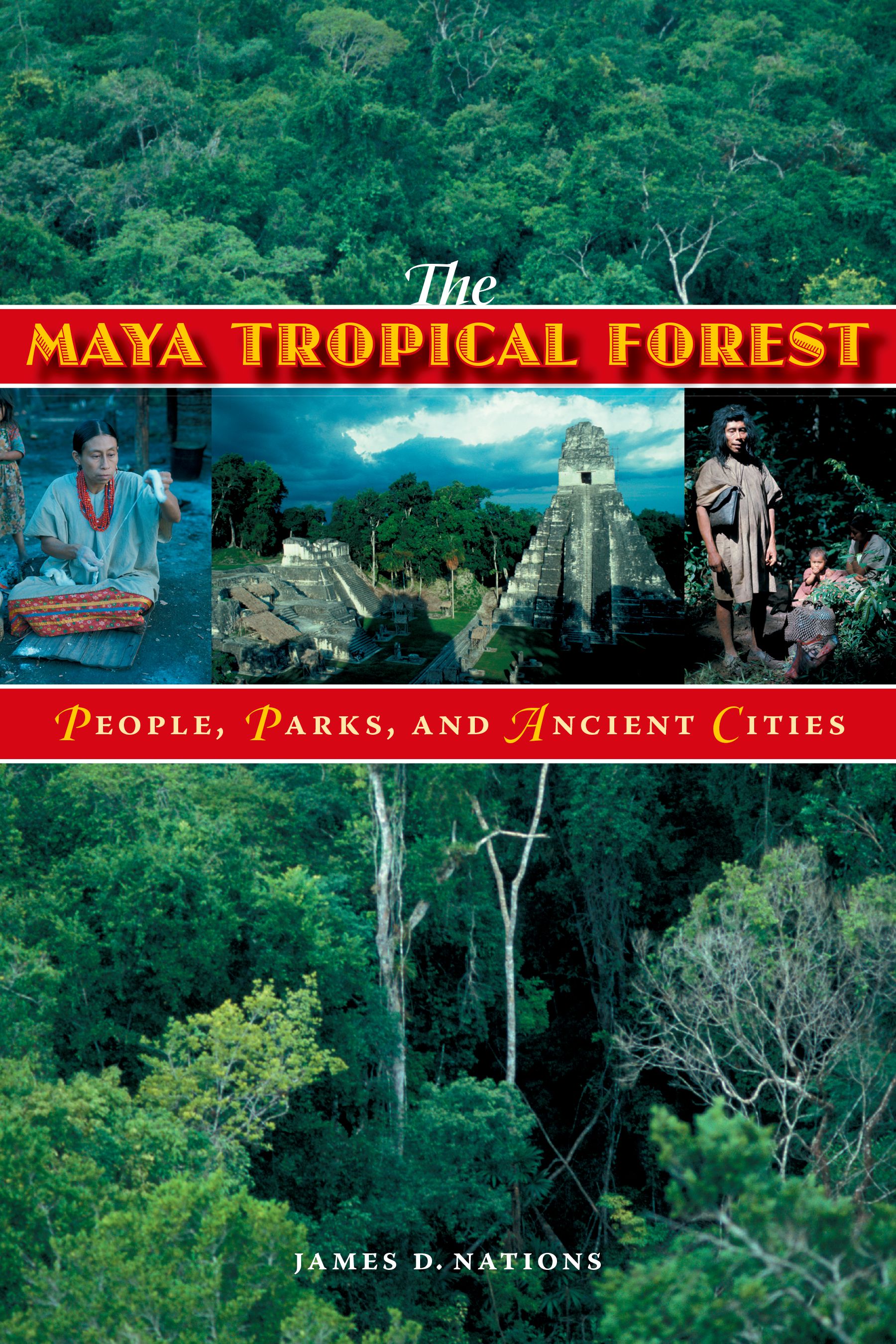
The Maya Tropical Forest
The Maya Tropical Forest, which occupies the lowlands of southern Mexico, Guatemala, and Belize, is the closest rainforest to the United States and one of the most popular tourist destinations in the Western Hemisphere. It has been home to the Maya peoples for nearly four millennia, starting around 1800 BC. Ancient cities in the rainforest such as Palenque, Yaxchilan, Tikal, and Caracol draw thousands of tourists and scholars seeking to learn more about the prehistoric Maya. Their contemporary descendants, the modern Maya, utilize the forest's natural resources in village life and international trade, while striving to protect their homeland from deforestation and environmental degradation. Writing for both visitors and conservationists, James Nations tells the fascinating story of how ancient and modern Maya peoples have used and guarded the rich natural resources of the Maya Tropical Forest. He opens with a natural history that profiles the forest's significant animals and plants. Nations then describes the Maya peoples, biological preserves, and major archaeological sites in Mexico, Guatemala, and Belize. Drawing on more than twenty-five years of conservation work in the Maya Tropical Forest, Nations tells first-hand stories of the creation of national parks and other protected areas to safeguard the region's natural resources and archaeological heritage. He concludes with an expert assessment of the forest's future in which he calls for expanded archaeological tourism to create an ecologically sustainable economic base for the region.
eBook

Lost Maya Cities
Hailed by The Guardian and other publications as “a real-life Indiana Jones,” Slovenian archaeologist Ivan Šprajc has been mapping out previously unknown Mayan sites in Mexico’s Yucatán Peninsula since 1996. Most recently, he was credited with the discovery of the Chactún and Lagunita sites in 2013 and 2014, respectively, helping to fill in what was previously one of the largest voids in modern knowledge of the ancient Maya landscape: the 2,800-square-mile Calakmul Biosphere Reserve in central Yucatán. Previously published in Šprajc’s native Slovenian and in German, this thrilling account of machete-wielding jungle expeditions has garnered enthusiastic reviews for its depictions of the efforts, dangers, successes, and disappointments experienced as the explorer-scientist searches out and documents ancient ruins that have been lost to the jungle for centuries. A skilled communicator as well as an experienced scholar, Šprajc conveys in eminently accessible prose a wealth of information on various aspects of the Maya culture, which he has studied closely for decades. The result is a deeply personal presentation of archaeological research on one of the most enigmatic civilizations of the ancient world. Generously illustrated, this book follows the chronology of Šprajc’s discoveries, focusing on what he considers the most interesting episodes. Those who specialize in Mesoamerican prehistory and archaeology will certainly relish Šprajc’s reports concerning his many field surveys and the discoveries that resulted. General readers, too, will enjoy his accounts of previously undocumented sites, ancient urban centers overtaken by the jungle, massive sculpted monuments, and mysterious hieroglyphic inscriptions.
eBook