
Catalogue Search | MBRL


Are you sure you want to remove the book from the shelf?

{{itemTitle}}
304
result(s) for
"Zechariah"
Sort by:

Trinity, Economy, and Scripture
No detailed description available for \"Trinity, Economy, and Scripture\".
eBook
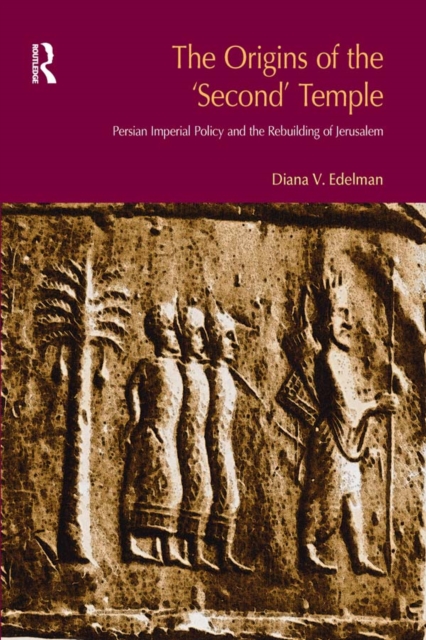
The origins of the 'Second' Temple : Persian imperial policy and the rebuilding of Jerusalem
Darius I, King of Persia, claims to have accomplished many deeds in the early years of his reign, but was one of them the rebuilding of the temple in Jerusalem? The editor who added the date to the books of Haggai and Zechariah thought so, and the author of Ezra 1-6 then relied on his dates when writing his account of the rebuilding process. The genealogical information contained in the book of Nehemiah, however, suggests otherwise; it indicates that Zerubbabel and Nehemiah were either contemporaries, or a generation apart in age, not some 65 years apart. Thus, either Zerubabbel and the temple rebuilding needs to be moved to the reign of Artaxerxes I, or Nehemiah and the rebuilding of the city walls needs to be moved to the reign of Darius I.;In this ground-breaking volume, the argument is made that the temple was built during the reign of Artaxerxes I. The editor of Haggai and Zechariah mistakenly set the event under Darius I because he was influenced by both a desire to show the fulfillment of inherited prophecy and by Darius' widely circulated autobiography of his rise to power. In light of the settlement patterns in Yehud during the Persian period, it is proposed that Artaxerxes I instituted a master plan to incorporate Yehud into the Persian road, postal, and military systems. The rebuilding of the temple was a minor part of the larger plan that provided soldiers stationed in the fortress in Jerusalem and civilians living in the new provincial seat with a place to worship their native god while also providing a place to store taxes and monies collected on behalf of the Persian administration.
eBook
The Fourth Gospel and the Scriptures : illuminating the form and meaning of scriptural citation in John 19:37
In The Fourth Gospel and the Scriptures, Bynum presents new insights from ancient biblical manuscripts 4QXII and the Minor Prophets Scroll that help unlock the mystery of John's unique form of scriptural citation.
eBook

Theodotion Zechariah in the Fourth Gospel
Abstract
This article attempts demonstrate that the only two citations of Zechariah in the Fourth Gospel likely derive from \"proto-Theodotion\" Zechariah (Zech-θ). We first see that the Greek revision Theodotion was extant and available to the authors of the New Testament. Next, we see that the Fourth Gospel's citation of Zech 9:9 in John 12:15 derives from Zech-θ and does not necessarily rely on Matthew's Gospel, which itself uses Zech-θ. The most critical piece of evidence for this conclusion is found in the genitive ὄνου, which neither the Old Greek (OG) nor Matthew's Gospel preserves, but is found explicitly in Zech-θ. We then examine Zech 12:10 in John 19:37 and conclude that it, too, ultimately derives from Zech-θ. This conclusion is plausible because (1) the Fourth Gospel typically uses the Greek versions when citing the OT, (2) Zech-θ was likely at the author's disposal when writing the Gospel, and (3) the prepositional phrase εἰς ὃν ἐξεκέντησαν reads verbatim with Zech-θ.
Journal Article

Lucan Barrenness Management: A Panacea for Mishandling Infertility in African Christian Society
This paper examines Lucan barrenness management in Luke 1:7, with a view to determining its relevance to mishandling infertility in African Christian society. Using spiral hermeneutic approach, it reveals that Lucan barrenness management centres on marital faithfulness. Unlike Lucan text which advocates living a fulfilled life without necessarily having biological children, African society adopts marital unfaithfulness. Hence, applying Lucan barrenness management could dispel marital unfaithfulness.
Journal Article
The Old Greek Translation of Zechariah
The Old Greek translation of Zechariah has not received much scholarly attention even though it contains several well known passages. Questions concerning its origin and character as a translation have yet to be dealt with in a comprehensive manner. The present monograph aims to bridge this gap by offering new methodological perspectives. The Old Greek Translation of Zechariah attempts to answer questions concerning the outlook of the translation, and what faction of the Jewish society was interested in translating this book into Greek. It argues that the translator had pro-Hasmonean sympathies.
eBook

לֹא as “Yes” and לֹא as “No”
The one-word negative response lō’ means “no” in Zech 4:5 and “yes” in Gen 18:15. This ambiguity is syntactic in nature and is handled and removed also by BH syntax.
Journal Article

Much More than a Triumphal Entry: The Old Testament Interweaving in Mk 11:1-11
Studies on the presence of the Old Testament (OT) in the New Testament (NT) have evolved significantly over time. Scholars have moved from a focus on identifying the textual version employed by the evangelists to attempts to systematize the various levels of the OT’s presence, classifying them as quotations, allusions, or echoes. In reality, biblical references permeate the NT, often going unnoticed. Unveiling them and, above all, approaching them through the interpretative logic characteristic of Judaism at the turn of the era imparts a surplus of meaning to the NT text. This is what this article demonstrates through an example from the Gospel according to Mark. There is no doubt about the strong biblical resonances in the passage describing Jesus’ entry into Jerusalem (Mk 11:1-11). In addition to a quotation from Psalm 118 (Mk 11:9-10), scholars recognize an allusion to Genesis and multiple references to texts from the book of Zechariah. This article will illustrate how drawing upon Jewish exegetical tradition from the turn of the era sheds light both on the way these OT references are interpreted and on how the various biblical references interconnect, enriching and expanding the meaning of the Gospel passage.
Journal Article

The mysterious Hebrew word שׂרקים in Zechariah 1:8
The Hebrew word שׂרקים in Zechariah 1:8 is a mysterious word. The disappearance of the Hebrew word שׂרקים in Zechariah 1:8 from the rest of the Book of Zechariah and the unknown meaning of שׂרקים itself are the reasons for this mystery. Zechariah 1:8 does not only abandon two colours: the black horses and the spotted (dappled) horses but also this verse adds שׂרקים or the sorrel ones, which are not recorded in Zechariah 6:2–3 and 6:6–7. The appearance of שׂרקים in Zechariah 1:8, therefore, creates disagreement colours with Zechariah 6:2–3 and 6:6–7. In addition, Gelston states that the Hebrew word שׂרקים is probably unknown to the ancient translators. This unknown meaning causes different translations of שׂרקים in ancient texts. This article, thus, attempts to unveil this mystery with textual criticism as its methodology.Intradisciplinary and/or interdisciplinary implications: This research emphasises on the importance of textual criticism to unveil the unknown meaning of קים in Zechariah 1:8.
Journal Article
The Seven Eyes of God
Abstract
The image of the stone with seven eyes in the book of Zechariah 3-4 is very puzzling, and has been interpreted in various ways. In this study I will suggest that the most logical interpretation of this image lies in the Babylonian kalû ritual and the well-known mythological Sibittu iconography that was familiar and accepted by the returning Babylonian exiles. This iconography was chosen for a specific reason, and then was given a new identity by the prophet, probably as part of a certain agenda.
Journal Article