
Catalogue Search | MBRL


Are you sure you want to remove the book from the shelf?

{{itemTitle}}
185
result(s) for
"Zensur"
Sort by:

Censored : distraction and diversion inside China's great firewall
As authoritarian governments around the world develop sophisticated technologies for controlling information, many observers have predicted that these controls would be ineffective because they are easily thwarted and evaded by savvy Internet users. In Censored, Margaret Roberts demonstrates that even censorship that is easy to circumvent can still be enormously effective. Taking advantage of digital data harvested from the Chinese Internet and leaks from China's Propaganda Department, this important book sheds light on how and when censorship influences the Chinese public. Roberts finds that much of censorship in China works not by making information impossible to access but by requiring those seeking information to spend extra time and money for access. By inconveniencing users, censorship diverts the attention of citizens and powerfully shapes the spread of information. When Internet users notice blatant censorship, they are willing to compensate for better access. But subtler censorship, such as burying search results or introducing distracting information on the web, is more effective because users are less aware of it. Roberts challenges the conventional wisdom that online censorship is undermined when it is incomplete and shows instead how censorship's porous nature is used strategically to divide the public. -- Inside jacket flap.
Book

Digital Resilience in Social Media Feminist Activism: Reactance Theory Applied to Weibo and Zhihu
Past studies have shown the value of social media for feminist activism in China. Yet, activists encounter strict censorship, negatively impacting their mobilization efforts. Existing studies have documented the strategies activists use to circumvent censorship by analyzing digital trace data but have not yet examined their censorship experiences. To fill this gap, the present study draws on reactance theory to investigate the experiences of social media feminist activists in China through 19 in-depth interviews. Following calls to examine digital resilience in the era of polycrisis, this study also contributes to rethinking digital resilience as not only resistance to censorship, but as an adaptive capacity to maintain agency and continuity in activism. We conducted a cross-platform comparison contrasting activists’ censorship experiences across Weibo and Zhihu. We found a hierarchy of concerns underlying censorship mechanisms. We identified five types of cognitive reactance: ambiguity, disagreement, unfairness, believing in a lack of control, and critical questioning of the positive energy motto. Affective reactance manifested through feelings of anger and irritation toward haphazard censorship enforcement. Digital resilience was visible in both cognitive and affective reactance, which motivated participants to restore their freedom. Participants used two types of direct means to regain their lost freedom: seeking and disseminating censored information. A few participants engaged in indirect restoration by reinterpreting the state’s motto of positive energy. The findings suggest activists developed different forms of digital resilience on Zhihu and Weibo that reflect unique platform affordances and regulations. We outline implications for reactance theory and future research.
Journal Article
Tactics of Disconnection: How Netizens Navigate China’s Censorship System
This article explores the complex, multi-layered mechanisms of internet censorship in China, emphasizing its role as both a tool of control over public engagement and a mechanism for elites to disconnect themselves from spaces of public scrutiny, and avoid potential threats such as doxxing by bottom-up populist online movements. Through in-depth interviews with social media users, this study investigates how individuals perceive, assess, and navigate the boundaries of internet censorship, focusing on their awareness of censorship practices, the assessment of sensitive content, and the tactics they employ to circumvent restrictions. We further examine how a sophisticated censorship mechanism—comprising self-censorship, platform censorship, and physical enforcement—works to disconnect netizens from grassroots collective actions. The findings reveal that internet censorship in China not only regulates online populist activism but also serves as a protective shield for elites, allowing them to curate a controlled digital space that suppresses critical discourse. By highlighting the ways in which both ordinary users and elites navigate the challenges of digital engagement in this heavily regulated environment, this study provides theoretical insights into the practice of disconnectivity as an elite privilege. It enhances our understanding of the interplay between connectivity, censorship, and disconnectivity in shaping the digital landscape and its implications for social change and political engagement in China and beyond.
Journal Article

Information seeking behavior on Facebook: The role of censorship endorsement and personality
Facebook started as a platform intended for connecting people but it has developed into a rich information source. Based on the uses-and-gratification approach, we examined to what extent censorship endorsement and personality factors can explain information seeking behavior on Facebook. 1525 German-speaking Facebook users participated in a cross-sectional survey. Censorship endorsement, three personality traits (extraversion, neuroticism, and openness), age, and gender served as predictors in blockwise regression models. Participants’ information seeking behavior on Facebook served as the criterion variable, whereby we examined different behavioral strategies. Overall, the extent of one’s endorsement of censorship was positively and reliably related to different facets of information seeking. Apparently, censorship might be considered a protection measure to establish a decent communication and information space. In contrast, personality traits were inconsistently related to different facets of information seeking. Extraversion and neuroticism were positively related to information seeking in general, but their impact was absent on some subscales. The effects of age and gender differed from what has been found in previous studies. Overall, the results highlight the necessity of a more differentiated perspective on social media use, provide implications for uses-and-gratification research in the context of social media, and indicate interesting venues for future research by incorporating censorship attitude as a hitherto neglected factor.
Journal Article
Missing Bodies, Silent Pages: How Turkish Media Portrays Journalist Murders and Silence
Press freedom in Turkey has frequently been questioned throughout its history. Acts of violence against journalists have become a critical issue sometimes resulting in fatalities. This study examines how murders of journalists in Turkey are represented in the media. It focuses on whose stories of the murdered journalists are neglected and whose are brought to the forefront. By addressing the representation of these deaths, the research questions the role of both traditional and digital media in shaping public perception. It investigates how long death-related news remains in the public spotlight and whether commemorations on death anniversaries receive coverage. Numerical differences regarding deaths between new media and traditional media outlets have also been examined. Additionally, the study explores the social and political contexts that contribute to the silences, omissions, and gaps in the narratives surrounding murdered journalists. Through these findings, the study aims to reveal how these stories contribute to the construction and erasure of memory in the media landscape.
Journal Article

Rethinking the “Conspiracy Crisis”: Use and Misuse of “Conspiracy Theory” Labels After Covid‐19
Against the backdrop of the Covid-19 pandemic, this article undertakes a critical evaluation of a series of shortcomings of the view of conspiracy theories that is predominant among scholars and the general public. Reviewing numerous studies on the topic, we critically assess: (a) how justified the claim is that we are in a conspiracy-thinking emergency, (b) how the label of conspiracy theorist can be used strategically to delegitimize heterodox views, and (c) the practical consequences, for academic research and the well-functioning of democracies, of unpopular ideas being labeled as conspiratorial. The empirical sources reviewed here suggest that beliefs in conspiracy theories have not increased over time and are less consequential than commonly believed, even in times of a global pandemic. Instead, the concept of conspiracy theory has become more prevalent and its derogatory connotation evokes a stigma that tilts the playing field against dissenting viewpoints. The stigmatization and political leveraging of this notion, we argue, lead to biases not only in the public discussion on various sensitive topics but also in the academic literature on conspiracy theories themselves. We analyze these academic blind spots in light of the diminishing political diversity in academia and recent perspectives on soft censorship. We propose to complement the research on conspiracy theorists with an analysis of individuals at the opposite end of the spectrum, who are inclined to uncritically trust institutional authorities and are prejudiced against heterodox opinions. Proposed solutions include promoting balanced news coverage, fostering critical thinking through debates, and piercing information bubbles to provide access to diverse perspectives.
Journal Article
Armenian Media System Overview According to the Hallin and Mancini Model
An overview of the Armenian media system is presented from the perspective of media professionals. Interference with the media system by the political system is analysed and the health of the Armenian media system is explored in the context of its transition from a Soviet republic towards a liberal model. The international situation contextualises analysis (resurgence of Russia–West enmity and globalisation) as does Armenia’s troubled relationship with its neighbours: with Turkey due to the 1915 genocide and with Azerbaijan because of the dispute over Nagorno-Karabakh. Relevant domestic affairs, such as the successful citizens’ mobilisation and the 2018 Velvet Revolution are also considered. The methodology used is based on in-depth interviews carried out in Yerevan (09/23) with 13 key informants; their answers are explored with content analysis using Hallin and Mancini’s dimensions. The study will serve to discuss how the media are used as tools of power and how the media system reproduces the political system (polarisation and individual ownership). We find that media is owned and/or controlled by political parties, and that the government controls public media but also part of the private sector through broadcasting licences and economic pressure. News media are not self-sustainable, thus, media economic dependence compromises its editorial independence, and very few media are independent. There is plurality, but highly polarised; there is no systematic censorship, but defamation fines reinforce journalists’ self-censorship; internet freedom is high but generates misinformation. Even so, there is professionalism, therefore there may yet be hope for the media if peace and the economy stabilise.
Journal Article
Democracy at Stake: Self-Censorship as a Self-Defence Strategy for Journalists
The media play an essential role of informing and mobilising voters as well as facilitating a two-way communication process between citizens and those vying for electoral offices during elections. This allows citizens to get information on various issues from the contenders, which largely informs their electoral decisions. In most less democratic societies however, this media function is increasingly becoming difficult to fulfil due to challenges journalists encounter during electoral processes. Using Uganda’s last general elections in 2016 as a case study, this article discusses the safety of journalists during elections basing on findings from a bigger study on the media coverage of the 2016 elections, supplemented by in-depth interviews with 10 journalists who covered the elections. In addition, the analysis makes reference to the 2016 Uganda Press Freedom Index. Findings of this research show that journalists face more safety and security risks during elections particularly perpetuated by state security agencies. Compared to previous elections, the 2016 elections also recorded the highest number of victims who were female journalists. This article highlights key challenges journalists face during elections, which include: state harassment and intimidation, arrest of those considered critical to the state, and denial of access to important information. Due to concerns of their own safety, journalists have responded to the insecure work environment by engaging in self-censorship, thereby giving biased or limited information to the public. The article identifies gaps that media development agencies can help to close if the media are to play their rightful role in a democratic society, especially during the electoral process.
Journal Article
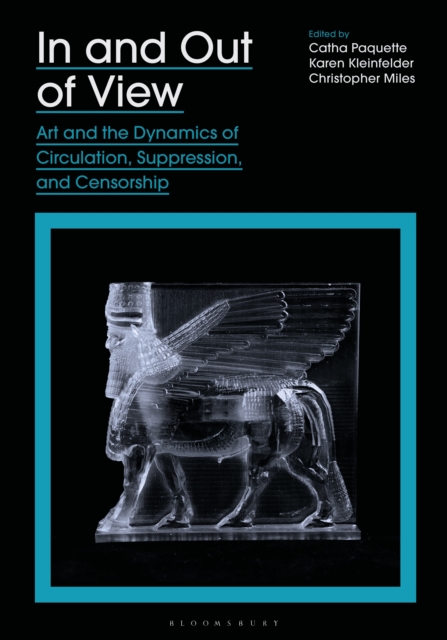
In and Out of View
In and Out of View represents a significant contribution to the literature on censorship. The twenty-two components of this anthology, which include essays, interviews, and statements by over forty contributors from diverse backgrounds and practices, focus on art production and reception from the mid-twentieth century to the present in the Americas, Africa, Asia, Europe, and the Middle East. At issue are not only governmental restrictions but also discursive effects, such as erasure and distortion resulting from institutional policies, interpretive methods, and canonical processes. Crucial considerations concerning death, violence, authoritarianism, colonialism, labor, global capitalism, immigration, race, religion, sexuality, social justice, activism, disability, campus speech, and cultural destruction are highlighted. The volume, which models an expansion in how censorship is discursively framed, invites consideration of the shifting contexts, values, and needs through which artwork moves in and out of view.
eBook

Behind the Screen
An eye-opening look at the invisible workers who protect us from seeing humanity's worst on today's commercial internetSocial media on the internet can be a nightmarish place. A primary shield against hateful language, violent videos, and online cruelty uploaded by users is not an algorithm. It is people. Mostly invisible by design, more than 100,000 commercial content moderators evaluate posts on mainstream social media platforms: enforcing internal policies, training artificial intelligence systems, and actively screening and removing offensive material-sometimes thousands of items per day. Sarah T. Roberts, an award-winning social media scholar, offers the first extensive ethnographic study of the commercial content moderation industry. Based on interviews with workers from Silicon Valley to the Philippines, at boutique firms and at major social media companies, she contextualizes this hidden industry and examines the emotional toll it takes on its workers. This revealing investigation of the people \"behind the screen\" offers insights into not only the reality of our commercial internet but the future of globalized labor in the digital age.
eBook