
Catalogue Search | MBRL


Are you sure you want to remove the book from the shelf?

{{itemTitle}}
37
result(s) for
"Zionism -- Great Britain -- History -- 20th century"
Sort by:


The Anglo-Jewish Economic Board for Palestine—The First Decade
The article explores the leading role played by the Anglo-Jewish “Economic Board for Palestine” in the economic reconstruction of Palestine during the first decade of the British Mandate. By presenting its collaborative efforts with four financial actors—the Zionist Organization, the government, individual organizations and private entrepreneurs, the article will shed a new light on the delicate relationship between Zionist and non-Zionist, private and national capital, and the formation of a powerful prototype of the Jewish Agency.
Journal Article
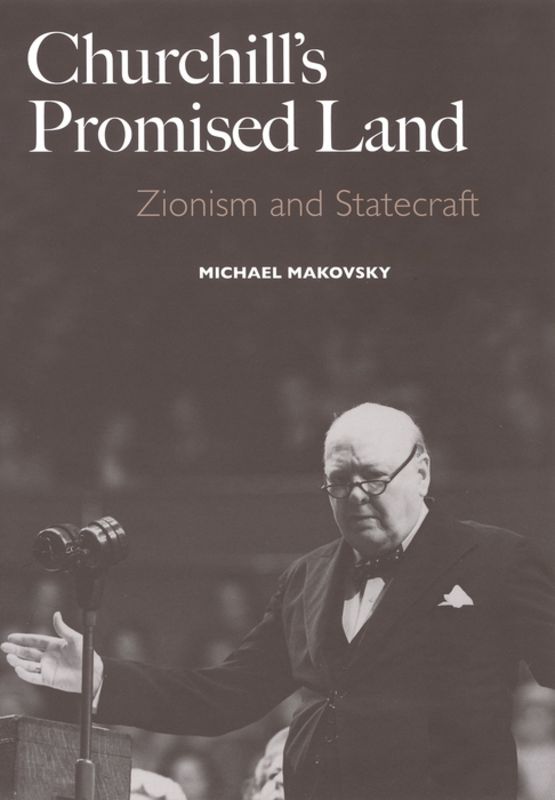
Churchill's Promised Land
This book is the first to explore fully the role that Zionism played in the political thought of Winston Churchill. Michael Makovsky traces the development of Churchill's positions toward Zionism from the period leading up to the First World War through his final years as prime minister in the 1950s. Setting Churchill's attitudes toward Zionism within the context of his overall worldview as well as within the context of twentieth-century British diplomacy, Makovsky offers a unique contribution to our understanding of Churchill.Moving chronologically, the book looks at Churchill's career within the context of several major themes: his own worldview and political strategies, his understanding of British imperial interests, the moral impact of the Holocaust, his commitment to ideals of civilization, and his historical sentimentalism. While Churchill was largely sympathetic to the Jews and to the Zionist impulse, he was not without inconsistencies in his views and policies over the years. Makovsky's book illuminates key aspects of Middle Eastern history; Zionist history; and British political, imperial, and diplomatic history; and further helps us understand one of the pivotal figures of the twentieth century.
eBook

Balfour and Weizmann : the Zionist, the zealot and the emergence of Israel
On November 2, 1917, Arthur Balfour, then Foreign Secretary, wrote to Lord Rothschild to say that the British Government viewed with favor the establishment in Palestine of a national home for the Jewish people.The consequences of this statement have reverberated throughout the world in a crescendo of bitterness and violence ever since.
eBook

Jewish Students, the Jewish Community, and the 'Campus War' in Britain
The 'campus war' in Britain over the right of Jewish student societies to organize against the background of the 'Zionism is racism' campaign is in itself a violation of educational standards. Dr Lucas argues that legislation to entrench the right of students to self-government, if the university authorities cannot ensure this themselves, rather than encouragement of a propaganda war, should be the objective of the Jewish community in this matter
Journal Article

Masculinity and Power in Irish Nationalism, 1884-1938
This book is a comparative study of masculinity and white racial identity in Irish nationalism and Zionism.It analyses how both national movements sought to refute widespread anti-Irish or anti-Jewish stereotypes and create more prideful (and highly gendered) images of their respective nations.
eBook
Refugees, Human Rights and Realpolitik
This book presents a multidimensional case study of international human rights in the immediate post-Second World War period, and the way in which complex refugee problems created by the war were often in direct competition with strategic interests and national sovereignty.
The case study is the clandestine immigration of Jewish refugees from Italy to Palestine in 1945-1948, which was part of a British-Zionist conflict over Palestine, involving strategic and humanitarian attitudes. The result was a clear subjection of human rights considerations to strategic and political interests.
eBook

Colonialism and Christianity in Mandate Palestine
Drawing on a rich base of British archival materials, Arabic periodicals, and secondary sources,Colonialism and Christianity in Mandate Palestinebrings to light the ways in which the British colonial state in Palestine exacerbated sectarianism. By transforming Muslim, Christian, and Jewish religious identities into legal categories, Laura Robson argues, the British ultimately marginalized Christian communities in Palestine. Robson explores the turning points that developed as a result of such policies, many of which led to permanent changes in the region's political landscapes. Cases include the British refusal to support Arab Christian leadership within Greek-controlled Orthodox churches, attempts to avert involvement from French or Vatican-related groups by sidelining Latin and Eastern Rite Catholics, and interfering with Arab Christians' efforts to cooperate with Muslims in objecting to Zionist expansion. Challenging the widespread but mistaken notion that violent sectarianism was endemic to Palestine,Colonialism and Christianity in Mandate Palestineshows that it was intentionally stoked in the wake of British rule beginning in 1917, with catastrophic effects well into the twenty-first century.
eBook

Modern Typologies as Spaces of Inter-Religious Engagement in British-Mandate Jerusalem, 1917–1938
The architecture of Jerusalem has for centuries been defined by its being a space sacred to Judaism, Christianity, and Islam. The end of World War I marked the beginning of British Mandatory rule, which lasted until 1948. During this period, Jerusalem witnessed a proliferation of architectural projects that repositioned religion within modern typologies representing the city’s communities. This research investigates four such buildings: the British Rockefeller Museum, the Palestinian Palace Hotel, the American YMCA Building, which functioned as a community center and hostel, and the new Zionist Executive Building. The integration of religious elements into these edifices is examined using the concept of inter-religious engagement and by applying the theory of purification and hybridization. The research demonstrates that British and American Christians, Zionist Jews, and Muslim Palestinians, used different strategies to produce inter-religious engagement—either intentionally or because of British-dictated political constructs. British and American Christians embedded religious elements within modern typologies to reflect peaceful co-existence, while Zionist Jews and Muslim Palestinians used them to construct national identity. Although conceived as “purely” secular, these modern typologies were hybridized by the integration of religious spaces or emblems, revealing further dimensions to our understanding and assessment of 20th-century urban secular architecture and its intersection with religions.
Journal Article
Reflections From Across the Pond
From the increasing availability of kosher eateries in Tel Aviv to the presence of haredi units in the IDF to the stickers in buses reminding us \"mi-penei sevah takum\" (the biblical command to stand for the elderly), Orthodox people across a wide range of ideological stripes feel instantly more at home in Israel than anywhere else. A further factor strengthening the concern for and identification with the State of Israel of all Orthodox (and of course many other) Jews outside extreme anti-Zionist haredi factions may be the ongoing security issues faced by Israel and the impact of terrorist attacks, Hamas, Hezbollah, and Iran. In terms of further reinforcing the influence of traditional texts, the Internet and other technological advancements since the publication of \"Rupture and Reconstruction\" have massively facilitated the spread and accessibility of daf yomi studies (discussed by Soloveitchik on 92), bringing many more Orthodox Jews to greater familiarity with the rabbinic text par excellence and its commentaries. The relevant point in the context of this discussion is that the pressure to demonstrate progress in this direction is in significant measure generated by the technologyfacilitated transparency of developments in women's public spiritual leadership in the global Modern Orthodox community.
Journal Article