
Catalogue Search | MBRL


Are you sure you want to remove the book from the shelf?

{{itemTitle}}
48
result(s) for
"Zombies Humor"
Sort by:
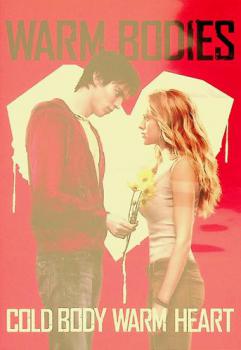
Warm bodies : cold body warm heart
\"A tormented zombie (Nicholas Hoult) experiences a profound transformation after entering into an unusual relationship with the daughter (Teresa Palmer) of a military leader charged with eradicating the walking dead. As the unlikely pair build a tenuous bridge between the living and the dead, those on both sides of the battle begin to sense that nothing in their world will ever be the same again. Warm Bodies is based on the novel by Isaac Marion. Rob Corddry and John Malkovich round out the starring cast\"--Allmovie.com, June 18, 2018.
DVD

Zombie infections: epidemiology, treatment, and prevention
Tara C Smith summarises the epidemiology and pathology of zombie infections and calls for research and funding to prevent a zombie apocalypse
Journal Article
\Comedy Is What We're Really About\: The Grateful Dead in a Comic Frame
[...]even after the band's death, its surviving members continue, zombie-like, to roam the earth performing as Dead and Company, drawing life from the blood of their young guitarist John Mayer and the wallets of the nostalgic. [...]Burke's comic frame explains Garcia's attitude toward his philosophical and pharmacological self-exploration.1 This study focuses on the use of tragic, Romantic, and comic frames both in writings about the Grateful Dead written for mass audiences – biographies, autobiographies, magazine articles, and interviews — and in scholarly works in the multidisciplinary field of Grateful Dead studies.2 The latter works have much in common with the popular and fan-oriented genres since, as Nicholas G. Meriwether writes, \"One of the most interesting aspects of the scholarship on the Grateful Dead phenomenon is its outspoken partisanship\" (\"The Thousand Stories\" 35). Stanley Spector cites Heidegger in order to celebrate the ineffable \"'isness' of everything\" experienced at Dead shows, David Malvinni invokes Heidegger and Deleuze to endorse the \"telepathy\" and the \"X factor\" as constituents in the phenomenon of \"Deadness,\" and Mark Tursi musters Arendt, Baudrillard, Deleuze and Guattari, Derrida, Lyotard, and Marx to caution that the essence of the Grateful Dead phenomenon will be sullied if too much academic attention leads to its \"assimilation\" into the status quo (Spector 232, Malvinni 26, Tursi 214.) [...]can the Grateful Dead story be told as a series of tragedies ending in the final tragedy of Garcia's death. To fully acknowledge the tragic frame is to recognize that of course, Garcia's life ended this way; his last 20 years – right up to the end – featured repeated vows to moderate or cease his drug use, interventions, aborted trips to rehab, and short stretches of abstinence followed by relapse.
Journal Article

Zombie Apocalypse: Can the Undead Teach the Living How to Survive an Emergency?
Objective. We examined whether or not CDC's zombie apocalypse campaign had the ability to achieve the agency's goals of educating young people about emergency preparedness and prompting them to get ready by developing an emergency kit and plan. While the campaign was extremely popular, we examined the question of whether the campaign had the capability to translate into knowledge and action. Methods. We conducted an online experiment with 340 undergraduate students divided randomly into two groups. One group was exposed to CDC's zombie blog post; the other to the same preparedness information presented in CDC's traditional, straightforward way. Participants then completed a survey designed to gauge their affective feelings, perceptions, retention of preparedness preparation, and intent to develop an emergency kit and plan. Results. While participants who viewed the humorous zombie material clearly enjoyed it, their positive affect did not lead to greater retention of preparedness information or greater expressed intent to prepare, compared with participants exposed to the factual treatment. The zombie approach had no influence on retention or resulted in less retention relative to the factual approach. Also, there was no significant between-group difference in reported likelihood of developing an emergency kit or plan. Conclusion. While the campaign drew unprecedented traffic to CDCs website, our findings suggest that it lacked the capability to fully achieve the agency's goals of educating people about preparedness and prompting them to get ready. This finding supports previous studies concluding that it is challenging to design public health messages that evoke positive affect as well as intended changes in intentions or behaviors.
Journal Article

ARREST FOR ATTEMPTED STREET THEATRE
On the eve of the royal wedding, two anthropologists and an actor – members of a street theatre troupe known as ‘The Government of the Dead’– were arrested for conspiracy to stage a performance. We adopt a Bakhtinian perspective of carnival laughter as essential to the scientific investigation of officialdom and ceremonial power.
Journal Article

Vacationing in \Zombieland\: The Classical Functions of the Modern Zombie Comedy
Ruben Fleischer's Zombieland operates as part of a long-established tradition of zombie movies, screen comedies, and the road film. This movie represents the unlikely fusion of Romero's Dawn of the Dead with Ramis's Vacation, particularly in the way Zombieland deals with familial tensions and social expectations. Because of this synthesis, Fleischer delves into largely uncharted territory, and Zombieland greatly adds to the rich tradition of this oft-maligned subgenre by embracing the classical conventions of the romantic adventure via a plot that is more about the hero's quest to establish a family structure than it is about abject humor.
Journal Article
