
Catalogue Search | MBRL


Are you sure you want to remove the book from the shelf?

{{itemTitle}}
98,037
result(s) for
"Zuckerberg, Mark"
Sort by:
أصحاب بلايين بالصدفة : تأسيس الفيس بوك : قصة جنس ومال وعبقرية وخيانة /
الإخفاق في العلاقات مع الجنس الآخر كان وراء اختراع الفيس بوك إدواردو سافرين ومارك زوكربرغ طالبان في الجامعة وصديقان حميمان لم يحالفهما الحظ في التواصل مع الفتيات.خطط إدواردو للخروج من المأزق بالانتساب إلى ناد جامعي. وتمكن مارك من اختراق نظام الحاسوب في الجامعة وخصص موقع بيانات ضمنه صور كل طالبات الجامعة. عطل العمل في النظام وطرد على أثر ذلك. لكن ما حدث كان ولادة الفيس بوك.ومن الآن فصاعدا يدب الخلاف بين الصديقين ويحتدم ليلغي كل أثر لصداقتهما. ويقتحم أصحاب رؤوس أموال ونسوة فاتنات هذا العالم الجديد للهيمنة عليه واستغلاله في مغامرة غير معروفة النتائج.اختراع هائل قرب بين ملايين البشر وفرق بين الصديقين اللذين اخترعاه. كتاب مصدر معلوماته إدواردو نفسه ومحاضر الدعاوى التي رفعت من طالبات الجامعة ضد مارك. وكان بأحداثه ومجرياته أغنى وأمتع وأكثر إثارة من الفلم الذي استلهم منه.
Book

Metaverso: Año Uno. La presentación en vídeo sobre Meta de Mark Zuckerberg (octubre 2021) en el contexto de los estudios previos y prospectivos sobre metaversos
Metaverso es un término ampliamente utilizado para referirse a mundos virtuales digitales que ha coexistido con otros términos como realidad virtual, mundos virtuales y ciertos tipos de ciberespacio. El presidente de Meta, Mark Zuckerberg, publicó una presentación en video en octubre de 2021 que podría haber fijado el término “metaverso” para referirse a esta industria en expansión que llega, y que afecta a muchas esferas de la vida humana, desde el entretenimiento a la salud, la publicidad o los negocios. El objetivo de este estudio es reseñar la presentación de Zuckerberg, en la que se describen los bloques necesarios para construir un metaverso, así como ponerla en el contexto de otros aspectos de los metaversos, como el origen del término, los atributos que deberían tener, la evolución tecnológica previa que los hace posibles y sus hitos, lo que se necesita para seguir avanzando en la construcción de mataversos, y las empresas que, en diferentes países, tienen el potencial de lanzar un metaverso.
Journal Article
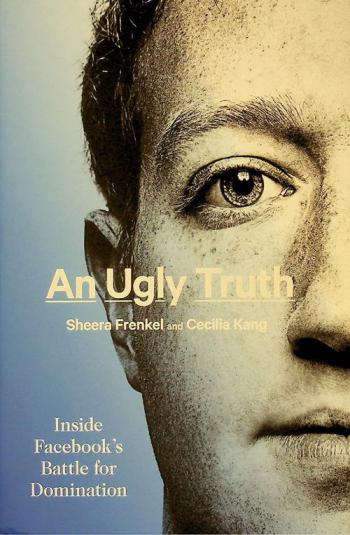
An ugly truth : inside Facebook's battle for domination
\"Once one of Silicon Valley's greatest success stories, Facebook has been under constant fire for the past five years, roiled by controversies and crises. It turns out that while the tech giant was connecting the world, they were also mishandling users' data, spreading fake news, and amplifying dangerous, polarizing hate speech ... Drawing on their unrivaled sources, Sheera Frenkel and Cecilia Kang take readers inside the complex court politics, alliances and rivalries within the company to shine a light on the fatal cracks in the architecture of the tech behemoth\"-- Provided by publisher.

Extensible Metaverse Implication for a Smart Tourism City
The metaverse is an innovation that has created the recent phenomenon of new tourism experiences from a virtual reality of a smart tourism destination. However, the existing metaverse platform demonstrated that the technology is still difficult to develop, as the service provider did not disclose the internal mechanisms to developers, and it was a closed system, which could not use or share the user’s data across platforms. The aim of this paper was to design and develop an open metaverse platform called the “extensible metaverse”, which would allow new developers to independently develop the capabilities of the metaverse system. The acquisition of this new technology was conducted through requirements analysis, then the analysis and design of the new system architecture, followed by the implementation, and the evaluation of the system by the users. The results found that the extended metaverse was divided into three tiers that created labels, characters, and virtual objects. Furthermore, the linking tier combined the 3D elements, and the deployment tier compiled the results of the link to use all three parts by using the Blender program, Godot Engine, and PHP + WebGL as their respective key mechanisms. This system was tested in Suphan Buri province, Thailand, which was evaluated by 428 users. The results of the metaverse satisfaction, created tourism experience, and overall satisfaction of the variation of the satisfaction of using the metaverse were 86.0%, 79.7%, and 92.9%, respectively. The relative Chi-square (χ2/df) of 1.253 indicated that the model was suitable. The comparative fit index (CFI) was 0.984, the goodness-of-fit index (GFI) was 0.998, and the model based on the research hypothesis was consistent with the empirical data. The root mean square error of approximation (RMSEA) was 0.024. In conclusion, the extended metaverse is more flexible than other platforms and also creates the user’s satisfaction and tourism experience in the smart destination to support sustainable tourism.
Journal Article


Bringing the individual back in: Private entrepreneurs as actors in international relations - the case of Mark Zuckerberg
Purpose - This paper aims to study individuals in international relations especially private individuals in global politics. Therefore the paper focuses on analyzing the case of Mark Zuckerberg the founder and chief executive of Facebook who affects the international arena. The paper illustrates Zuckerberg's strategies to assert wide influence and power within Facebook's network and through multiple networks. Design/methodology/approach - The paper follows new theories of studying the human agent in international relations, concentrating on private individuals as new actors in international relations (IR). Thus, depending on \"network making power theory\" and the \"three-dimensional power perspectives; (discursive, structural and instrumental)\", the paper illustrates the case of Mark Zuckerberg as a private entrepreneur and his authority in the era of social media dominance with a focus on: Zuckerberg's discursive/ideational power strategy. Zuckerberg's strategy to work as a switcher through multiple networks. The most obvious one is the Facebook network, through which he can assert global influence. Findings - Formal state officials are not the only type of individuals who can affect international relations. Technological evolution has empowered private individuals as influential actors in international relations (IR). Interdisciplinary approaches became essential tools in studying new actors affecting IR. There are new patterns of power linked to individuals without formal positions. Zuckerberg, CEO of Facebook and global philanthropist, is considered an influential actor in IR depending on programming and switching strategies to assert his power in a networked world. Originality/value - This paper is able to prove that there are new forms of power which belong to private individuals in a networked world.
Journal Article

مملكة مارك زوكربيرج وطيوره الخرافية = Mamlakatu Mark Zuckerberg Wa Tuyurahu Al-Khurafiyya
كتاب \"مملكة مارك زوكربيرج وطيوره الخرافية\"، تأليف أحمد عبد اللطيف. مجموعة قصصية مكونة من 5 قصص طويلة، تدور حول فكرة \"الطرد\" كثيمة رئيسية، وتتناول أفكار حول الهجرة والحب والغياب، ويسود فيها عالم سوريالي إلى حد ما. وتعتبر تجربة أخرى في اللغة من أجل العثور على إيقاع جديد في اللغة العربية.
BOOK

Metaverse through the prism of power and addiction: what will happen when the virtual world becomes more attractive than reality?
New technologies are emerging at a fast pace without being properly analyzed in terms of their social impact or adequately regulated by societies. One of the biggest potentially disruptive technologies for the future is the metaverse, or the new Internet, which is being developed by leading tech companies. The idea is to create a virtual reality universe that would allow people to meet, socialize, work, play, entertain, and create.Methods coming from future studies are used to analyze expectations and narrative building around the metaverse. Additionally, it is examined how metaverse could shape the future relations of power and levels of media addiction in the society.Hype and disappointment dynamics created after the video presentation of meta’s CEO Mark Zuckerberg have been found to affect the present, especially in terms of certainty and designability. This idea is supported by a variety of data, including search engine n-grams, trends in the diffusion of NFT technology, indications of investment interest, stock value statistics, and so on. It has been found that discourse in the mentioned presentation of the metaverse contains elements of optimism, epochalism, and inventibility, which corresponds to the concept of future essentialism.On the other hand, power relations in society, inquired through the prism of classical theorists, indicate that current trends in the concentration of power among Big Tech could expand even more if the metaverse becomes mainstream. Technology deployed by the metaverse may create an attractive environment that would mimic direct reality and further stimulate media addiction in society.It is proposed that future inquiries examine how virtual reality affects the psychology of individuals and groups, their creative capacity, and imagination. Also, virtual identity as a human right and recommender systems as a public good need to be considered in future theoretical and empirical endeavors.
Journal Article

Mark Zuckerberg : creator of Facebook
Mark Zuckerberg's story is an interesting one: who knew that a quiet, code-writing nerd would be the creator of what we call social media, the Chairman and CEO of Facebook Inc., and the youngest self-made billionaire?
BOOK
Facebook CEO Mark Zuckerberg has tech trouble at Senate hearing
But before his testimony to the Senate Commerce Committee on Oct. 28, Facebook CEO Mark Zuckerberg had some tech trouble, causing the committee to take a five minute break.
Streaming Video