
Catalogue Search | MBRL


Are you sure you want to remove the book from the shelf?

{{itemTitle}}
190
result(s) for
"abjection"
Sort by:

Abjection incorporated : mediating the politics of pleasure & violence
\"From the films of Larry Clark, to the feminist comedy of Amy Schumer, to the fall of Louis CK, comedic, graphic, and violent moments of abjection have permeated twentieth- and twenty-first-century social and political discourse. The contributors to Abjection Incorporated move beyond simple critiques of abjection as a punitive form of social death, illustrating how it has become a contested form of political and cultural capital--empowering for some but oppressive for others. Escaping abjection's usual confines of psychoanalysis and aesthetic modernism, core to theories of abjection by thinkers such as Kristeva and Bataille, the contributors examine a range of media, including literature, photography, film, television, talking dolls, comics, and manga. Whether analyzing how comedic abjection can help mobilize feminist politics or how expressions of abjection inflect class, race, and gender hierarchies, the contributors demonstrate the importance of competing uses of abjection to contemporary society and politics. They emphasize abjection's role in circumscribing the boundaries of the human, and how the threats abjection poses to the self and other, far from simply negative, open up possibilities for radically new politics\"-- Provided by publisher.
Book

Limits of horror
Horror is not what it used to be. Nor are its Gothic avatars. The meaning of monsters, vampires and ghosts has changed significantly over the last 200 years, as have the mechanisms (from fiction to fantasmagoria, film and video games) through which they are produced and consumed. This book, moving from gothic to cybergothic, through technological modernity and across a range of literary, cinematic and popular cultural texts, critically examines these changes and the questions they pose for understanding contemporary culture and subjectivity. Re-examining key concepts such as the uncanny, the sublime, terror, shock and abjection in terms of their bodily and technological implications, it advances current critical and theoretical debates on Gothic horror to propose a new theory of cultural production based on an extensive discussion of Sigmund Freud's idea of the death drive.
eBook


Extravagant Abjection
Challenging the conception of empowerment associated with the Black Power Movement and its political and intellectual legacies in the present, Darieck Scott contends that power can be found not only in martial resistance, but, surprisingly, where the black body has been inflicted with harm or humiliation. Theorizing the relation between blackness and abjection by foregrounding often neglected depictions of the sexual exploitation and humiliation of men in works by James Weldon Johnson, Toni Morrison, Amiri Baraka, and Samuel R. Delany, Extravagant Abjection asks: If we're racialized through domination and abjection, what is the political, personal, and psychological potential in racialization-through-abjection? Using the figure of male rape as a lens through which to examine this question, Scott argues that blackness in relation to abjection endows its inheritors with a form of counter-intuitive power - indeed, what can be thought of as a revised notion of black power. This power is found at the point at which ego, identity, body, race, and nation seem to reveal themselves as utterly penetrated and compromised, without defensible boundary. Yet in Extravagant Abjection, power assumes an unexpected and paradoxical form. In arguing that blackness endows its inheritors with a surprising form of counter-intuitive power - as a resource for the political present - found at the very point of violation, Extravagant Abjection enriches our understanding of the construction of black male identity.
eBook
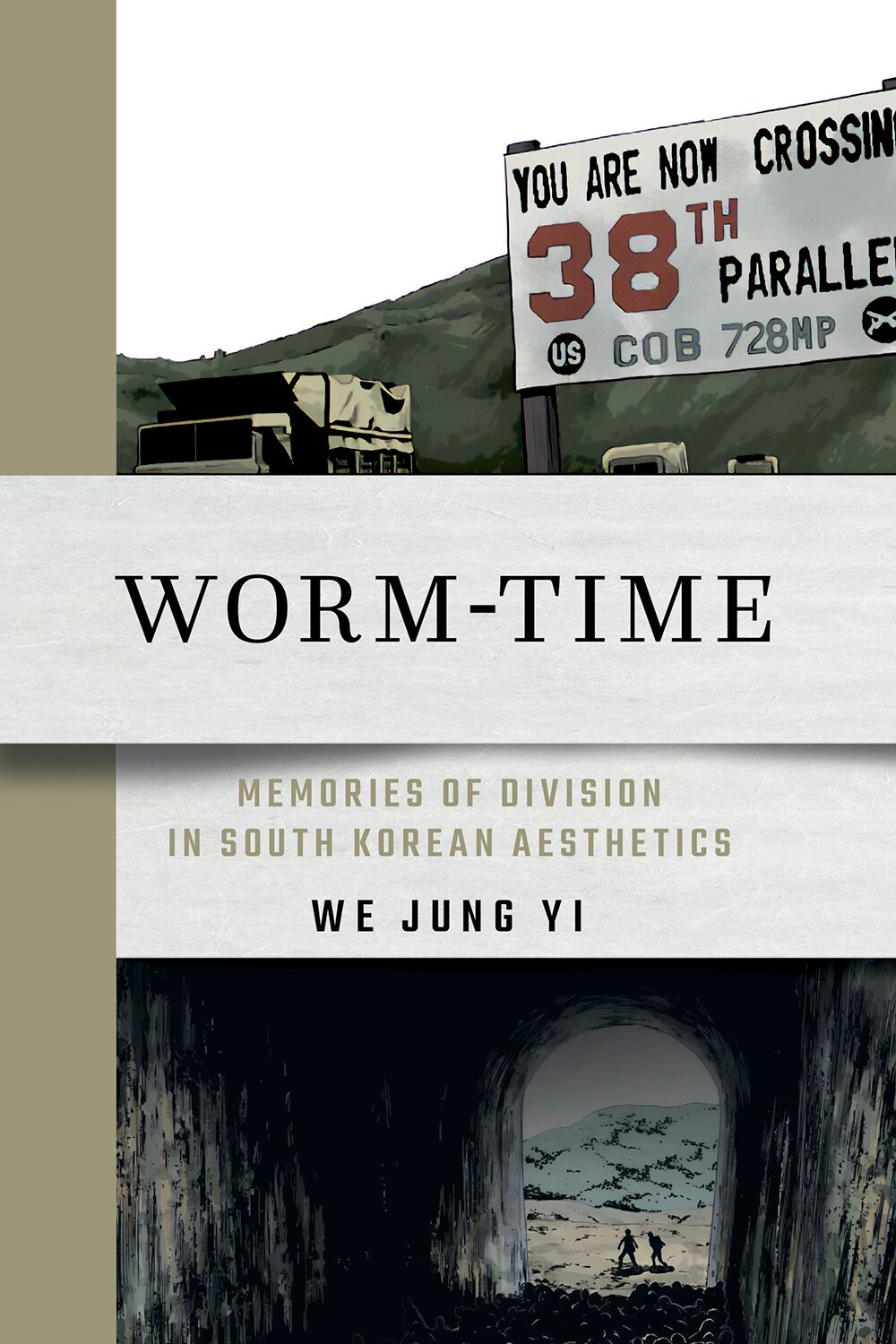
Worm-Time
Worm-Time challenges
conventional narratives of the Cold War and its end, presenting an
alternative cultural history based on evolving South Korean
aesthetics about enduring national division. From novels
of dissent during the authoritarian era to films and webtoons in
the new millennium, We Jung Yi's transmedia analyses unearth
people's experiences of \"wormification\"-traumatic survival,
deferred justice, and warped capitalist growth in the wake of the
Korean War.
Whether embodied as refugees, leftists, or broken families, Yi's
wormified protagonists transcend their positions as displaced
victims of polarized politics and unequal development. Through
metamorphoses into border riders who fly over or crawl through the
world's dividing lines, they reclaim postcolonial memories buried
in the pursuit of modernization under US hegemony and cultivate a
desire for social transformation. Connecting colonial legacies,
Cold War ideologies, and neoliberal economics, Worm-Time
dares us to rethink the post-WWII consensus on freedom, peace, and
prosperity.
eBook

Managing the Menopause through ‘Abjection Work’
This article examines how power and menopause relate at work. Based on qualitative data from 23 women administrative workers, the research finds that menopausal symptoms are sometimes ‘awful’, ‘knackering’ and ‘isolating’. Yet, as ‘real’ or ‘normal women’, they described getting lost in the menopause discourse and many spoke of going through ‘the change’ instead; this saw them make sense of, and respond to, their symptoms in (sometimes) unconventional ways. In addition, when a menopausal body runs rampant, its abject appearance can cause embarrassment, but not just for the woman – for anyone who witnesses it. For some women, they simply go and stand outside. For others, the realisation of the vicarious nature of embarrassment sees them employ their menopausal bodies and do ‘abjection work’. This work acts as a powerful form of management; yet some might argue that it is improper.
Journal Article

“Melting Pot” or “Salad Bowl”: Lupine Metaphors and the Myth of American Assimilation in Karen Russell’s “St. Lucy’s Home for Girls Raised by Wolves”
This article examines Karen Russell’s “St. Lucy’s Home for Girls Raised by Wolves” as a vivid illustration of the struggles minority groups face during assimilation into mainstream American culture. Through lupine metaphors, Russell critiques the myth of the American Dream, which promises equality and opportunity but often marginalizes and erases minority identities. The story’s depiction of the wolf girls – raised in a culturally distinct lupine environment and later compelled by nuns to embrace human civilization – parallels the experiences of minorities pressured to conform to dominant norms. Their diverging fates – some fully assimilating and losing their original identity, while others resist and cling to their heritage – highlight the complexities of cultural dislocation. This tension underscores the alienation faced by individuals caught between their original community and the dominant culture. Situating “St. Lucy’s Home for Girls Raised by Wolves” within broader discussions of assimilation and the abjection of the “other,” this article argues that Russell dismantles the illusion of harmonious multiculturalism, revealing how forced assimilation leads to alienation rather than true inclusion.
Journal Article

What does it mean when people call a place a shithole? Understanding a discourse of denigration in the United Kingdom and the Republic of Ireland
This paper investigates what people mean when they engage in the discourse of denigration. Building on existing literature on territorial stigmatisation that either focuses on macro‐scale uses and effects of territorial stigmatisation or micro‐scale ethnographic studies of effects, we develop a novel approach that captures the diverse voices that engage in the discourse of denigration by tracing the use of the word and hashtag “shithole” on the social media platform Twitter in order to examine who is engaged in the stigmatising discourse, the types of place that are stigmatised and the responses to stigmatised places. Using a robust data set, we highlight two key findings. First, the majority of tweets were aimed at places where the tweeter was not from, a form of othering consistent with how territories are stigmatised by those in positions of power such as policymakers, politicians and journalists. Second, we note that an important and gendered minority of tweets can be characterised by a “cry for help” and powerlessness, where the stigma is aimed at their own places. We offer an interpretive lens through which to understand and frame these minoritarian voices by engaging with theories of abjection that allow us to see how minoritarian voices relate to place.
Journal Article

Between Abjection and World-Making: Spatial Dynamics in the Lives of Indonesian Waria
The lives of Indonesian waria (transgender women) are substantially shaped by spatial dynamics. As a result of social and spatial exclusion, subsequent migration and economic needs, a lifestyle pattern around daily work in beauty salons and street nightlife tied to transactional sex has evolved in many parts of urban Indonesia. Drawing on ethnographic research in the Indonesian regions of Java and West Papua, I demonstrate that despite tremendous spatial abjection, salons and street nightlife are also productive, transformative and conjoining spatialities that foster waria subjectivity in affective relations with their intimate partners, the community, the phantasmic promise of the transnational mediascape and Indonesia as a nation. The places that waria occupy may spark moral prejudice and targeted violence, but simultaneously they are sites of agency at which waria experience self-affirmation and a sense of belonging while embodying through gendered performance the envisioned mobility at both national and transnational scales. The paper thus foregrounds how spaces and subjectivities are mutually constitutive, forging one another, as well as how certain spatialities hold potential to disrupt the sense of marginality.
Journal Article
Adolescence in vampire narratives: symbolic motifs from the fairy tale Little Red Riding Hood in E.T.A. Hoffmann’s Vampyrismus (1821) and Moira Buffini’s A Vampire Story (2008)
This study examines adolescence as a site of psychological crisis in vampire narratives, focusing on the Oedipal structure and its role in identity formation. Drawing on Sigmund Freud’s psychoanalytic theory and Julia Kristeva’s concept of abjection, the analysis highlights the tension between the principles of pleasure and reality, as young female protagonists disregard maternal injunctions and pursue desire, thereby precipitating vampiric transformation. E.T.A. Hoffmann’s Vampyrismus (1821) dramatizes this inevitability through Aurelie’s abject metamorphosis, whereas Moira Buffini’s A Vampire Story (2008) explores Eleanor’s fragile sensibility and transgressive love for Frank. The analysis employs a comparative close reading of these works that dramatize how female protagonists negotiate tensions between desire and repression. This study demonstrates that the Oedipal complex structure evident in the fairy tale Little Red Riding Hood can be read as the psychological origin of vampirization in Hoffmann’s and Buffini’s narratives. The study also examines Neil Jordan’s contemporary cinematic adaptation to illustrate how these symbolic structures continue across media. The vampire figure emerges as a liminal presence that destabilizes boundaries between subject and object, purity and impurity, and life and death. This study argues that vampirism functions as a metaphor for adolescent identity crises, where desire and abjection mark privileged sites of female subjectivity. This perspective contributes to work at the intersection of gender, psychoanalytic criticism, and narrative folklore.
Journal Article