
Catalogue Search | MBRL


Are you sure you want to remove the book from the shelf?

{{itemTitle}}
10,284
result(s) for
"abortion debate"
Sort by:

No Real Choice
In the United States, the “right to choose” an abortion is the law of the land. But what if a woman continues her pregnancy because she didn’t really have a choice? What if state laws, federal policies, stigma, and a host of other obstacles push that choice out of her reach? Based on candid, in-depth interviews with women who considered but did not obtain an abortion, No Real Choice punctures the myth that American women have full autonomy over their reproductive choices. Focusing on the experiences of a predominantly Black and low-income group of women, sociologist Katrina Kimport finds that structural, cultural, and experiential factors can make choosing abortion impossible–especially for those who experience racism and class discrimination. From these conversations, we see the obstacles to “choice” these women face, such as bans on public insurance coverage of abortion and rampant antiabortion claims that abortion is harmful. Kimport's interviews reveal that even as activists fight to preserve Roe v. Wade, class and racial disparities have already curtailed many women’s freedom of choice. No Real Choice analyzes both the structural obstacles to abortion and the cultural ideologies that try to persuade women not to choose abortion. Told with care and sensitivity, No Real Choice gives voice to women whose experiences are often overlooked in debates on abortion, illustrating how real reproductive choice is denied, for whom, and at what cost.
eBook
Evictionism, Pro-Life and Pro-Choice: A Response
This short essay is a response to Walter Block’s “evictionist” alternative to the “pro-life” and “pro-choice” arguments over abortion. It addresses Block’s use of metaphors in the ongoing debate surrounding reproductive freedom and abortion in contemporary liberal democracies. It focuses specifically on Block’s libertarian framing of the pregnant woman as a “landlord” and the fetus as an “intruder” or “squatter”. The essay argues that these images are problematic and unlikely to help advance debate on reproductive liberty, abortion in particular, beyond its current impasse.
Journal Article

Good Catholics
Good Catholics tells the story of the remarkable individuals who have engaged in a nearly fifty-year struggle to assert the moral legitimacy of a pro-choice position in the Catholic Church, as well as the concurrent efforts of the Catholic hierarchy to suppress abortion dissent and to translate Catholic doctrine on sexuality into law. Miller recounts a dramatic but largely untold history of protest and persecution, which demonstrates the profound and surprising influence that the conflict over abortion in the Catholic Church has had not only on the church but also on the very fabric of U.S. politics. Good Catholics addresses many of today’s hot-button questions about the separation of church and state, including what concessions society should make in public policy to matters of religious doctrine, such as the Catholic ban on contraception. Good Catholics is a Gold Medalist (Women’s Issues) in the 2015 IPPY awards, an award presented by the Independent Publishers Book Association to recognize excellence in independent book publishing.
eBook

The Substantive Representation of Women in Poland
This article examines the substantive representation of women in Poland after the 2015 parliamentary elections. By looking at the case of the Black Protests, in which tens of thousands of demonstrators, wearing black, defended women's rights by protesting a proposed total abortion ban, it revisits the existing approaches to substantive representation. Hanna Pitkin's definition is used as a starting point, but then broader questions concerning women's interests, agents, and sites of representation are considered. This article identifies a variety of interests but argues that in Poland, conservative interests dominate in parliament, although feminist interests are voiced too, especially by nonelected agents in extraparliamentary sites. This article makes an important contribution to the research on women's political representation because it deals with unexplored aspects of representation in Central and Eastern Europe.
Journal Article

Abortion in the American Imagination
The public debate on abortion stretches back much further than Roe v. Wade, to long before the terms \"pro-choice\" and \"pro-life\" were ever invented. Yet the ways Americans discussed abortion in the early decades of the twentieth century had little in common with our now-entrenched debates about personal responsibility and individual autonomy.Abortion in the American Imaginationreturns to the moment when American writers first dared to broach the controversial subject of abortion. What was once a topic avoided by polite society, only discussed in vague euphemisms behind closed doors, suddenly became open to vigorous public debate as it was represented everywhere from sensationalistic melodramas to treatises on social reform. Literary scholar and cultural historian Karen Weingarten shows how these discussions were remarkably fluid and far-ranging, touching upon issues of eugenics, economics, race, and gender roles.Weingarten traces the discourses on abortion across a wide array of media, putting fiction by canonical writers like William Faulkner, Edith Wharton, and Langston Hughes into conversation with the era's films, newspaper articles, and activist rhetoric. By doing so, she exposes not only the ways that public perceptions of abortion changed over the course of the twentieth century, but also the ways in which these abortion debates shaped our very sense of what it means to be an American.
eBook

Being Baptized: Bodies and Abortion
This chapter contains sections titled:
Abortion and Perplexity
Bodies and their Virtues
Building a Temple for the Spirit
Baptized Bodies in the Midst of the Nations: Beyond the Minimally Decent Samaritan
References
Book Chapter

Foetal Images: The Power of Visual Technology in Antenatal Care and the Implications for Women's Reproductive Freedom
Continuing medico-technical progress has led to an increasing medicalisation of pregnancy and childbirth. One of the most common technologies in this context is ultrasound. Based on some identified 'pro-technology feminist theories', notably the postmodernist feminist discourse, the technology of ultrasound is analysed focusing mainly on social and political rather than clinical issues. As empirical research suggests, ultrasound is welcomed by the majority of women. The analysis, however, shows that attitudes and decisions of women are influenced by broader social aspects. Furthermore, it demonstrates how the visual technology of ultrasound, in addition to other reproductive technology in maternity care, is linked to the 'personification' of the foetus and has therefore contributed to a new image of the foetus. The exploration of these issues challenges some arguments of feminist discourse. It draws attention to possible adverse implications of the technology for women's reproductive freedom and indicates the importance of the topic for political discussions.
Journal Article
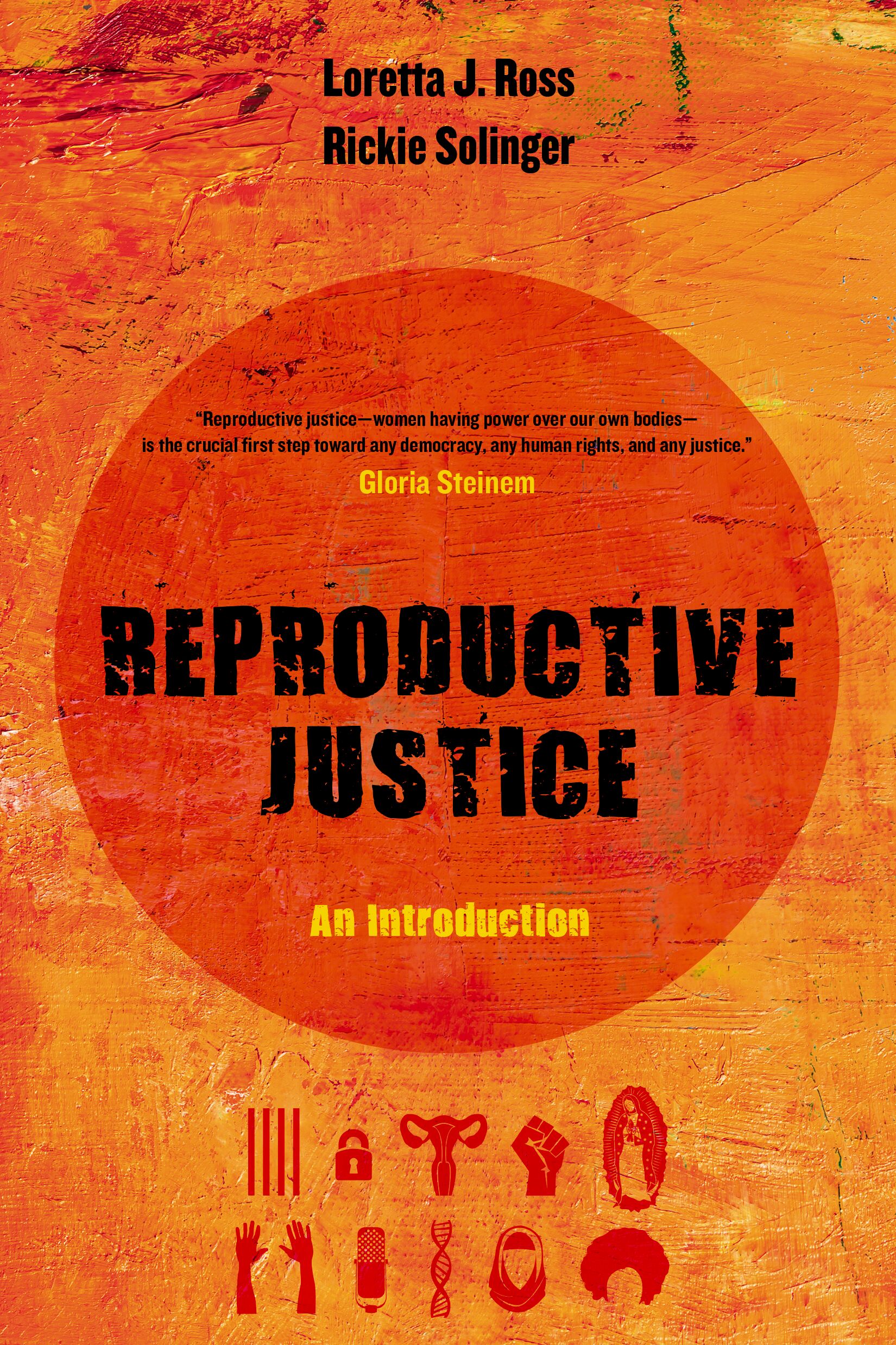
Reproductive justice
\"Reproductive Justice is a first-of-its-kind primer providing a comprehensive yet succinct description of the field. Written by two legendary scholar-activists, Reproductive Justice introduces students to an intersectional analysis of race, class, and gender politics. Clearly showing how reproductive justice is a political movement of reproductive rights and social justice, the authors illuminate how, for example, a low-income, physically -disabled woman, living in West Texas with no viable public transportation, no healthcare clinic, and no living-wage employment opportunities, faces a complex web of structural obstacles as she contemplates her sexual and reproductive intentions. Putting the lives and lived experience of women of color at the center of the book, and using a human rights analysis, the authors show how reproductive justice is significantly different from the pro-choice/anti-abortion debates that have long-dominated the headlines and mainstream political conflict. In a period in which women's reproductive lives are imperiled, Reproductive Justice provides an essential guide to understanding and mobilizing around women's rights in the 21st century. Reproductive Justice: A New Vision for the 21st Century Series publishes works that explore the contours and content of reproductive justice. The series will include primers intended for students and those new to reproductive justice as well as books of original research to continue to further knowledge and impact society.\"
eBook

Abortion and Reproductive Rights Activism
Feminist movements necessarily have to fight on multiple fronts; some issues rise and fall in terms of their prominence and political saliency, whilst others, such as abortion, have been an almost permanent feature of twentieth and (to date) twenty-first century feminist campaigning. There has been some speculation in the media regarding an ‘Americanization’ of the abortion debate in Britain;1 this refers both to the presence of US anti-abortion campaigns now active in Britain but also to the idea that the issue is becoming a ‘political football’. This chapter presents analysis of the ways in which feminist campaigns have responded to the state’s attempts to roll back abortion provision. In doing so, the chapter highlights the different role that the issue plays in feminist discourse and activism within Britain and the US. Focusing on one specific high-profile policy issue also enables us to consider more fully the ways in which feminist positions are framed by activists, the various groups campaigning on the issue and politicians and political parties. Abortion is a longstanding feminist issue and it is one that typically unites feminists: it has not emerged with this third wave of feminism and it is for that very reason that it provides a useful way of thinking through the points of continuity and divergence between ferninist campaigning in the US and Britain.
Book Chapter

Viability is probably irrelevant
Arguments to lower the gestational age limit at which abortion may be performed are based almost entirely on the idea of fetal viability-the gestational age at which, if the fetus were born prematurely, it would have a reasonable chance of survival. 1 The viability argument can be a convenient one for both sides of the debate, but it does not hold up to rational analysis.
Journal Article