
Catalogue Search | MBRL


Are you sure you want to remove the book from the shelf?

{{itemTitle}}
13,135
result(s) for
"accommodation"
Sort by:

Interculturalism : a view from Quebec
Accommodating ethnic diversity is a major challenge for all democratic nations and a topic that has attracted a great deal of attention in the last few decades. Within Quebec, a new approach has emerged that seeks a balance between the needs of minorities and those of the majority. In Interculturalism, sociologist and historian Gâerard Bouchard presents his vision of interculturalism as a model for the management of diversity. A pluralist approach which recognizes the existence of a cultural majority whose rights must also be acknowledged, interculturalism constitutes an important alternative to multiculturalism both in Canada and internationally. Written by one of Quebec's leading public intellectuals and the co-chair of the Bouchard-Taylor Commission on reasonable accommodation, Interculturalism is the first clear and comprehensive statement in English of an approach being discussed around the world. A translation of Bouchard's award-winning French-language work, L'Interculturalisme: Un point de vue quâebâecois, this book features a new foreword by philosopher Charles Taylor and an afterword by the author written specifically for the English-language edition. -- Provided by publisher.
Book
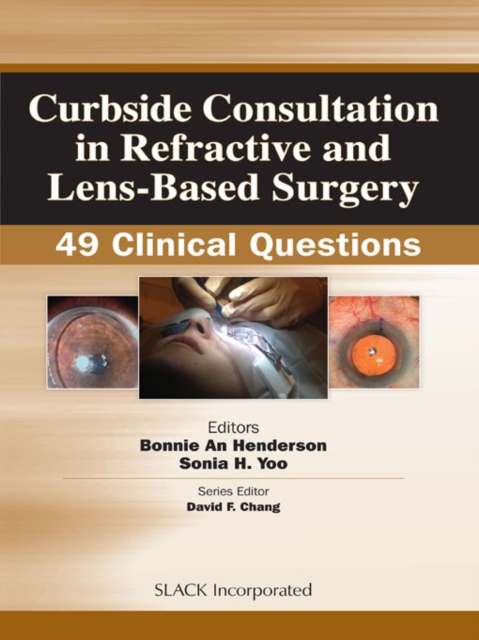
Curbside Consultation in Refractive and Lens-Based Surgery
Are you looking for concise, practical answers to questions that are often left unanswered by traditional references on refractive surgery? Are you seeking brief, evidence-based advice for the daily examination of patients?
Curbside Consultation in Refractive and Lens-Based Surgery: 49 Clinical Questions
provides quick and direct answers to the thorny questions most commonly posed during a \"curbside consultation\" between experienced clinicians.
Drs. Bonnie An Henderson and Sonia H. Yoo have designed this unique reference in which refractive specialists offer expert advice, preferences, and opinions on tough clinical questions commonly encountered by ophthalmologists, residents, and other health care professionals. The unique Q&A format provides quick access to current information related to refractive and lens-based surgery with the simplicity of a conversation between two colleagues. Images, diagrams, and references are included to enhance the text and to illustrate clinical diagnoses and treatment plans.
Based on clinical scenarios that a refractive surgeon might encounter in real life,
Curbside Consultation in Refractive and Lens-Based Surgery
provides information basic enough for residents while also incorporating expert pearls that even high-volume ophthalmologists will appreciate. General ophthalmologists and residents alike will enjoy the user-friendly and casual format.
Some of the questions that are answered:
How do I manage epithelial ingrowth after LASIK? What if it recurs?
Should I perform PRK in patients with forme fruste keratoconus?
How do I manage patients with dry eyes after LASIK surgery?
How do I determine my surgically induced astigmatism?
Is a monocular implantation of a multifocal IOL tolerated?
How do you manage an unhappy multifocal patient who is experiencing halos and glare?
eBook

A path in the mighty waters : shipboard life and Atlantic crossings to the New World
\"This book tells the story of how people experienced the eighteenth-century crossing of the Atlantic Ocean, exploring the transformative journey undertaken by the thousands of Europeans who journeyed in search of a better life. Stephen Berry shows how the ships, on which passengers were contained in close quarters for months at a time, operated as compressed \"frontiers,\" where diverse groups encountered one another and established new patterns of social organization. As he argues that experiences aboard ship served as a profound conversion experience for travelers, both spiritually and culturally, Berry reframes the history of Atlantic migrations, giving the ocean and the ship a more prominent role in Atlantic history. The ocean was more than a backdrop for human events: it actively shaped historical experiences by furnishing a dissociative break from normal patterns of life and a formative stage in travelers' processes of collective identification\"-- Provided by publisher.
Book

Accommodative response in children with attention deficit hyperactivity disorder (ADHD): the influence of accommodation stimulus and medication
BackgroundThere are claims that ocular accommodation differs in children with attention deficit hyperactivity disorder (ADHD) compared to typically developing children. We examined whether the accommodation response in ADHD children is influenced by changing the stimulus to accommodation in an attempt modify the level of attentional engagement or by medication for the condition.MethodsWe measured the accommodative response and pupil diameter using a binocular, open-field autorefractor in non-medicated and medicated children with ADHD (n = 22, mean age = 10.1 ± 2.4 years; n = 19; mean age = 11.0 ± 3.8 years; respectively) and in an age-matched control group (n = 22; mean age = 10.6 ± 1.9 years) while participants were asked to maintain focus on (i) a high-contrast Maltese cross, (ii) a frame of a cartoon movie (picture) and (iii) a cartoon movie chosen by the participant. Each stimulus was viewed for 180 s from a distance of 25 cm, and the order of presentation was randomised.ResultsGreater lags of accommodation were present in the non-medicated ADHD in comparison to controls (p = 0.023, lags of 1.10 ± 0.56 D and 0.72 ± 0.57 D, respectively). No statistically significant difference in the mean accommodative lag was observed between medicated ADHD children (lag of 1.00 ± 0.44D) and controls (p = 0.104) or between medicated and non-medicated children with ADHD (p = 0.504). The visual stimulus did not influence the lag of accommodation (p = 0.491), and there were no significant group-by-stimulus interactions (p = 0.935). The variability of accommodation differed depending on the visual stimulus, with higher variability for the picture condition compared to the cartoon-movie (p < 0.001) and the Maltese cross (p = 0.006). In addition, the variability yielded statistically significant difference for the main effect of time-on-task (p = 0.027), exhibiting a higher variability over time. However, no group differences in accommodation variability were observed (p = 0.935).ConclusionsChildren with ADHD have a reduced accommodative response, which is not influenced by the stimulus to accommodation. There is no marked effect of medication for ADHD on accommodation accuracy.
Journal Article

A 12-Week-Long Intake of Bilberry Extract (Vaccinium myrtillus L.) Improved Objective Findings of Ciliary Muscle Contraction of the Eye: A Randomized, Double-Blind, Placebo-Controlled, Parallel-Group Comparison Trial
A 12-week-long randomized, double-blind, placebo-controlled, parallel-group comparison trial was conducted to determine the effects of long-term standardized bilberry extract (SBE) intake on tonic accommodation of ciliary muscle caused by visual display terminal (VDT) tasks. This study was compliant with the accordance with CONSORT 2010 statement. A total of 109 healthy adult men and women aged 20–60 years were recruited and randomized into SBE and placebo groups. The subjects in the SBE and placebo groups were administered 240 mg of SBE and placebo, respectively, once daily for 12 weeks. Tests were performed before and after VDT tasks at week 0, 4, 8, and 12; high-frequency component (HFC)-1 value was the evaluation outcome. Results showed that post-load HFC-1 values at weeks 8 and 12 were significantly improved in the SBE group than in the placebo group (p = 0.014 and 0.017, respectively). This study shows that oral consumption of 240 mg SBE extract for 12 weeks relieves the tonic accommodation of the ciliary muscle caused by VDT tasks and near-vision tasks.
Journal Article

Pharmacological Accommodative Changes of Haptic Position and Its Impact on Vault After ICL Implantation
Purpose
To evaluate dynamic changes in ciliary parameters and Implantable Collamer Lens V4C (ICL) (STAAR Surgical) haptic position using mydriatic and miotic agents and their effects on the central and peripheral vault.
Methods
This study involved 80 eyes from 40 consecutive patients (mean age: 28.05 years; range: 19 to 42 years) examined 3 months after ICL implantation. Patients were randomly assigned to either a mydriasis group or a miosis group. Ultrasound biomicroscopy was used to measure the following parameters at baseline and after pharmacological induction with tropicamide or pilocarpine: ciliary process length (CPL), iris ciliary angle (ICA), final tip point of the ICL haptic (ftICL haptic), central vault (c-vault), mid-peripheral vault (m-vault), and peripheral vault (p-vault).
Results
In the mydriatic group, the proportion of eyes with all ICL haptics in the ciliary sulcus increased from 70.0% to 77.5% after tropicamide administration, whereas in the miotic group, this proportion decreased from 67.5% to 57.5% after pilocarpine administration. The CPL and ftICL haptic increased significantly in the mydriatic group (all P < .01) but decreased in the miotic group (all P < 0.01). Conversely, the ICA decreased significantly in the mydriatic group and increased in the miotic group (all P < .01). The correlation analysis showed no significant relationship between changes in c-vault, m-vault, and p-vault with alterations in CPL, ICA, and ftICL haptic in both groups.
Conclusions
Haptic position contributes to the movement of the ICL optical zone during accommodation, but changes in haptic position were not significantly correlated with changes in the vault.
[J Refract Surg. 2025;41(1):e22–e28.]
Journal Article

Effect of low-dose atropine on myopia progression, pupil diameter and accommodative amplitude: low-dose atropine and myopia progression
PurposeTo evaluate the effects of 0.01% and 0.02% atropine eye drops on myopia progression, pupil diameter and accommodative amplitude in myopic children.MethodsA cohort study assessed 400 myopic children divided into three groups: 138 and 142 children were randomised to use either 0.02% or 0.01% atropine eye drops, respectively. They wore single-vision (SV) spectacles, with one drop of atropine eye drop applied to both eyes once nightly. Control children (n=120) only wore SV spectacles. Repeated measurements of spherical equivalent refractive errors (SERs), axial length (AL), pupil diameter and accommodative amplitude were performed at baseline, and 4, 8 and 12 months after treatment.ResultsAfter 12 months, the SER change was −0.38±0.35D, −0.47±0.45D, −0.70±0.60D and AL change was 0.30±0.21 mm, 0.37±0.22 mm, 0.46±0.35 mm in the 0.02%, 0.01% atropine and control groups, respectively. There were significant differences in the change in AL and SER between three groups (all p<0.001). Between baseline and the 12-month visit, the overall change in accommodative amplitude was 1.50±0.25D, 1.61±0.31D and change in pupil diameter was 0.78±0.42 mm, 0.69±0.39 mm, with 0.02% and 0.01% atropine, respectively. Accommodative amplitude significantly decreased and pupil diameter significantly increased in two atropine groups (all p<0.001). Moreover, there was no statistical difference in the change difference in accommodative amplitude and pupil diameter between two atropine groups (p=0.24, p=0.38), whereas the accommodative amplitude (p=0.45) and pupil diameter (p=0.39) in the control group remained stable.Conclusions0.02% atropine eye drops had a better effect on myopia progression than 0.01% atropine, but 0.02% and 0.01% atropine showed similar effects on pupil diameter and accommodative amplitude after 12 months of treatment.Trial registration numberChiCTR-IPD-16008844.
Journal Article

Processes, Experiences, and Outcomes Associated With Accommodation and Nursing Students With Disabilities: A Scoping Review
Background: More accessible nursing programs for a broader segment of society, including students with disabilities, will enhance diversity of thought in program curricula and representation among nurse graduates. Key to realizing these benefits is the ways in which nurse educators can best promote accessible and inclusive learning environments for nursing students with disabilities. Purpose: We completed a scoping review of published research reports, non-research publications, and dissertations related to accommodation and baccalaureate nursing students with disabilities. The review explored what is known from existing literature about the processes, experiences, and outcomes associated with classroom and clinical accommodation for nursing students with disabilities from the perspectives of learners and educators. Method: Online databases were used to identify literature that was written in English, published from 1990 to 2024, and focused on accommodation for nursing students with any visible or invisible disability within a nursing program leading to registered nurse status. Arksey and O’Malley’s (2005) methodological framework guided the selection of 84 publications, charting of the data, and summarizing results. Results: Accommodation processes are linked to disclosure, require collaboration, need to account for context, and must comply with legislation. The experience of accommodation for nursing students ranges from worrisome to supportive, while faculty experiences are similarly varied: feelings range from skepticism and internal struggle to acceptance and willingness. No standardized process and no universally accepted target outcome exist for the accommodation process. Tensions and uncertainties about how to best support nursing students with disabilities are ongoing. Conclusions: Intersectoral collaborative scholarly work is needed to advance practices for managing the complexities associated with the accommodation process in nursing education. Evidence is needed to ensure the process promotes equitable and inclusive experiences for nursing students with disabilities and supports nurse educators in managing their primary role through ample resources and professional development opportunities. Contexte : Rendre les programmes de sciences infirmières plus accessibles à un segment plus large de la société, y compris aux étudiantes et étudiants en situation de handicap, renforcera la diversité des perspectives dans les programmes d’études et la représentativité parmi les diplômées et diplômés en sciences infirmières. Pour réaliser ces avantages, il est essentiel que les infirmières et infirmiers enseignants puissent promouvoir des environnements d’apprentissage accessibles et inclusifs pour les étudiantes et étudiants en situation de handicap. Objectif : Nous avons réalisé une revue de la portée comportant des rapports de recherche publiés, des publications non fondées sur la recherche et des thèses liés aux mesures d’accommodement et aux étudiantes et étudiants au baccalauréat en sciences infirmières en situation de handicap. Cette revue a examiné ce que la littérature existante révèle au sujet des processus, des expériences et des résultats associés aux mesures d’accommodement en classe et en milieu clinique pour les étudiantes et étudiants en sciences infirmières en situation de handicap, selon les perspectives des apprenantes et apprenants ainsi que des personnes enseignantes. Méthode : Des bases de données en ligne ont été utilisées pour repérer la littérature rédigée en anglais, publiée entre 1990 et 2024, et portant sur les mesures d’accommodement pour les étudiantes et étudiants en sciences infirmières ayant un handicap visible ou invisible au sein d’un programme menant au statut d’infirmière ou infirmier autorisé. Le cadre méthodologique d’Arksey et O’Malley (2005) a guidé la sélection de 84 publications, la consignation des données et la synthèse des résultats. Résultats : Les processus d’accommodement sont liés à la divulgation, nécessitent une collaboration, doivent tenir compte du contexte et doivent respecter la législation. L’expérience des accommodements pour les étudiantes et étudiants en sciences infirmières varie d’inquiétante à soutenante, tandis que les expériences du corps professoral sont tout aussi diversifiées : les sentiments vont du scepticisme et des luttes internes à l’acceptation et à la volonté d’appuyer. Il n’existe aucun processus normalisé ni aucun résultat cible universellement accepté pour le processus d’accommodement. Des tensions et des incertitudes persistent quant à la meilleure façon de soutenir les étudiantes et étudiants en situation de handicap en sciences infirmières. Conclusions : Des travaux de recherche intersectoriels et collaboratifs sont nécessaires pour faire progresser les pratiques de gestion des complexités associées au processus d’accommodement dans la formation infirmière. Des données probantes sont requises afin d’assurer que ce processus favorise des expériences équitables et inclusives pour les étudiantes et étudiants en situation de handicap et qu’elles soutiennent les infirmières et infirmiers enseignants dans l’exercice de leur rôle principal grâce à des ressources suffisantes et à des possibilités de développement professionnel.
Journal Article
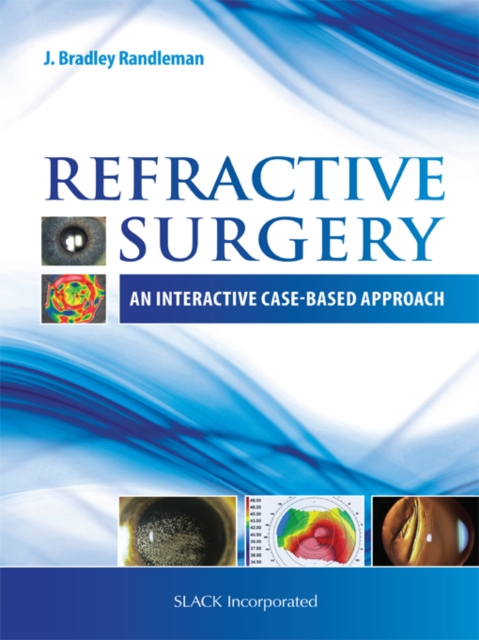
Refractive Surgery
Refractive Surgery: An Interactive Case-Based Approach
presents all of the necessary refractive surgery material to make an informed decision regarding diagnosis and management plans. Rather than utilizing the standard organization of most books, where major points are first introduced and then explained through a series of writings and references, this book relies on the clinical decision-making process involved with treating refractive surgery patients.
Refractive Surgery: An Interactive Case-Based Approach
by Dr. J. Bradley Randleman builds upon foundational initial chapters through the case presentations and focused case discussions, encompassing the major topics in refractive surgery today. For each case, the critical question is simply, \"what data in this chart is the most critical to consider when evaluating this patient for surgery?\"
Refractive Surgery: An Interactive Case-Based Approach
is unique in its format. Specifically, the book facilitates active learning by forcing the reader to think through a series of questions surrounding each patient scenario. This active learning not only facilitates better recall of the information presented but also mimics the actual physician-to-patient clinical experience, making this book more relevant than other routine refractive surgery books.
Bonus!
This dynamic learning tool is also supplemented by interactive online video material to further the learning experience. Enhance the clinical decision-making process by watching the videos and then answering a series of questions that lead to the conclusion of each scenario.
By challenging the reader to perform the thinking and decision making up-front, and then providing some guidance on the most salient concepts for each case scenario presented along with resources to gain a deeper understanding of the most complex concepts,
Refractive Surgery: An Interactive Case-Based Approach
engages more in the learning process and thereby allowing to absorb and retain significantly more information to apply to patient care and the education of others.
Ophthalmologists, residents, fellows, resident and fellowship educators, who want to update their refractive surgery knowledge base will appreciate the unique format and style of
Refractive Surgery: An Interactive Case-Based Approach.
eBook

The rise (and rise) of vertical studentification
The conditions for studentification are changing with increasing numbers of students living in high-rise – and high-quality – micro-apartment-style accommodation provided through purposebuilt student accommodation (PBSA) blocks. This ‘verticalisation’ of studentification is a global phenomenon, with Australia representing a frontier with distinctive geographies that result from its rapid ascension to the second-ranked global destination for international students. Yet, despite rising student numbers being recognised as positively impacting national and state economies, little is understood of how student accommodation development fits within the broader scheme of Australian urban revitalisation. To address this, we combine concepts relating to condo-ism and condo-isation to offer an original analytical framework that examines how PBSA has created new conditions through which vertical studentification can be produced in and of cities. We therefore ask how vertical studentification relates to wider Australian housing and urban development trends in ways that differentiate PBSA development and trajectories from other forms of accommodation. We also question how vertical studentification relates to the realities and regulation expressed as intra-urban geographies of Australian university cities and their resident-host communities. We argue that deliberately recognising and dovetailing several self-reinforcing and contradicting urban development dimensions invites a foundation for further interrogating vertical studentification in existing and emerging sites in Australia and beyond.
随着越来越多的学生住在由专门建造的学生宿舍 (PBSA) 街区提供的高质量高层微型公寓式宿舍里,学生化的条件正在发生变化。这种学生化的“垂直化”是一种全球现象,澳大利亚在这方面处于前沿位置,具有独特的地理特征,这是因为它迅速成为了全球第二大国际学生目的地。然而,尽管学生数量的日益增多被认为对全国和州的经济产生了积极影响,但学生住宿发展与澳大利亚城市复兴的广泛计划之间的关系却鲜为人知。为了认识这一问题,我们将公寓主义 (Condo-ism) 和公寓化 (Condo-isation) 相关的概念结合起来,提供了一个原始的分析框架,该框架考察了PBSA如何创造新的条件,通过这些条件,城市可以产生或变得垂直学生化。藉此,我们探寻垂直学生化与更广泛的澳大利亚住房和城市发展趋势之间的关系,以区别PBSA发展与其他形式的住宿模式。我们还探寻垂直学生化与现实和条例之间的关系,后者的表现是澳大利亚大学城与其居住社区的城市内部地理。我们认为,有意识别和整合几个自我强化和相互矛盾的城市发展层面,能为进一步调查澳大利亚及其他地区现有和新兴场所的垂直学生化奠定基础。
Journal Article