
Catalogue Search | MBRL


Are you sure you want to remove the book from the shelf?

{{itemTitle}}
28,339
result(s) for
"african anthropology"
Sort by:


The enculturated gene
In the 1980s, a research team led by Parisian scientists identified several unique DNA sequences, or haplotypes, linked to sickle cell anemia in African populations. After casual observations of how patients managed this painful blood disorder, the researchers in question postulated that the Senegalese type was less severe. The Enculturated Gene traces how this genetic discourse has blotted from view the roles that Senegalese patients and doctors have played in making sickle cell \"mild\" in a social setting where public health priorities and economic austerity programs have forced people to improvise informal strategies of care.
eBook

Consuming Ivory
Examines the complex global impact of the ivory tradeThe economic prosperity of two nineteenth- and early-twentieth-century New England towns rested on factories that manufactured piano keys, billiard balls, combs, and other items made of ivory imported from East Africa. Yet while towns like Ivoryton and Deep River, Connecticut, thrived, the African ivory trade left in its wake massive human exploitation and ecological devastation. At the same time, dynamic East African engagement with capitalism and imperialism took place within these trade histories.Drawing from extensive archival and field research in New England, Great Britain, and Tanzania, Alexandra Kelly investigates the complex global legacies of the historical ivory trade. She not only explains the complexities of this trade but also analyzes Anglo-American narratives about Africa, questioning why elephants and ivory feature so centrally in those representations. From elephant conservation efforts to the cultural heritage industries in New England and East Africa, her study reveals the ongoing global repercussions of the ivory craze and will be of interest to anthropologists, archaeologists, historians, and conservationists.
eBook

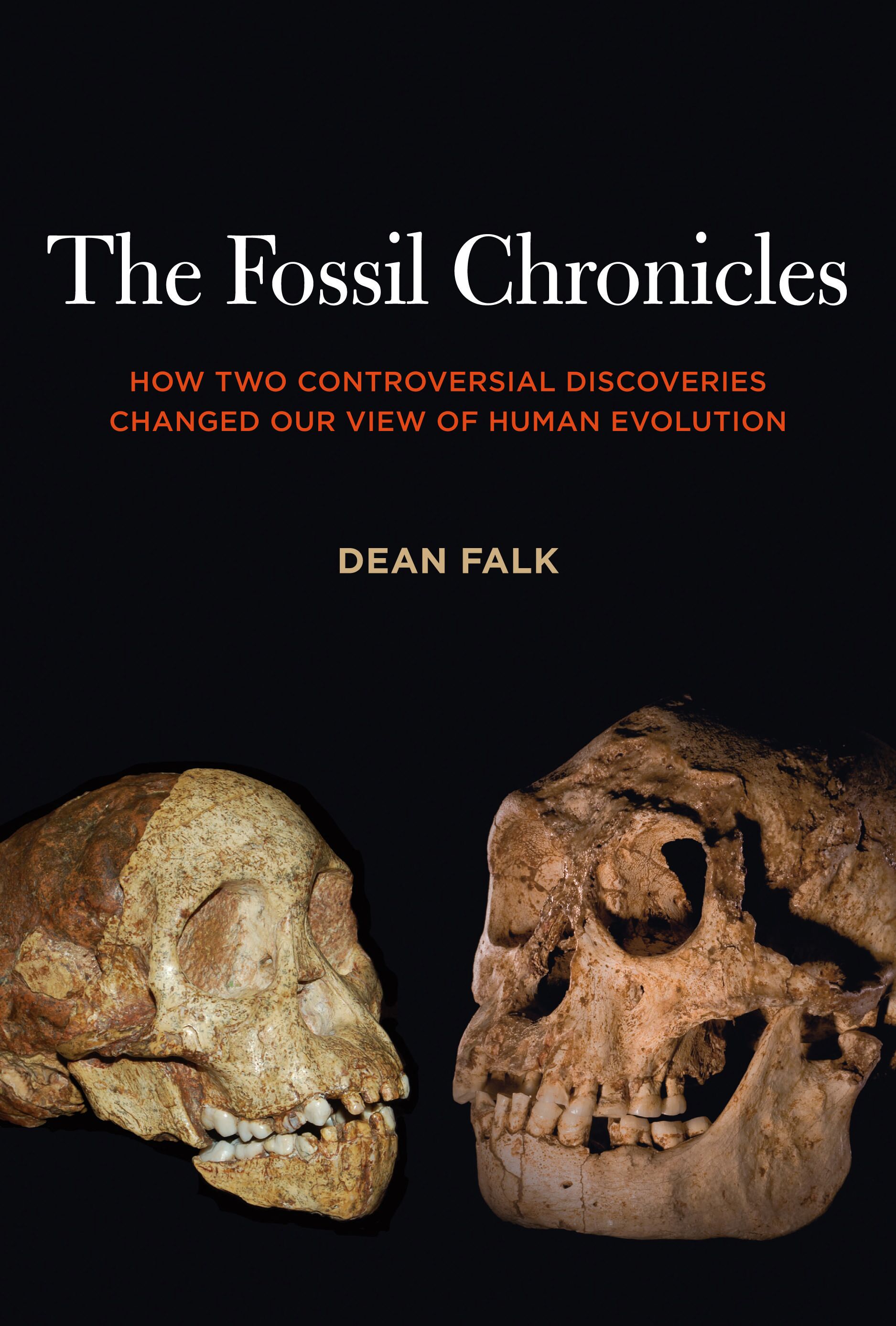
The fossil chronicles
Two discoveries of early human relatives, one in 1924 and one in 2003, radically changed scientific thinking about our origins. Dean Falk, a pioneer in the field of human brain evolution, offers this fast-paced insider's account of these discoveries, the behind-the-scenes politics embroiling the scientists who found and analyzed them, and the academic and religious controversies they generated. The first is the Taung child, a two-million-year-old skull from South Africa that led anatomist Raymond Dart to argue that this creature had walked upright and that Africa held the key to the fossil ancestry of our species. The second find consisted of the partial skeleton of a three-and-a-half-foot-tall woman, nicknamed Hobbit, from Flores Island, Indonesia. She is thought by scientists to belong to a new, recently extinct species of human, but her story is still unfolding. Falk, who has studied the brain casts of both Taung and Hobbit, reveals new evidence crucial to interpreting both discoveries and proposes surprising connections between this pair of extraordinary specimens.
eBook


Scrambling for Africa
Countries in sub-Saharan Africa were once dismissed by Western experts as being too poor and chaotic to benefit from the antiretroviral drugs that transformed the AIDS epidemic in the United States and Europe. Today, however, the region is courted by some of the most prestigious research universities in the world as they search for \"resource-poor\" hospitals in which to base their international HIV research and global health programs. InScrambling for Africa, Johanna Tayloe Crane reveals how, in the space of merely a decade, Africa went from being a continent largely excluded from advancements in HIV medicine to an area of central concern and knowledge production within the increasingly popular field of global health science.
Drawing on research conducted in the U.S. and Uganda during the mid-2000s, Crane provides a fascinating ethnographic account of the transnational flow of knowledge, politics, and research money-as well as blood samples, viruses, and drugs. She takes readers to underfunded Ugandan HIV clinics as well as to laboratories and conference rooms in wealthy American cities like San Francisco and Seattle where American and Ugandan experts struggle to forge shared knowledge about the AIDS epidemic. The resulting uncomfortable mix of preventable suffering, humanitarian sentiment, and scientific ambition shows how global health research partnerships may paradoxically benefit from the very inequalities they aspire to redress. A work of outstanding interdisciplinary scholarship,Scrambling for Africawill be of interest to audiences in anthropology, science and technology studies, African studies, and the medical humanities.
eBook

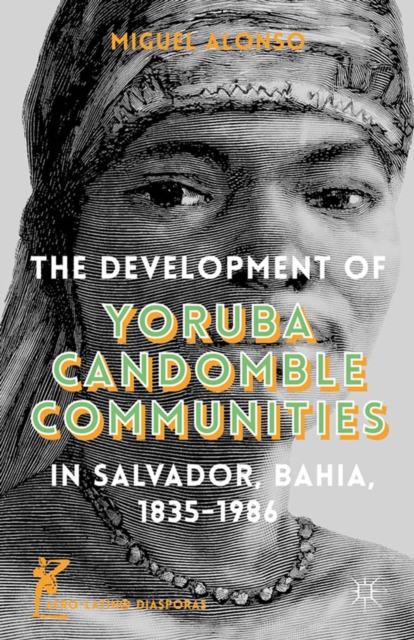
The development of Yoruba Candomble communities in Salvador, Bahia, 1835-1986
This project is an attempt to bring together the many fragments of history concerning the Yoruba religious community and their rise to prominence in Salvador, Bahia, Brazil, from the mid-nineteenth to the late-twentieth centuries. Given the scarcity of primary sources for this particular subject, it focuses mainly on the works of early Bahian ethnographers as primary sources (even as it analyzes these sources' inherent weaknesses, such as the inability to corroborate much of their information and the cultural biases from which they were constructed), while also incorporating newspaper accounts, police records, oral interviews, and a variety of other innovative forms of evidence. The result is a fascinating historical study of a community characterized by a profound secrecy and a remarkable ability to manipulate or deliberately mislead outside researchers to preserve their own self-interests and protect what they feel is privileged information.
eBook