
Catalogue Search | MBRL


Are you sure you want to remove the book from the shelf?

{{itemTitle}}
29,848
result(s) for
"aging policy"
Sort by:

International handbook on ageing and public policy
This title explores the challenges arising from the ageing of populations across the globe for government, policy makers, the private sector and civil society.
BOOK

Old-age income support in the 21st century : an international perspective on pension systems and reform
The past decade has brought an increasing recognition to the importance of pension systems to the economic stability of nations and the security of their aging populations. During this time, the World Bank has taken a leading role in addressing this challenge through its support for pension reforms around the world. Old-Age Income Support in the 21st Century attempts to explain current policy thinking and update the World Bank’s perspective on pension reform. The Bank has been involved in pension reforms in nearly 60 countries, and the demand for its support continues to grow. This book incorporates lessons learned from recent Bank experiences and research that have significantly increased knowledge and insight regarding how best to proceed in the future. The book has a comprehensive introduction and two main parts. Part I presents the conceptual underpinnings for the Bank’s thinking on pension systems and reforms, including structure of Bank lending in this area. Part II highlights key design and implementation issues where it signals areas of confidence and areas for further research and experience, and includes a section on regional reform experiences, including Latin American and Europe and Central Asia. This book will be of interest to Bank clients, the international community, and anyone interested in pension systems and reform.
eBook


Organizational Hindrances to the Retention of Older Healthcare Workers
The Swedish healthcare sector is currently experiencing recruitment difficulties combined with increasing demand for healthcare services. This study accordingly seeks knowledge of the obstacles to and opportunities for retaining older employees in the Swedish healthcare sector. Results of interviews with line managers and human resource (HR) partners indicate that the informants have positive attitudes toward older healthcare workers in general, particularly acknowledging their contributions based on long experience and skill. However, line managers’ high workload, the absence of age-management strategies, and universal HR policies not conducive to older workers’ individual needs are considered obstacles to retention on an organizational level. To retain older healthcare workers and maintain their ability and motivation, the healthcare sector and especially HR strategies need to be more proactive in addressing these issues, and formalized policies are required in order to benefit from the potential labor reserve that older employees constitute.
Journal Article


China’s Elder Care Policies 1994–2020: A Narrative Document Analysis
Until the 1980s, institutional elder care was virtually unknown in China. In a few decades, China had to construct a universal social safety net and assure basic elderly care. China’s government has been facing several challenges: the eroding traditional family care, the funding to assure care services for the older population, as well as the shortage of care delivery services and nursing staff. This paper examines China’s Five-Year Policy Plans from 1994 to 2020. Our narrative review analysis focuses on six main topics revealed in these policies: care infrastructure, community involvement, home-based care, filial piety, active aging and elder industry. Based on this analysis, we identified several successive and often simultaneously strategic steps that China introduced to contend with the aging challenge. In Western countries, elder care policies have been shifting to the home care approach. China introduced home care as the elder care cornerstone and encouraged the revival of the filial piety tradition. Although China has a unique approach, the care policies for the aged population in China and Western countries are converging by emphasizing home-based care, informal care and healthy aging.
Journal Article

Neoliberalising old age
\"This book explores an issue central to the study of age and ageing: Do we wish to preserve old age as a discrete stage of life, to be protected by welfare policies specifically targeting 'the old'? Should old age be accorded a privileged status? This may recognise the needs of a particular age group with regard to health, income and social care. But by doing so, we support the inaccurate and possibly offensive definition of 'old age' as the stage of life beyond age 65 - a demarcation line which has no biological or cognitive significance, since human beings age at very different rates. Defining old age in this way may ghettoise and marginalise one group of people in society, encouraging prejudice against them via policies that 'single out, stigmatise and isolate the aged from the rest of society', in a way that can be seen as subtly ageist. On the other hand, should we dispense with age as a categorisation and work towards an 'age-irrelevant', 'age-neutral' or 'ageless' society - one in which individuals will be judged by the content of their character, rather than their chronological age? Is the concept of old age an outmoded relic from the past?\"-- Provided by publisher.
Book

THE EFFECT OF MEDICAL MARIJUANA LAWS ON THE HEALTH AND LABOR SUPPLY OF OLDER ADULTS
Older adults are at elevated risk of reducing labor supply due to poor health, partly because of high rates of symptoms that may be alleviated by medical marijuana. Yet, surprisingly little is known about how this group responds to medical marijuana laws (MMLs). We quantify the effects of state medical marijuana laws on the health and labor supply of adults age 51 and older, focusing on the 55 percent with one or more medical conditions with symptoms that may respond to medical marijuana. We use longitudinal data from the Health and Retirement Study to estimate event study and differences-in-differences regression models. Three principle findings emerge from our analysis. First, active state medical marijuana laws lead to lower pain and better self-assessed health among older adults. Second, state medical marijuana laws lead to increases in older adult labor supply, with effects concentrated on the intensive margin. Third, the effects of MMLs are largest among older adults with a health condition that would qualify for legal medical marijuana use under current state laws. Findings highlight the role of health policy in supporting work among older adults and the importance of including older adults in assessments of state medical marijuana laws.
Journal Article

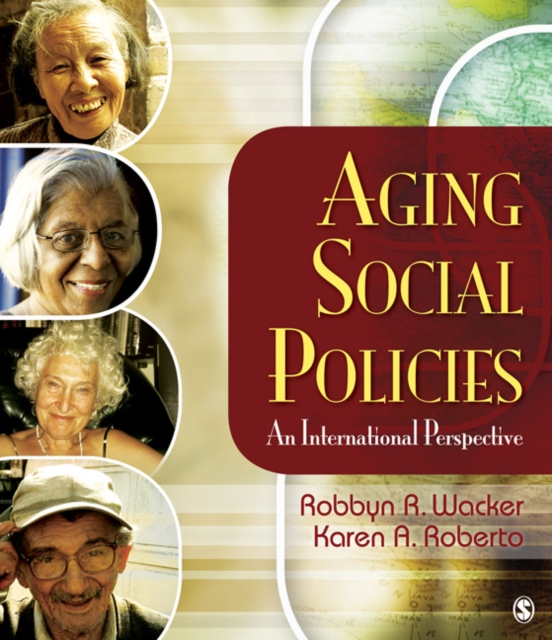
Aging social policies : an international perspective
Our population is aging. What will we do about it?Due to population explosion and a global increase in average life expectancies, an unprecedentedly high percentage of the world's population is aging. By the middle of this century there will be up to 2 billion individuals over the age of 65, a demographic shift never before experienced in our human history. In addition, declining birth rates in industrialized countries means a decrease in the number of adults under 64. In Aging Social Policies: An International Perspective the authors consider how policy–domestic and international–affects and will continue to affect the lives of our aging population.
eBook