
Catalogue Search | MBRL


Are you sure you want to remove the book from the shelf?

{{itemTitle}}
241,797
result(s) for
"and"
Sort by:
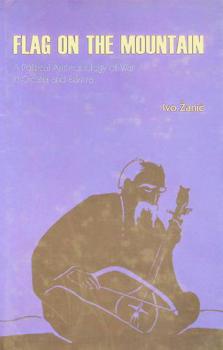
Flag on the mountain : a political anthropology of war in Croatia and Bosnia-Herzegovina, 1990-1995
\"Drawing on a wealth of sources - including print media. TV broadcasts, political speeches, and particularly new epic poems, unveiled at political rallies or before military or paramilitary audiences then widely distributed on audio cassette - Zanic's book is far-reaching, revealing how war profiteers, paramilitary leaders, plunderers and charlatans took their places harmoniously within the universal theme of Robin Hood, growing into models of local identity and even into national icons and political exemplars.\"--Jacket.
Book

Tunneling estimates and approximate controllability for hypoelliptic equations
This memoir is concerned with quantitative unique continuation estimates for equations involving a “sum of squares” operator
The first result is the tunneling estimate
The main
result is a stability estimate for solutions to the hypoelliptic wave equation
We then prove the approximate controllability of the
hypoelliptic heat equation
We also explain how the analyticity
assumption can be relaxed, and a boundary
Most results turn out to be optimal on a family of Grushin-type operators.
The main proof relies on the
general strategy to produce quantitative unique continuation estimates, developed by the authors in Laurent-Léautaud (2019).
eBook


Peacebuilding in Practice
In November 2007 Adam Moore was conducting fieldwork in Mostar
when the southern Bosnian city was rocked by two days of violent
clashes between Croat and Bosniak youth. It was not the city's only
experience of ethnic conflict in recent years. Indeed, Mostar's
problems are often cited as emblematic of the failure of
international efforts to overcome deep divisions that continue to
stymie the postwar peace process in Bosnia. Yet not all of Bosnia
has been plagued by such troubles. Mostar remains mired in distrust
and division, but the Brčko District in the northeast corner of the
country has become a model of what Bosnia could be. Its multiethnic
institutions operate well compared to other municipalities, and are
broadly supported by those who live there; it also boasts the only
fully integrated school system in the country. What accounts for
the striking divergence in postwar peacebuilding in these two
towns?
Moore argues that a conjunction of four factors explains the
contrast in peacebuilding outcomes in Mostar and Brčko: The design
of political institutions, the sequencing of political and economic
reforms, local and regional legacies from the war, and the practice
and organization of international peacebuilding efforts in the two
towns. Differences in the latter, in particular, have profoundly
shaped relations between local political elites and international
officials. Through a grounded analysis of localized peacebuilding
dynamics in these two cities Moore generates a powerful argument
concerning the need to rethink how peacebuilding is done-that is, a
shift in the habitus or culture that governs international
peacebuilding activities and priorities today.
In November 2007 Adam Moore was conducting fieldwork in Mostar
when the southern Bosnian city was rocked by two days of violent
clashes between Croat and Bosniak youth. It was not the city's only
experience of ethnic conflict in recent years. Indeed, Mostar's
problems are often cited as emblematic of the failure of
international efforts to overcome deep divisions that continue to
stymie the postwar peace process in Bosnia. Yet not all of Bosnia
has been plagued by such troubles. Mostar remains mired in distrust
and division, but the Brcko District in the northeast corner of the
country has become a model of what Bosnia could be. Its multiethnic
institutions operate well compared to other municipalities, and are
broadly supported by those who live there; it also boasts the only
fully integrated school system in the country. What accounts for
the striking divergence in postwar peacebuilding in these two
towns?Moore argues that a conjunction of four factors explains the
contrast in outcomes in Mostar and Brcko: The design of political
institutions, the sequencing of political and economic reforms,
local and regional legacies from the war, and the practice and
organization of international peacebuilding efforts in the two
towns. Differences in the latter, in particular, have profoundly
shaped relations between local political elites and international
officials. Through a grounded analysis of localized peacebuilding
dynamics in these two cities Moore generates a powerful argument
concerning the need to rethink how peacebuilding is done-that is, a
shift in the habitus or culture that governs international
peacebuilding activities and priorities today.
eBook


Sensitive pasts
Heritage studies necessarily must deal with strong emotions and political commitments. In this, it poses particular challenges for teachers and their students. Guided by a shared focus on these \"sensitive pasts,\" the contributors to this volume draw on new theoretical and empirical research to provide valuable insights into heritage pedagogy.
eBook


Tits polygons
We introduce the notion of a Tits polygon, a generalization of the notion of a Moufang polygon, and show that Tits polygons arise in
a natural way from certain configurations of parabolic subgroups in an arbitrary spherical buildings satisfying the Moufang condition.
We establish numerous basic properties of Tits polygons and characterize a large class of Tits hexagons in terms of Jordan algebras. We
apply this classification to give a “rank
eBook


Literary Cultures in History
A grand synthesis of unprecedented scope,Literary Cultures in Historyis the first comprehensive history of the rich literary traditions of South Asia. Together these traditions are unmatched in their combination of antiquity, continuity, and multicultural complexity, and are a unique resource for understanding the development of language and imagination over time. In this unparalleled volume, an international team of renowned scholars considers fifteen South Asian literary traditions-including Hindi, Indian-English, Persian, Sanskrit, Tibetan, and Urdu-in their full historical and cultural variety. The volume is united by a twofold theoretical aim: to understand South Asia by looking at it through the lens of its literary cultures and to rethink the practice of literary history by incorporating non-Western categories and processes. The questions these seventeen essays ask are accordingly broad, ranging from the character of cosmopolitan and vernacular traditions to the impact of colonialism and independence, indigenous literary and aesthetic theory, and modes of performance. A sophisticated assimilation of perspectives from experts in anthropology, political science, history, literary studies, and religion, the book makes a landmark contribution to historical cultural studies and to literary theory in addition to the new perspectives it offers on what literature has meant in South Asia. (Available in South Asia from Oxford University Press--India)
eBook