
Catalogue Search | MBRL


Are you sure you want to remove the book from the shelf?

{{itemTitle}}
669
result(s) for
"animal metaphors"
Sort by:
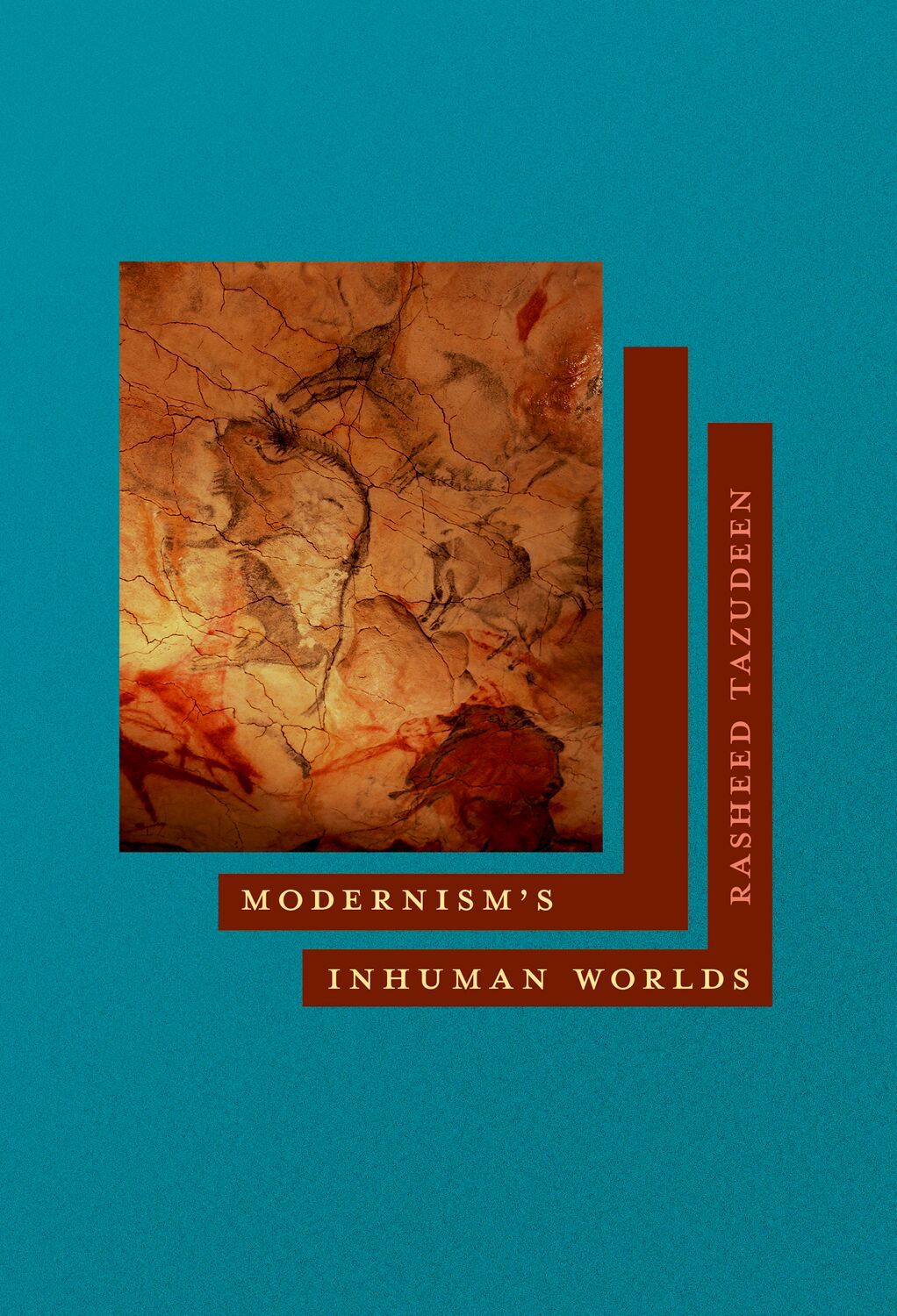
Modernism's Inhuman Worlds
Modernism's Inhuman Worlds
explores the centrality of ecological precarity, species
indeterminacy, planetary change, and the specter of extinction to
modernist and contemporary metamodernist literatures.
Modernist ecologies, Rasheed Tazudeen argues, emerge in response to
the enigma of how to imagine inhuman being-including soils,
forests, oceans, and the earth itself-through languages and
epistemologies that have only ever been humanist. How might
(meta)modernist aesthetics help us to imagine (with) inhuman
worlds, including the worlds still to be made on the other side of
mass extinction?
Through innovative readings of canonical and emergent modernist
and metamodernist works, Tazudeen theorizes inhuman modernism as a
call toward further receptivity to the worlds, beings, and
relations that tend to go unthought within Western humanist
epistemologies. Modernist engagements with the figures of enigma,
riddle, and metaphor, according to the book's central argument,
offer a means toward what Franz Kafka calls an \"otherwise\"
speaking, based on language's obliqueness to inhuman and planetary
being. Drawing on ecocriticism, decolonial and feminist science
studies, postcolonial theory, inhuman geography, and sound studies,
Tazudeen analyzes an inhuman modernist lineage-spanning from
Darwin, Carroll, and Flaubert, through Joyce, Kafka, and Woolf, to
contemporary poetic works-as both part of a collaborative
rethinking of modernism's planetary and inhuman aesthetics, as well
as occasions for imagining new modes of livingness for the
extinctions to come.
eBook

An Analysis of Animal Metaphors in Episodes of Gender Violence Reported in Spanish and Canadian Newspapers
This article explores animal metaphors in episodes of gender-based violence reported in Spanish and Canadian newspapers. It analyzes the most common zoomorphic representations of female victims in real cases of gender-based violence documented in the news in Spain and Canada from 2006 to 2022. The research shows how the bestial iconography articulates discourses of gender-based violence and how the male perpetrator sees the abused woman through an animal lens to dehumanize, sexualize, exert, and even justify his violent actions.
Journal Article

How animal metaphors increase tourists’ waste classification intention?
Previous researches have shown that animal metaphors play an important role in promoting specific behavioral dispositions of individuals. However, we are not well aware of the role of animal metaphors in tourists’ waste classification intentions. Therefore, this study aimed to investigate the impact of animal metaphors advertising for waste classification in scenic spots (versus non-animal metaphors advertising) on tourists’ waste classification intentions. Four experiments (N = 1051) were conducted in this study to examine the impacts of animal metaphors advertising in scenic spots, on tourists’ waste classification intentions, which enriches the literature on the animal metaphors and tourists’ pro-environmental behaviors. The results show that the animal metaphors advertising about waste classification in scenic spots can effectively increase tourists’ waste classification intentions. We explored the mediating role of tourists’ perceptions of cute animal images in animal metaphors advertising, and the moderating role of visual imagery for animal metaphors advertising, on the relationship between animal metaphors advertising and tourists’ waste classification intentions. The results show that there is a significant interaction effect between visual imagery and animal metaphors advertising. In conclusion, this study reveals the different impacts of animal metaphors, cute images and visual imagery on individual tourists, which provides new insights for scenic spot managers to choose waste classification strategies and the looks of bins.
Journal Article

Figurations of Suffering in Concentration Camp Testimony
This article offers a close reading of the figurative language used to represent suffering in literary testimonies of the Nazi concentration camps. It begins with an overview of the debate over the legitimacy of figurative language in representations of the Holocaust and considers the arguments against metaphor by scholars in the field of pain research and Holocaust studies. Bringing into dialogue the disciplines of pain studies and Holocaust studies, the article advances the claim that figurative language is an effective means of expressing suffering and that an analysis of this language is valuable for understanding the experiences of the victims of Nazism. The article subsequently presents a comparative analysis of Se questo è un uomo (1947) by Primo Levi, Le grand voyage (1963) by Jorge Semprún, and K.L. Reich (1963) by Joaquim Amat-Piniella. It identifies two patterns in the representation of suffering by these author-survivors: first, the use of zoomorphic metaphors to describe bodily pain and, second, the depiction of anthropomorphized landscapes to portray psychological anguish.
Journal Article

An Analysis of Animal Metaphors in Episodes of Gender-Based Violence Reported in Spanish and Canadian Newspapers
This article explores animal metaphors in episodes of gender-based violence reported in Spanish and Canadian newspapers. It analyzes the most common zoomorphic representations of female victims in real cases of gender-based violence documented in the news in Spain and Canada from 2006 to 2022. The research shows how the bestial iconography articulates discourses of gender-based violence and how the male perpetrator sees the abused woman through an animal lens to dehumanize, sexualize, exert, and even justify his violent actions.
Journal Article

'What a kitty!': Women’s physical appearance and animal metaphors in Montenegro
Animals present a common source of metaphors conceptualising humanity, and, consequently, women. The aim of this paper is to explore how women's physical appearance is conceptualised through animal metaphors in Montenegrin webpages (the. me domain). We find that women's looks are most often likened to those of a cat (kitten, kitty), fish, mare, snake, tigress, and duck. The choice of an animal that a woman is compared to and the associated characteristics reflect entrenched cultural views which prioritise women's physical appearance. By comparing our results to those from the scholarly literature, we also conclude that the choice of some metaphors may be culturally specific to Montenegro and/or perhaps the wider Western Balkan region.
Journal Article
The IMMIGRANTS ARE ANIMALS metaphor as a deliberate metaphor in British and Bosnian-Herzegovinian media
Applying MIPVU (Steen et al., 2010) to the corpus of media articles about the European migrant crisis in the period from August 2015 until March 2016 in English and Bosnian/Croatian/Serbian, this paper analyzes the IMMIGRANTS ARE ANIMALS metaphor within the framework of the deliberate metaphor theory by considering the three dimensions of this metaphor, namely, the linguistic dimension of (in)directness, the conceptual parameter of conventionality, and the communicative dimension of (non)deliberateness. Specifically, the paper examines the use of the ANIMALS metaphor as a deliberate metaphor in the immigration discourse in English and Bosnian/Croatian/Serbian. The paper aims to determine to what extent and in which situations the authors of the texts tend to divert the addressee’s attention to viewing immigrants in terms of animals. Using the IDeM protocol for the identification of deliberate metaphor (Krennmayr, 2011), the paper also focuses on the rhetorical potential and the effects of the use of deliberate metaphors in the media discourse. Such metaphors are often used in the media discourse to dehumanize immigrants and consequently reduce the addressee’s empathy for them.
Journal Article

Zoomorphic Metaphors from a Cognitive Point of View
We are presenting here an analysis of zoomorphism, metaphorical expressions containing nouns referring to humans. The objective is to analyze, from a cognitive linguistics approach, semantic motivations involved in the metaphorical uses of zoomorphism. It will address the effect of prototypicality and frame semantics present in animal lexicon, and metaphorical projection from human dominium to animal dominium.
Journal Article

The Routledge Handbook of Shakespeare and Animals
Shakespeare’s plays have a long and varied performance history. The relevance of his plays in literary studies cannot be understated, but only recently have scholars been looking into the presence and significance of animals within the canon. Readers will quickly find—without having to do extensive research—that the plays are teeming with animals! In this Handbook, Karen Raber and Holly Dugan delve deep into Shakespeare’s World to illuminate and understand the use of animals in his span of work. This volume supplies a valuable resource, offering a broad and thorough grounding in the many ways animal references and the appearance of actual animals in the plays can be interpreted. It provides a thorough overview; demonstrates rigorous, original research; and charts new frontiers in the field through a broad variety of contributions from an international group of well-known and respected scholars.
eBook

Beauty And The Beast From A Cognitive Linguistic Perspective: Animal Metaphors For Women In Serbian And Romanian
Under the theoretical wing of Conceptual Metaphor Theory, we present a contrastive cognitive and linguistic analysis of the
metaphor as used in Romanian and Serbian. Our main aim is to establish whether the names of the same animals are used in the two languages to conceptualise women and their various characteristics (particularly physical appearance and character traits), or alternatively, whether the two languages exhibit any linguistic or conceptual differences in this regard.
Journal Article