
Catalogue Search | MBRL


Are you sure you want to remove the book from the shelf?

{{itemTitle}}
29,673
result(s) for
"aquatic biodiversity"
Sort by:

The CBD Post‐2020 biodiversity framework: People's place within the rest of nature
Recognizing two decades of failure to achieve global goals and targets, parties to the Convention on Biological Diversity are in the final phase of negotiating a Post‐2020 Global Biodiversity Framework for the conservation, sustainable use and benefit sharing of biodiversity. The framework attempts to set out pathways, goals and targets for the next decade to achieve positive biodiversity change. This perspective intends to help that framework set people firmly as part of nature, not apart from it. Despite work done so far through four meetings, new thinking and focus is still needed on ‘what’ changes must be conceptualized and implemented, and ‘how’ those changes are to be delivered. To help achieve that new thinking, as a broad range of people, many with a focus on aquatic systems, we highlight six key foci that offer potential to strengthen delivery of the framework and break the ‘business as usual’ logjam. These foci are as follows: (i) a reframing of the narrative of ‘people's relationship with the rest of nature’ and emphasize the crucial role of Indigenous Peoples and Local Communities in delivering positive biodiversity change; (ii) moving beyond a focus on species and places by prioritizing ecosystem function and resilience; (iii) supporting a diversity of top‐down and bottom‐up governance processes; (iv) embracing new technologies to make and measure progress; (v) linking business more effectively with biodiversity and (vi) leveraging the power of international agencies and programmes. Given they are linked to a greater or lesser degree, implementing these six foci together will lead to a much‐needed broadening of the framework, especially those of business and broader urban civil society, as well as those of Indigenous Peoples and Local Communities. Read the free Plain Language Summary for this article on the Journal blog. Read the free Plain Language Summary for this article on the Journal blog.
Journal Article

Predicting the fate of eDNA in the environment and implications for studying biodiversity
Environmental DNA (eDNA) applications are transforming the standard of characterizing aquatic biodiversity via the presence, location and abundance of DNA collected from environmental samples. As eDNA studies use DNA fragments as a proxy for the presence of organisms, the ecological properties of the complex and dynamic environments from which eDNA is sampled need to be considered for accurate biological interpretation. In this review, we discuss the role that differing environments play on the major processes that eDNA undergoes between organism and collection, including shedding, decay and transport. We focus on a mechanistic understanding of these processes and highlight how decay and transport models are being developed towards more accurate and robust predictions of the fate of eDNA. We conclude with five recommendations for eDNA researchers and practitioners, to advance current best practices, as well as to support a future model of eDNA spatio-temporal persistence.
Journal Article

Scientists’ warning to humanity on the freshwater biodiversity crisis
Freshwater ecosystems provide irreplaceable services for both nature and society. The quality and quantity of freshwater affect biogeochemical processes and ecological dynamics that determine biodiversity, ecosystem productivity, and human health and welfare at local, regional and global scales. Freshwater ecosystems and their associated riparian habitats are amongst the most biologically diverse on Earth, and have inestimable economic, health, cultural, scientific and educational values. Yet human impacts to lakes, rivers, streams, wetlands and groundwater are dramatically reducing biodiversity and robbing critical natural resources and services from current and future generations. Freshwater biodiversity is declining rapidly on every continent and in every major river basin on Earth, and this degradation is occurring more rapidly than in terrestrial ecosystems. Currently, about one third of all global freshwater discharges pass through human agricultural, industrial or urban infrastructure. About one fifth of the Earth’s arable land is now already equipped for irrigation, including all the most productive lands, and this proportion is projected to surpass one third by midcentury to feed the rapidly expanding populations of humans and commensal species, especially poultry and ruminant livestock. Less than one fifth of the world’s preindustrial freshwater wetlands remain, and this proportion is projected to decline to under one tenth by midcentury, with imminent threats from water transfer megaprojects in Brazil and India, and coastal wetland drainage megaprojects in China. The Living Planet Index for freshwater vertebrate populations has declined to just one third that of 1970, and is projected to sink below one fifth by midcentury. A linear model of global economic expansion yields the chilling prediction that human utilization of critical freshwater resources will approach one half of the Earth’s total capacity by midcentury. Although the magnitude and growth of the human freshwater footprint are greater than is generally understood by policy makers, the news media, or the general public, slowing and reversing dramatic losses of freshwater species and ecosystems is still possible. We recommend a set of urgent policy actions that promote clean water, conserve watershed services, and restore freshwater ecosystems and their vital services. Effective management of freshwater resources and ecosystems must be ranked amongst humanity’s highest priorities.
Journal Article

Habitat complexity in shallow lakes and ponds: importance, threats, and potential for restoration
In this review we describe patterns and mechanisms by which habitat complexity is crucial for the functioning of shallow lakes and ponds, and for the abundance and diversity of biological communities in these ecosystems. Habitat complexity is affected by processes acting at different spatial scales, from the landscape to the ecosystem level (i.e., morphometric attributes) that generate different complexities, determining the potential for organisms to succeed and processes to occur, such as energy and nutrient transfer, and fluxes of greenhouse gases, among others. At the local scale, the three major habitats, pelagic, littoral, and benthic, are characterised by different degrees of structural complexity and a particular set of organisms and processes. Direct and indirect effects of changes in within-lake habitat complexity can either hinder or promote regime shifts in these systems. We also review several anthropogenic pressures (eutrophication, urbanisation, introduction of exotic species, and climate change) that decrease lake resilience through changes in habitat complexity and strategies for habitat complexity restoration. Overall, we emphasize the need to preserve and/or restore habitat complexity as key challenges to account for ecosystem integrity, maintenance of local/regional biodiversity, and for the provision of crucial ecosystem services (e.g., biodiversity, self-purification, and carbon sequestration).
Journal Article

Environmental DNA reveals tropical shark diversity in contrasting levels of anthropogenic impact
Sharks are charismatic predators that play a key role in most marine food webs. Their demonstrated vulnerability to exploitation has recently turned them into flagship species in ocean conservation. Yet, the assessment and monitoring of the distribution and abundance of such mobile species in marine environments remain challenging, often invasive and resource-intensive. Here we pilot a novel, rapid and non-invasive environmental DNA (eDNA) metabarcoding approach specifically targeted to infer shark presence, diversity and eDNA read abundance in tropical habitats. We identified at least 21 shark species, from both Caribbean and Pacific Coral Sea water samples, whose geographical patterns of diversity and read abundance coincide with geographical differences in levels of anthropogenic pressure and conservation effort. We demonstrate that eDNA metabarcoding can be effectively employed to study shark diversity. Further developments in this field have the potential to drastically enhance our ability to assess and monitor elusive oceanic predators, and lead to improved conservation strategies.
Journal Article

Exploring the impact of heavy metals toxicity in the aquatic ecosystem
The toxic effects of heavy metals have grown to be a global concern in recent years, posing an enormous threat to both aquatic ecosystems and biodiversity. Heavy metals are introduced to aquatic systems as a result of industrialization, mining, agricultural runoff, and a range of other natural activities, such as the weathering of rocks and volcanic activity. Increasing amounts of heavy metals in aquatic ecosystems have been linked to anthropogenic activities, which are largely responsible for their increasing levels. Fish population exposure to heavy metals has been associated with a few health hazards that can be attributed to repeated contact with them. The presence of heavy metals in aquatic ecosystems has negative effects on the quality of the water, hydrogen ion concentrations, dissolved oxygen concentrations, and turbidity of the water and has devastating effects on aquatic biota, including plankton, fish that are present, and benthos. Several heavy metals are known to cause harmful effects on the growth and development of fish, as well as the reproductive and respiratory systems of those fish. Examples include cd, Pb, Hg, Cu, and Zn. Heavy metal toxicity also impairs feeding, breeding, and fish behavior. A significant amount of heavy metals is accumulating in aquatic ecosystems that can lead to their bio-magnification in the food chain as well as disrupting the aquatic food cycle due to increased heavy metal pollution. Heavy metal pollution will increase the risk of extinction for vulnerable species as a result of increased heavy metal pollution. A number of strategies are employed for the remediation of water resources by removing these heavy metals from them, such as bioremediation and phytoremediation. The aim of this review is to evaluate the toxicity of heavy metals in the aquatic ecosystem as a possible threat to biodiversity and ecosystem functioning, and to evaluate the various strategies involved in removing these heavy metals from the environment.
Journal Article
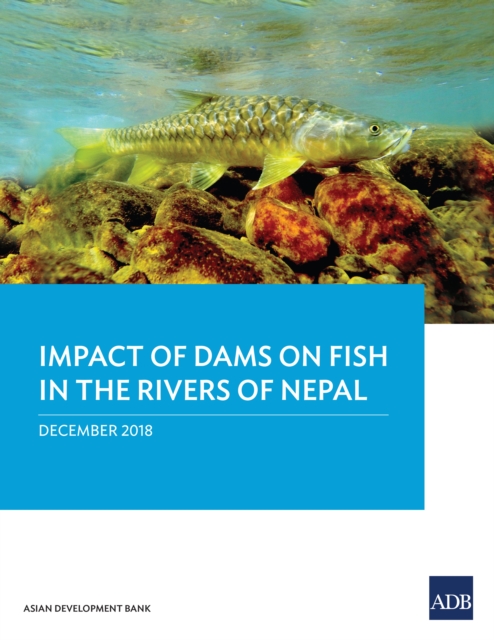
Impact of Dam on Fish in the Rivers of Nepal
This study was conducted by ADB to assess the impact of projects involving the construction of dams on aquatic biodiversity in Nepal. The findings may not be authoritative, but conclusions suggest that fish populations and the diversity of species are affected due to alterations in the ecosystem and blockage in life cycle movements.
eBook

MitoNGS: an online platform to analyze fish metabarcoding data in high resolution
Abstract
Environmental DNA (eDNA) metabarcoding has become a powerful tool for assessing fish biodiversity in aquatic ecosystems. However, accurate species-level identification remains challenging due to incomplete and contaminated reference databases, as well as ambiguous taxa sharing identical barcode sequences. Here, we present MitoNGS, a next-generation platform that succeeds the widely used MiFish pipeline, designed for high-resolution analysis of fish metabarcoding data. MitoNGS addresses these challenges by incorporating more comprehensive references including non-fish species and detailed annotations of heterospecific regions. Additionally, it introduces the “species complex” strategy in conjunction with environmental habitat and geographic occurrence data to resolve ambiguous taxa. Furthermore, MitoNGS expands the functionalities of the legacy MiFish pipeline. It can analyze data from any mitochondrial markers and from Nanopore sequencing platforms. MitoNGS demonstrated excellent performance on our testing datasets from diverse locations, markers, and sequencing platforms. MitoNGS offers a user-friendly, web-based solution for fish detection, biodiversity monitoring, conservation research, and bioresource management. MitoNGS is freely available via https://mitofish.aori.u-tokyo.ac.jp/mito-ngs.
Journal Article

River benthic macroinvertebrates and environmental DNA metabarcoding: a scoping review of eDNA sampling, extraction, amplification and sequencing methods
There is a growing body of literature on the use of molecular methods for the ecological assessment of rivers based on benthic macroinvertebrates. Previous research has established the benefits of the use of environmental DNA (eDNA) to assess benthic macroinvertebrate communities as being more efficient, less subjective, and non-invasive compared to traditional methods. The aim of this review is to synthesize the existing knowledge on eDNA sampling, extraction, amplification and sequencing methods regarding river benthic macroinvertebrate metabarcoding studies. Literature searches were performed using two online databases, and following a screening process, 46 papers published between 2012 and 2022 met the eligibility criteria to be included in the review. Since the use of river macrobial eDNA in ecology is a fast-evolving field, the results showed that the methodologies used vary considerably among studies. A variety of filters are used for capturing eDNA from water or preservative ethanol and different sources of eDNA (i.e., sediment, biofilm) are also explored. This review identified 12 different extraction methods and 15 different primer pairs that were used more than once in benthic macroinvertebrate eDNA metabarcoding studies. Therefore, there is a need for standardization of some key steps of the eDNA metabarcoding process to increase the comparability of the results and the robustness of the methods for further implementation into large-scale monitoring programs.
Journal Article

Taxonomic structure and spatial distribution of aquatic invertebrates from temporary wetlands after a severe drought event in southern Brazil
Abstract Aim The aim of this study was to evaluate the composition and spatial distribution of aquatic invertebrates in temporary wetlands following a severe drought event in southern Brazil. Methods Aquatic invertebrates and limnological variables were collected from 14 temporary wetlands located on the campus of the Federal University of Rio Grande, Rio Grande do Sul State, Brazil, after a severe drought period in the summer de 2024. Results The temporary wetlands were characterized by small size (70.8 – 336.0 m2), shallow depth (9.0 – 36.0 cm), and water temperature between 20.5 and 29.4 ºC. A total of 3230 invertebrates were identified, encompassing 55 different taxa. The most frequent groups were Diptera (761 individuals), Collembola (526 individuals), and Gastropoda (498 individuals). Additionally, 11 unique taxa were found in temporary wetlands analyzed, with the majority belonging to Arachnida. Based on taxa abundance, two main clusters were observed, the first being composed of temporary wetlands (TW) from 1 to 9, and the second cluster with areas 10 to 14. Conclusions Climate change projections suggest a rising frequency and potential for severe drought events. Temporary wetlands, which harbor significant diversity of aquatic invertebrates, are particularly vulnerable due to their characteristics and dependence on hydroperiods. Severe drought events may impact species composition and distribution, highlighting the need for monitoring and protection of these habitats. Resumo Objetivo O objetivo deste estudo foi de avaliar a composição e distribuição espacial de invertebrados aquáticos em zonas úmidas temporárias após um evento de seca severa no sul do Brasil. Métodos Invertebrados e variáveis limnológicas foram coletados em 14 zonas úmidas temporárias distribuídas no Campus da Universidade Federal do Rio Grande, Rio Grande do Sul, Brasil, durante um período de seca severa no verão de 2024. Resultados As zonas úmidas temporárias eram pequenas (70,8 – 336,0 m2), rasas (9,0 – 36,0 cm) e temperatura da água entre 20,5 e 29,4 ºC. Foram contabilizados ao total 3230 invertebrados, distribuídos em 55 táxons. Diptera (761 indivíduos), Collembola (526 indivíduos) e Gastropoda (498 indivíduos) foram os grupos mais frequentes. Além disso, 11 táxons únicos foram encontrados em áreas úmidas temporárias analisadas, com a maioria pertencente a Arachnida. Com base na abundância de táxons, foram observados dois agrupamentos principais, sendo o primeiro composto por áreas úmidas temporárias (TW) de 1 a 9, e o segundo agrupamento com áreas de 10 a 14. Conclusões Projeções de mudanças climáticas indicam um aumento na frequência e na potencialidade de eventos de seca severa. As zonas úmidas temporárias abrigam importante diversidade de invertebrados aquáticos e estes são vulneráveis devido as suas características e relação com os hidroperíodos. Não encontramos registros de monitoramento dessas zonas úmidas. Eventos severos de seca poderão afetar a composição e distribuição de espécies, sendo necessário o monitoramento e proteção desses habitats.
Journal Article