
Catalogue Search | MBRL


Are you sure you want to remove the book from the shelf?

{{itemTitle}}
3,076
result(s) for
"armed social reform"
Sort by:
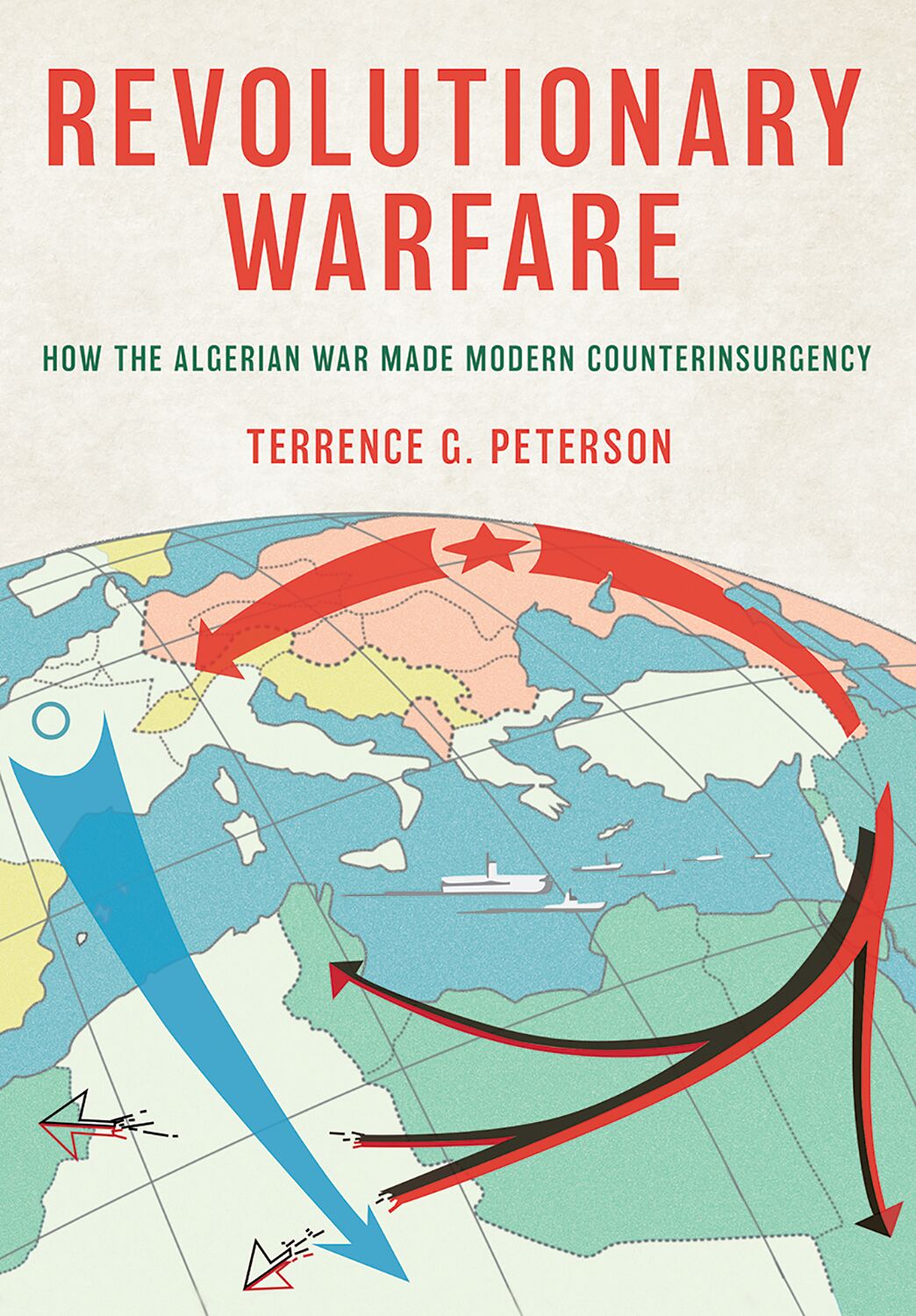
Revolutionary Warfare
Revolutionary Warfare
investigates how efforts to counter a revolution could also
be revolutionary. The Algerian War fractured the French
Empire, destroyed the legitimacy of colonial rule, and helped
launch the Third Worldist movement for the liberation of the Global
South. By tracing how French generals, officers, and civil
officials sought to counter Algerian independence with their own
project of radical social transformation, Terrence G. Peterson
reveals that the conflict also helped to transform the nature of
modern warfare.
The French war effort was never defined solely by repression. As
Peterson details, it also sought to fashion new forms of
surveillance and social control that could capture the loyalty of
Algerians and transform Algerian society. Hygiene and medical aid
efforts, youth sports and education programs, and psychological
warfare campaigns all attempted to remake Algerian social
structures and bind them more closely to the French state. In
tracing the emergence of such programs, Peterson reframes the
French war effort as a project of armed social reform that sought
not to preserve colonial rule unchanged, but to revolutionize it in
order to preserve it against the global challenges of
decolonization.
Revolutionary Warfare demonstrates how French officers'
efforts to transform warfare into an exercise in social engineering
not only shaped how the Algerian War unfolded from its earliest
months, but also helped to forge a paradigm of warfare that
dominated strategic thinking during the Cold War and after:
counterinsurgency.
eBook

The Decline and Persistence of the Old Boy: Private Schools and Elite Recruitment 1897 to 2016
We draw on 120 years of biographical data (N = 120,764) contained within Who's Who—a unique catalogue of the British elite—to explore the changing relationship between elite schools and elite recruitment. We find that the propulsive power of Britain's public schools has diminished significantly over time. This is driven in part by the wane of military and religious elites, and the rise of women in the labor force. However, the most dramatic declines followed key educational reforms that increased access to the credentials needed to access elite trajectories, while also standardizing and differentiating them. Notwithstanding these changes, public schools remain extraordinarily powerful channels of elite formation. Even today, the alumni of the nine Clarendon schools are 94 times more likely to reach the British elite than are those who attended any other school. Alumni of elite schools also retain a striking capacity to enter the elite even without passing through other prestigious institutions, such as Oxford, Cambridge, or private members clubs. Our analysis not only points to the dogged persistence of the \"old boy,\" but also underlines the theoretical importance of reviving and refining the study of elite recruitment.
Journal Article

Intersecting injustices: child marriage and the law in conflict-affected Sudan
Sudan is the only country in North Africa that is yet to reform its family law embodied by the Personal Status Act for Muslims of 1991. This law legalises child marriage, contradicts the National Child Act of 2010 that outlaws child marriage. This study aimed to understand how the pluralistic legal system in Sudan affects the occurrence and circumstances of child marriage in Kassala State in the context of the current war, to inform future advocacy efforts to ban child marriage. Thirteen key informants were interviewed in Kassala state and at the national level, complemented by one focus group discussion (FGD) at national level. In Kassala state, seven FGDs and eight in-depth interviews were held with young people who married as children and with parents whose children married under 18 years. Data were transcribed and coded, after which thematic analysis was undertaken. The findings affirm that child marriage is a commonplace practice, often justified by religion, driven by financial incentives and the on-going war. The closure of schools since 2023, abuses of girls by armed forces, and growing financial precarity are prompting parents to marry their daughters early. Community informants displayed a lack of awareness regarding the laws around child marriage and the legal minimum age of marriage. Contradictions between the laws create confusion and leave room for different interpretations, which are influenced by religion and social norms, further complicating the legal landscape. Although mazons (local marriage registrars) are mandated to follow civil law, they officiate underage marriages to conform to ‘local culture’, due to parental pressure, or because of false age certificates presented by families. Previous legal reform efforts failed to create consensus among religious hardliners and activists. Sudan’s pluralistic legal system has institutionalised gender inequality and legitimised the culturally accepted practice of child marriage. A future post-war recovery period might provide a window of opportunity for law reform. Sudan could build on successful strategies used by neighbouring countries to reform the family law. Policy and legal reform need to be accompanied by broader social and economic change, including advances in gender equality, to address child marriage in Sudan.
Journal Article

The Militarization of Law Enforcement: Evidence from Latin America
What are the political consequences of militarizing law enforcement? Across the world, law enforcement has become increasingly militarized over the last three decades, with civilian police operating more like armed forces and soldiers replacing civilian police in law enforcement tasks. Scholarly, policy, and journalistic attention has mostly focused on the first type, but has neglected the study of three main areas toward which we seek to contribute: 1) the constabularization of the military—i.e., when the armed forces take on the responsibilities of civilian law enforcement agencies, 2) the extent to which this process has taken place outside of the United States, and 3) its political consequences. Toward this end, we unpack the concept of militarized law enforcement, develop theoretical expectations about its political consequences, take stock of militarization in Latin America, and evaluate whether expectations have played out in the region. We show that the distinction between civilian and military law enforcement typical of democratic regimes has been severely blurred in the region. Further, we argue that the constabularization of the military has had important consequences for the quality of democracy in the region by undermining citizen security, human rights, police reform, and the legal order.
Journal Article

The Great War and the Warfare–Welfare Nexus in British and French West African Colonies
In the Global North, mass warfare created a huge demand for social protection, pushing governments to provide income for invalids, war victims, and the survivors of fallen soldiers. Most European colonial powers, including France and Great Britain, recruited soldiers and other security forces not only from their metropoles but also from their colonies during both World Wars. However, the question of how mass warfare influenced social reforms in former colonies has not been systematically addressed, particularly with respect to how these influences varied across colonial powers. To begin to address this gap, this paper explores the warfare–welfare nexus in the context of British and French colonies of West Africa around World War I (WWI). The paper finds that, while Britain and France had similar overarching imperial and military objectives in West Africa of securing their colonies, enforcing order within them, and promoting commerce to increase profit, they went about achieving them very differently, with direct and indirect implications for social reforms after WWI. While only a first step, research on the distinct nature of the warfare–welfare nexus in colonial contexts is critical in order to historicize and close research gaps by widening and deepening our understanding of social policy trajectories in countries of the Global South.
Journal Article

WHEN KLEPTOCRACY BECOMES INSOLVENT: BRUTE CAUSES OF THE CIVIL WAR IN SOUTH SUDAN
South Sudan obtained independence in July 2011 as a kleptocracy — a militarized, corrupt neo-patrimonial system of governance. By the time of independence, the South Sudanese \"political marketplace\" was so expensive that the country's comparatively copious revenue was consumed by the military-political patronage system, with almost nothing left for public services, development or institution building. The efforts of national technocrats and foreign donors produced bubbles of institutional integrity but the system as a whole was entirely resistant to reform. The January 2012 shutdown of oil production bankrupted the system. Even an experienced and talented political business manager would have struggled, and President Salva Kiir did not display the required skills. No sooner had shots been fired than the compact holding the SPLA together fell apart and civil war ensued. Drawing upon long-term observation of elite politics in South Sudan, this article explains both the roots of kleptocratic government and its dire consequences.
Journal Article

Armed violent conflict and healthcare-seeking behavior for maternal and child health in sub-Saharan Africa: A systematic review
[Background:] Over 630 million women and children worldwide have been displaced by conflict or live dangerously close to conflict zones. While the adverse effects of physical destruction on healthcare delivery are relatively well understood, the effects on healthcare-seeking behavior remain underexplored, particularly in sub-Saharan Africa. This study aims to better understand the interconnections and knowledge gaps between exposure to armed violent conflicts and healthcare-seeking behaviors for maternal and child health in sub-Saharan Africa. [Methods:] Five key electronic databases (PubMed, Scopus, Web of Science, PsycNET, and African Journals Online) were s earched for peer-reviewed publications between 2000 and 2022. The review was designed according to PRISMA-P statement and the protocol was registered with PROSPERO database. The methodological quality and risks of bias were appraised using GRADE. A data extraction instrument was modelled along the Cochrane Handbook for Systematic Reviews and the Centre for Reviews and Dissemination of Systematic Reviews. [Result:] The search results yielded 1,148 publications. Only twenty-one studies met the eligibility criteria, reporting healthcare-seeking behaviors for maternal and child health. Of the twenty-one studies, seventeen (81.0%) reported maternal health behaviors such as antenatal care, skilled birth attendance, postnatal care services, and family planning. Nine studies (42.8%) observed behaviors for child health such as vaccination uptake, case management for pneumonia, diarrhea, malnutrition, and cough. While conflict exposure is generally associated with less favorable healthcare-seeking behaviors, some of the studies found improved health outcomes. Marital status, male partner attitudes, education, income and poverty levels were associated with healthcare-seeking behavior. [Conclusion:] There is a need for multifaceted interventions to mitigate the impact of armed violent conflict on healthcare-seeking behavior, given its overall negative effects on child and maternal healthcare utilization. While armed violent conflict disproportionately affects children’s health compared to maternal health, it is noteworthy that exposure to such conflicts may inadvertently also lead to positive outcomes.
Journal Article

The Reforms of Shang Yang
The Reforms of Shang Yang Shang Yang is regarded as the chief architect of the Chinese state. This paper analyzes the reforms of Shang Yang in a mathematical model. The existence of institutional complementarity between the adoption of the county form and the use of strong incentives for soldiers is established. An increase in the level of external threats induces the ruler to adopt stronger incentives for soldiers and to choose a higher degree of adopting the county form. An increase in the power of clans leads the ruler to choose a lower incentive for soldiers and a lower level of adopting the county form.
Journal Article

Forced to Be Free? Why Foreign-Imposed Regime Change Rarely Leads to Democratization
Is military intervention effective in spreading democracy? Existing studies disagree. Optimists point to successful cases, such as the transformation of West Germany and Japan into consolidated democracies after World War II. Pessimists view these successes as outliers from a broader pattern of failure typified by cases such as Iraq and Afghanistan. Those in between agree that, in general, democratic military intervention has little liberalizing effect in target states, but contend that democracies can induce democratization when they explicitly pursue this objective and invest substantial effort and resources. Existing studies, however, often employ overly broad definitions of intervention, fail to grapple with possible selection effects in countries where democracies choose to intervene, and stress interveners' actions while neglecting conditions in targets. A statistical examination of seventy instances of foreign-imposed regime change (FIRC) in the twentieth century shows that implementing prodemocratic institutional reforms, such as sponsoring elections, is not enough to induce democratization; interveners will meet with little success unless conditions in the target state—in the form of high levels of economic development and societal homogeneity, and previous experience with representative governance—are favorable to democracy. Given that prospective regime change operations are likely to target regimes in poor, diverse countries, policymakers should scale back their expectations that democracy will flourish after FIRC.
Journal Article

A Case Study of Veteran Patient‐Researcher Partnerships in Mental Health Research and Practice: Three Recommendations From a Veteran Patient Engaged in Research (VPER)
Introduction Veteran patient partnerships in research improve patient‐centred healthcare outcomes within US Department of Veterans Affairs (VA) medical centres. To achieve this, researchers must contextualize perspectives, motivations, and contributions of Veteran patients engaged in research (VPERs) as valued consultants within a complex healthcare environment. Our objective was to investigate best practices for research teams partnering with VPERs by utilizing the expertise of our research team's own VPER. The parent project of this case study, Hybrid Controlled Trial to Implement Collaborative Care in General Mental Health, was approved by the VA Boston Healthcare System Institutional Review Board and deemed research. Objective Provide three key recommendations when engaging military Veterans and/or VA Veteran Patients in research to facilitate sustained teamwork and integration. Study Design and Methodologies This paper is structured as a qualitative descriptive data‐based case study. Two team members used a semi‐structured conversation guide to interview Dr. Colleen Turner, MSW, PhD, Lt. Col. (Ret., US Air Force Reserves) for one hour about her experience as a VPER on the 5‐year research project. This manuscript was then written collaboratively by members of the team, with heavy influence and editing from Colleen for details and accuracy. Results Improving mental healthcare for Veterans motivated Colleen to serve as a VPER from 2015 to 2020. She used organizational and provider‐level mental health expertise gained during her Air Force service, applied her graduate social work training, and offered her experience as a VA patient. A diverse background and an ability to codeswitch helped her navigate the study and enriched the team's partnership dynamics. Through a qualitative interview with Colleen about her experience as a VPER, three recommendations emerged for research teams to better situate VPERs on studies: (1) ensure initial project literacy and provide ongoing support, (2) incorporate VPER goals into project work and (3) communicate both (a) offers of reasonable compensation and professional acknowledgement and (b) visible patient‐centred outcomes. Conclusion This case study deepens the understanding of how to meaningfully incorporate VPERs into a partnered research study. Engagement starts early, continues throughout the study, and culminates with well‐communicated outcomes as they pertain to the researchers’ and VPERs’ goals. These recommendations closely align with widely accepted community‐engaged research practices and may guide ongoing and future studies to further improve patient engagement in research and the collaboration experiences of VPERs. Patient or Public Contribution This manuscript focuses on Colleen's contributions to the design and conduct of a hybrid implementation/effectiveness study. Colleen also contributed to the manuscript itself. Uniquely, Dr. Turner brought her experience as a practitioner with master's and doctoral degrees in social work, as an institutional communications analyst, and as an independent author. Because of this, she was able to bring even more expertise to the project beyond just that of a patient, which is valuable in its own right. Colleen was involved in the research project from inception to conclusion, including study design, general analysis, and manuscript publication, with overall consultation throughout.
Journal Article