
Catalogue Search | MBRL


Are you sure you want to remove the book from the shelf?

{{itemTitle}}
17,323
result(s) for
"art historian"
Sort by:

The Vienna School of Art History
Matthew Rampley’s The Vienna School of Art History is the first book in over seventy-five years to study in depth and in context the practices of art history from 1847, the year the first teaching position in the discipline was created, to 1918, the collapse of Austria-Hungary. It traces the emergence of art history as a discipline, the establishment of norms of scholarly enquiry, and the involvement of art historians in wider debates about the cultural and political identity of the monarchy. While Rampley also examines the formation of art history elsewhere in Austria-Hungary, the so-called Vienna School plays the central role in the study. Located in the Habsburg imperial capital, Vienna art historians frequently became entangled in debates that were of importance to art historians elsewhere in the Empire, and the book pays particular attention to these areas of overlapping interest. The Vienna School was well known for its methodological innovations and this book analyzes its contributions in this area. Rampley focuses most fully, however, on the larger political and ideological context of the practice of art history, in particular the way in which art historical debates served as proxies for wider arguments over the political, social, and cultural life of the Habsburg Empire.
eBook

Form as Revolt
The German writer and art critic Carl Einstein (1885-1940) has long been acknowledged as an important figure in the history of modern art, and yet he is often sidelined as an enigma. InForm as RevoltSebastian Zeidler recovers Einstein's multifaceted career, offering the first comprehensive intellectual biography of Einstein in English.
Einstein first emerged as a writer of experimental prose through his involvement with the anarchist journalDie Aktion. After a few limited forays into art criticism, he burst onto the art scene in 1915 with his bookNegro Sculpture, at once a formalist intervention into the contemporary theory and practice of European sculpture and a manifesto for the sophistication of African art. Einstein would go on to publish seminal texts on the cubist paintings of Georges Braque and Pablo Picasso. His contributions to the surrealist magazineDocuments(which Einstein cofounded with Georges Bataille), including writings on Picasso and Paul Klee, remain unsurpassed in their depth and complexity. In a series of close visual analyses-illustrated with major works by Braque, Picasso, and Klee-Zeidler retrieves the theoretical resources that Einstein brought to bear on their art.Form as Revoltshows us that to rediscover Einstein's art criticism is to see the work of great modernist artists anew through the eyes of one of the most gifted left-wing formalists of the twentieth century.
eBook

The Books That Shaped Art History
Which were the books that shaped art history as it developed in the 20h century? This pioneering volume is a concise and brilliant study of the discipline of Art History and an invaluable resource for students, teachers, bibliophiles and all those interested in visual culture.
eBook

The legacies of Bernard Smith : essays on Australian art, history and cultural politics
It has been widely asserted that Bernard Smith established the discipline of art history in Australia. He was the founding professor of contemporary art and the directory of the Power Institute at the University of Sydney, published the classic art text Australian Painting.
eBook
Friderike Klauner (1916–1993). Director of the Picture Gallery and First Director of the Kunsthistorisches Museum Wien. A biographical sketch
50 years ago, a woman headed Austria’s largest art museum for the first time. For eight years, Friderike Klauner managed the affairs of the Kunsthistorisches Museum in Vienna with untiring commitment. She introduced some innovations, but also preserved traditions in order to make the valuable, formerly imperial art collection accessible to the interested public in various forms. This essay attempts a biographical approach to the successful art historian. It explores her career and her professional achievements. It wonders why so little has been published about her so far and finally asks what still remains of Friderike Klauner to this day.
Journal Article

Surround, Background, and the Overlooked
This piece invites attention to the background of photographs, or, as James Elkins would call it, the surround. He argues that the characteristics of the surround mean that this feature can be used to distinguish the genre of photography from that of painting. This essay maintains that there is much more of an overlap between photography and painting in this respect than he allows, since photographic surrounds were frequently artificial, or depended on aesthetic effects. It considers two different types of Victorian and early Edwardian photographs to support this claim: studio portraits, especially those featuring members of Buffalo Bill's Wild West Show posed against non-Native scenes; and those in which atmospheric darkness was created through flash.
Journal Article
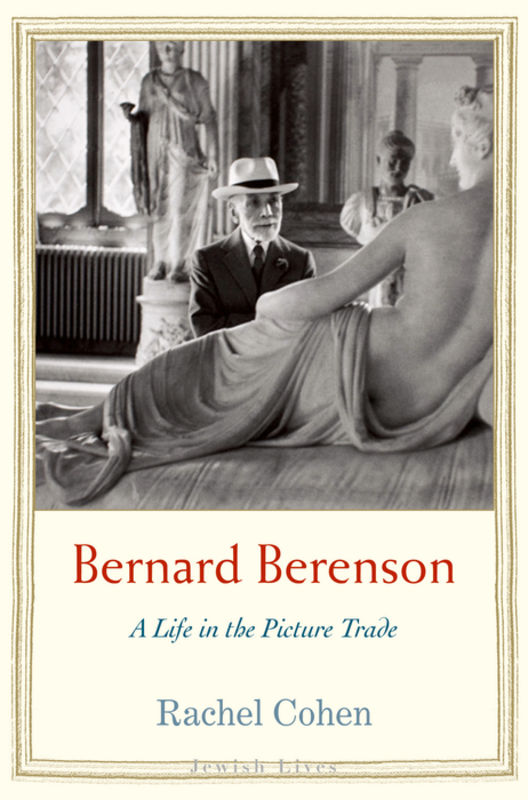
Bernard Berenson
When Gilded Age millionaires wanted to buy Italian Renaissance paintings, the expert whose opinion they sought was Bernard Berenson, with his vast erudition, incredible eye, and uncanny skill at attributing paintings. They visited Berenson at his beautiful Villa I Tatti, in the hills outside Florence, and walked with him through the immense private library-which he would eventually bequeath to Harvard-without ever suspecting that he had grown up in a poor Lithuanian Jewish immigrant family that had struggled to survive in Boston on the wages of the father's work as a tin peddler. Berenson's extraordinary self-transformation, financed by the explosion of the Gilded Age art market and his secret partnership with the great art dealer Joseph Duveen, came with painful costs: he hid his origins and felt that he had betrayed his gifts as an interpreter of paintings. Nevertheless his way of seeing, presented in his books, codified in his attributions, and institutionalized in the many important American collections he helped to build, goes on shaping the American understanding of art today.This finely drawn portrait of Berenson, the first biography devoted to him in a quarter century, draws on new archival materials that bring out the significance of his secret business dealings and the way his family and companions-including his patron Isabella Stewart Gardner, his lover Belle da Costa Greene, and his dear friend Edith Wharton-helped to form his ideas and his legacy. Rachel Cohen explores Berenson's inner world and exceptional visual capacity while also illuminating the historical forces-new capital, the developing art market, persistent anti-Semitism, and the two world wars-that profoundly affected his life.
eBook

The Celebrity Monarch
Empress Elisabeth of Austria (1837-1898), wife of Habsburg Emperor Francis Joseph I, was celebrated as the most beautiful woman in Europe. Glamorous painted portraits by Franz Xaver Winterhalter and widely collected photographs spread news of her beauty, and the twentieth-century German-language film trilogy Sissi (1955-57) cemented this legacy. Despite the enduring fascination with the empress, art historians have never considered Elisabeth’s role in producing her public portraiture or the influence of her creation. The Celebrity Monarch reveals how portraits of Elisabeth transformed monarchs from divinely appointed sovereigns to public personalities whose daily lives were consumed by spectators. With resources ranging from the paintings of Gustav Klimt and Elisabeth’s private collection of celebrity photography to twenty-first century collages and films by T. J. Wilcox, this book positions Elisabeth herself as the primary engineer of her public image and argues for the widespread influence of her construction on both modern art and the emerging phenomenon of celebrity.
eBook

Alias Olympia
Eunice Lipton was a fledging art historian when she first became intrigued by Victorine Meurent, the nineteenth-century model who appeared in Edouard Manet's most famous paintings, only to vanish from history in a haze of degrading hearsay. But had this bold and spirited beauty really descended into prostitution, drunkenness, and early death-or did her life, hidden from history, take a different course altogether? Eunice Lipton's search for the answer combines the suspense of a detective story with the revelatory power of art, peeling off layers of lies to reveal startling truths about Victorine Meurent-and about Lipton herself.
eBook

Names and stories : Emilia Dilke and Victorian culture
\"Emilia Dilke\" (1840-1904) was known by several names, eventually becoming Lady Dilke - intellectual, feminist, author and President of the Women's Trade Union League. In investigating her life and work, this book examines the full spectrum of 19th-century British thought and custom.
eBook