
Catalogue Search | MBRL


Are you sure you want to remove the book from the shelf?

{{itemTitle}}
30,857
result(s) for
"art making"
Sort by:
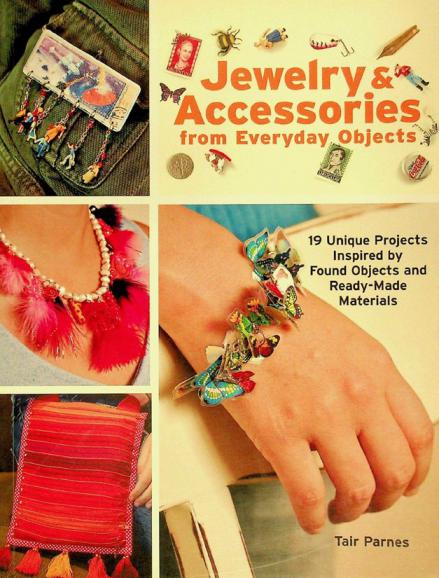
Jewelry & accessories from everyday objects : 19 unique projects inspired by found objects and ready-made materials
\"Step-by-step instructions and photos for turning a variety of found objects into unique necklaces, rings, earrings, brooches, accessories\"--Provided by publisher.
Book

Influences of a Classroom Setting on Students’ Artistic Processes
This study uses Mace and Ward’s model of the artistic process as a theoretical framework to examine the art-making processes of students enrolled in an Advanced Placement (AP) art class in a public high school. Previous scholarship about the artistic process is grounded in the experience of professional artists and has not sufficiently attended to whether and how the artistic process of students in K–12 classroom contexts mirrors the work of artists outside school contexts. Data from classroom observations and interviews of AP art students suggests students’ processes were closely aligned to Mace and Ward’s descriptive model of the art-making process. The data also suggest that two major factors influenced students’ artistic process in school contexts: the influence of the teacher and working in a shared classroom space.
Journal Article


Art therapy as a comprehensive complementary treatment for Parkinson’s disease
Parkinson's disease (PD) is the second most prevalent neurodegenerative disease. Complementary and alternative therapies are increasingly utilized to address its complex multisystem symptomatology. Art therapy involves motoric action and visuospatial processing while promoting broad biopsychosocial wellness. The process involves hedonic absorption, which provides an escape from otherwise persistent and cumulative PD symptoms, refreshing internal resources. It involves the expression in nonverbal form of multilayered psychological and somatic phenomena; once these are externalized in a symbolic arts medium, they can be explored, understood, integrated, and reorganized through verbal dialogue, effecting relief and positive change.
42 participants with mild to moderate PD were treated with 20 sessions of group art therapy. They were assessed before and after therapy with a novel arts-based instrument developed to match the treatment modality for maximum sensitivity. The House-Tree-Person PD Scale (HTP-PDS) assesses motoric and visuospatial processing-core PD symptoms-as well as cognition (thought and logic), affect/mood, motivation, self (including body-image, self-image, and self- efficacy), interpersonal functioning, creativity, and overall level of functioning. It was hypothesized that art therapy will ameliorate core PD symptoms and that this will correlate with improvements in all other variables.
HTP-PDS scores across all symptoms and variables improved significantly, though causality among variables was indeterminate.
Art therapy is a clinically efficacious complementary treatment for PD. Further research is warranted to disentangle causal pathways among the aforementioned variables, and additionally, to isolate and examine the multiple, discrete healing mechanisms believed to operate simultaneously in art therapy.
Journal Article

Pom pom animals : 45 easy and adorable projects made from wool
\"With easy-to-understand instructions and step-by-step photos, Pom Pom Animals teaches you how to make these whimsical and charming furry faces. Included are plans to create bears, rabbits, sheep, cats, dogs, squirrels, birds, hedgehogs, sloths, and more--over 40 different kinds of cute and delightful animals that are sure to put a smile on everyone's face!\" -- Amazon.com.
Book

Art Therapy and Art Making for Addressing Cancer-Related Pain and Distress in Adult Populations: A Scoping Review
Worldwide, cancer is a leading cause of morbidity and mortality, with symptoms of pain and emotional distress, associated with the disease and its treatment. Art therapy and art making are promising adjuncts to pharmacotherapy for these symptoms. However, current studies do not support replacing pharmacotherapy with these methods.
Is there evidence supporting the use of art therapy and/or art making interventions for managing cancer-related pain (primary outcome) and emotional distress (secondary outcome) among adult cancer survivors, during and following active treatment?
We searched six databases, including PubMed, CINAHL, Scopus, ProQuest (library's version), and Google Scholar, using the search terms \"cancer pain\" AND \"art therapy\" OR \"art making.\" Inclusion criteria included English language, peer-reviewed studies, on adult cancer survivors. The search yielded 1305 results, with 23 meeting the inclusion criteria. Because emotional distress was frequently discussed in the context of cancer-related pain in the included studies, it was added as a secondary outcome.
The efficacy of art therapy/art making to manage cancer-related pain and emotional distress was difficult to determine due to the heterogeneity of study designs and interventions. Of the studies reviewed in which pain was a primary outcome, eight found significant pain reductions, three found small or no effects, and three reviews described art making as a non-verbal method of communicating about pain, but did not address changes in pain levels. The terms \"art therapy\" and \"art making\" were sometimes used interchangeably. The choice of therapeutic approach was sometimes financially driven, and was also impacted by the availability of certified art therapists.
Methodological shortcomings of the existing research include small sample sizes, lack of standardized intervention protocols, and inconsistent outcome measures, underscoring the need for more rigorous and generalizable studies. Future research should consider neuroimaging evidence linking aesthetic experiences with activation of the brain's \"reward network\" by utilizing fMRI to study brain activity during art therapy and art making interventions.
Journal Article

Making steampunk jewellery
Steampunk has captured the imagination of thousands who are searching for a unique style symbolic of a richly inspired, post-apocalyptic world drawn from the heavy machinery of the Victorian age. This book shows you how to access that world and make unique jewellery and accessories that will complete an outfit and transport you to another era.
Book

Studio Investigation: An Approach in Studio-Based Research
This article is about a studio investigation that is used as a practical studio-based research method to produce creative works of visual art. Creating an empirical research-oriented visual artwork isa creative process that involved intellectual phase on aesthetic object not an easy process. Studio-based research issimilar just like any other research is to contribute science through the creative work of visual art. Thus in the investigation studio, there are two phases of research method, which is the data generation phase and the artwork phase. For Phase data generation, there are four components of the study element, namely qualitative approach, neo-narrative process, visual research methodology and object (subject of study). The Artwork approach consists of two components - art-making that consists of four-phase elements and studio experience components.
Journal Article

Pokémon felties : how to make 16 of your favorite Pokémon!
Learn how to put together 16 of your favorite Pokémon with this easy-to-use kit, and get started on soft and easy-to-make felties.
Book

Put Dialectics into the Machine: Protection against Automatic-decision-making through a Deeper Understanding of Contestability by Design
This paper endorses the idea that the
provided for by art. 22, § 3 GDPR, actually is the apex of a progressive set of tools the data subject has at his disposal to cope with automatic decisions and it should work as an architectural principle to create
But in order to achieve that important role, it cannot be reduce to the right of human intervention, also provided for by art.22, § 3, nor to a generic opposition to the outcome of the automatic processing. Thus, drawing from a thorough analysis of the relationships among the rights included in art. 22, § 3 GDPR as well as from the juridical proper meaning of “
”, it is concluded that
has its own proper nature as a hybrid substantial-processual right that is able to give concrete shape to all the other rights indicated in art. 22, § 3, included the much discussed right to explanation.
Journal Article