
Catalogue Search | MBRL


Are you sure you want to remove the book from the shelf?

{{itemTitle}}
125,770
result(s) for
"artificial human"
Sort by:

Faking it : artificial intelligence in a human world
In an increasingly AI-driven world, renowned expert Toby Walsh examines what the 'artificial' in artificial intelligence truly means.
BOOK
Sex cells
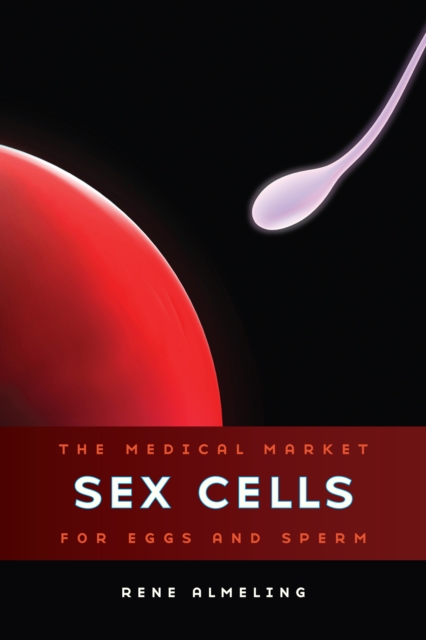
Unimaginable until the twentieth century, the clinical practice of transferring eggs and sperm from body to body is now the basis of a bustling market. In Sex Cells, Rene Almeling provides an inside look at how egg agencies and sperm banks do business. Although both men and women are usually drawn to donation for financial reasons, Almeling finds that clinics encourage sperm donors to think of the payments as remuneration for an easy \"job.\" Women receive more money but are urged to regard egg donation in feminine terms, as the ultimate \"gift\" from one woman to another. Sex Cells shows how the gendered framing of paid donation, as either a job or a gift, not only influences the structure of the market, but also profoundly affects the individuals whose genetic material is being purchased.
eBook

If anyone builds it, everyone dies : why superhuman AI would kill us all
\"In 2023, hundreds of AI luminaries signed an open letter warning that artificial intelligence poses a serious risk of human extinction. Since then, the AI race has only intensified. Companies and countries are rushing to build machines that will be smarter than any person. And the world is devastatingly unprepared for what would come next. For decades, two signatories of that letter -- Eliezer Yudkowsky and Nate Soares -- have studied how smarter-than-human intelligences will think, behave, and pursue their objectives. Their research says that sufficiently smart AIs will develop goals of their own that put them in conflict with us -- and that if it comes to conflict, an artificial superintelligence would crush us. The contest wouldn't even be close. How could a machine superintelligence wipe out our entire species? Why would it want to? Would it want anything at all? In this urgent book, Yudkowsky and Soares walk through the theory and the evidence, present one possible extinction scenario, and explain what it would take for humanity to survive. The world is racing to build something truly new under the sun. And if anyone builds it, everyone dies.\" -- Provided by publisher.
BOOK

Epigenetic engineering shows H3K4me2 is required for HJURP targeting and CENP-A assembly on a synthetic human kinetochore
Kinetochores assemble on distinct ‘centrochromatin’ containing the histone H3 variant CENP‐A and interspersed nucleosomes dimethylated on H3K4 (H3K4me2). Little is known about how the chromatin environment at active centromeres governs centromeric structure and function. Here, we report that centrochromatin resembles K4–K36 domains found in the body of some actively transcribed housekeeping genes. By tethering the lysine‐specific demethylase 1 (LSD1), we specifically depleted H3K4me2, a modification thought to have a role in transcriptional memory, from the kinetochore of a synthetic human artificial chromosome (HAC). H3K4me2 depletion caused kinetochores to suffer a rapid loss of transcription of the underlying α‐satellite DNA and to no longer efficiently recruit HJURP, the CENP‐A chaperone. Kinetochores depleted of H3K4me2 remained functional in the short term, but were defective in incorporation of CENP‐A, and were gradually inactivated. Our data provide a functional link between the centromeric chromatin, α‐satellite transcription, maintenance of CENP‐A levels and kinetochore stability.
Here, centromeric histone marks on a human artificial chromosome are found to resemble the chromatin landscape in transcribed genes, and selective manipulation shows them to govern the incorporation of the centromere‐specifying CENP‐A histone variant.
Journal Article


A new generation of human artificial chromosomes for functional genomics and gene therapy
Since their description in the late 1990s, human artificial chromosomes (HACs) carrying a functional kinetochore were considered as a promising system for gene delivery and expression with a potential to overcome many problems caused by the use of viral-based gene transfer systems. Indeed, HACs avoid the limited cloning capacity, lack of copy number control and insertional mutagenesis due to integration into host chromosomes that plague viral vectors. Nevertheless, until recently, HACs have not been widely recognized because of uncertainties of their structure and the absence of a unique gene acceptor site. The situation changed a few years ago after engineering of HACs with a single loxP gene adopter site and a defined structure. In this review, we summarize recent progress made in HAC technology and concentrate on details of two of the most advanced HACs, 21HAC generated by truncation of human chromosome 21 and alphoid
tetO
-HAC generated de novo using a synthetic tetO-alphoid DNA array. Multiple potential applications of the HAC vectors are discussed, specifically the unique features of two of the most advanced HAC cloning systems.
Journal Article


Synthetic rewriting technologies in mammalian cells
Synthetic rewriting technologies, encompassing large-scale DNA assembly, transfer, maintenance, and rearrangement, enabled de novo synthesis or large-scale modifications of genomes. While significant progress has been made in model organisms of viruses, bacteria, and unicellular eukaryotes, their development in mammalian cells faces unique challenges. This review summarizes key breakthroughs in synthetic rewriting technologies, including megabase (Mb)-scale assembly of human DNA, yeast-mediated transfer methods, bottom-up human artificial chromosomes (HACs), and genome-scale rearrangement, along with emerging applications in constructing models and decoding genomes for mammals. These tools will expand functional engineering in mammals and deepen mechanistic insights into complex biological systems.
Synthetic DNA rewriting technologies enable de novo synthesis or large-scale modification of genomes. Here the authors discuss key advances in the DNA rewriting toolbox at the level of large-scale DNA assembly, transfer, maintenance, and rearrangement, whilst highlighting emerging applications.
Journal Article


European Kinship in the Age of Biotechnology
Interest in the study of kinship, a key area of anthropological enquiry, has recently reemerged. Dubbed ‘the new kinship’, this interest was stimulated by the ‘new genetics’ and revived interest in kinship and family patterns. This volume investigates the impact of biotechnology on contemporary understandings of kinship, of family and ‘belonging’ in a variety of European settings and reveals similarities and differences in how kinship is conceived. What constitutes kinship for different publics? How significant are biogenetic links? What does family resemblance tell us? Why is genetically modified food an issue? Are ‘genes’ and ‘blood’ interchangeable? It has been argued that the recent prominence of genetic science and genetic technologies has resulted in a ‘geneticization’ of social life; the ethnographic examples presented here do show shifts occurring in notions of ‘nature’ and of what is ‘natural’. But, they also illustrate the complexity of contemporary kinship thinking in Europe and the continued interconnectedness of biological and sociological understandings of relatedness and the relationship between nature and nurture.
eBook