
Catalogue Search | MBRL


Are you sure you want to remove the book from the shelf?

{{itemTitle}}
11,759
result(s) for
"arts/general"
Sort by:

Art, Agency and Living Presence
Throughout history, and all over the world, viewers have treated works of art as if they are living beings: speaking to them, falling in love with them, kissing or beating them. Although over the past 20 years the catalogue of individual cases of such behavior towards art has increased immensely, there are few attempts at formulating a theoretical account of them, or writing the history of how such responses were considered, defined or understood. That is what this book sets out to do: to reconstruct some crucial chapters in the history of thought about such reflections in Western Europe, and to offer some building blocks towards a theoretical account of such responses, drawing on the work of Aby Warburg and Alfred Gell.
eBook
Strindberg on drama and theatre
Sweden’s August Strindberg (1849-1912) has long been recognised as one of the leading dramatists around the turn of the last century. His electrifying theatre work resonated with the public in his lifetime, and continues to grip playwrights and audiences today. A restless innovator of various drama forms, he was a source of inspiration for Eugene O’Neill, Samuel Beckett and Ingmar Bergman, and has proved seminal to the development of modern drama. His preface to Miss Julie and his prefatory note to A Dream Play are well known and often reprinted. What is less well known is that Strindberg frequently commented on drama and theatre in general, and on his own plays and their staging in particular. This book presents the most important of these comments, chronologically assembled and annotated, many of them for the first time in an English translation.
eBook

Performing Piety
In the 1980s, Egypt witnessed a growing revival of religiosity among large sectors of the population, including artists. Many pious stars retired from art, \"repented\" from \"sinful\" activities, and dedicated themselves to worship, preaching, and charity. Their public conversions were influential in spreading piety to the Egyptian upper class during the 1990s, which in turn enabled the development of pious markets for leisure and art, thus facilitating the return of artists as veiled actresses or religiously committed performers.
Revisiting the story she began in\"A Trade like Any Other\": Female Singers and Dancers in Egypt, Karin van Nieuwkerk draws on extensive fieldwork among performers to offer a unique history of the religious revival in Egypt through the lens of the performing arts. She highlights the narratives of celebrities who retired in the 1980s and early 1990s, including their spiritual journeys and their influence on the \"pietization\" of their fans, among whom are the wealthy, relatively secular, strata of Egyptian society. Van Nieuwkerk then turns to the emergence of a polemic public sphere in which secularists and Islamists debated Islam, art, and gender in the 1990s. Finally, she analyzes the Islamist project of \"art with a mission\" and the development of Islamic aesthetics, questioning whether the outcome has been to Islamize popular art or rather to popularize Islam. The result is an intimate thirty-year history of two spheres that have tremendous importance for Egypt-art production and piety.
eBook
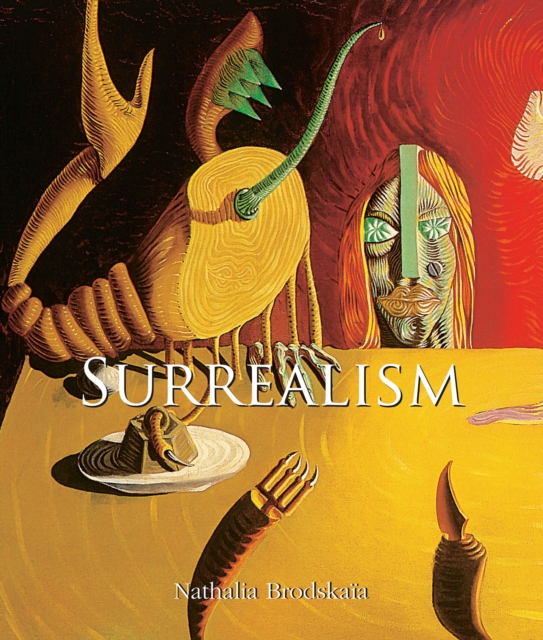
Surrealism
The Dada movement and then the Surrealists appeared in the First World War aftermath with a bang: revolution of thought, creativity, and the wish to break away from the past and all that was left in ruins. This refusal to integrate into the Bourgeois society lead Georg Grosz to remark of Dada, 'it's the end of-isms'. Breton asserted that Dada does not produce perspective, 'a machine which functions full steam, but where it remains to be seen how it can feed itself'. Surrealism emerged amidst such feeling. These artists often changed from one movement to another. They were united by their superior intellectualism and the common goal to break from the norm. Describing Dada with its dynamic free-thinkers, and the Surrealists with their aversive resistance to the system, the author brings a new approach which strives to be relative and truthful.
eBook

Feminisms
This book combines compelling analyses of contemporary images of women and their narratives with insightful reflections and interviews on the developments and differentiation in the history, theory, and practice of women and film and in the larger field of media studies.
eBook

Music, Informal Learning and the School: A New Classroom Pedagogy
This pioneering book reveals how the music classroom can draw upon the world of popular musicians' informal learning practices, so as to recognize and foster a range of musical skills and knowledge that have long been overlooked within music education. It investigates how far informal learning practices are possible and desirable in a classroom context; how they can affect young teenagers' musical skill and knowledge acquisition; and how they can change the ways students listen to, understand and appreciate music as critical listeners, not only in relation to what they already know, but beyond. It examines students' motivations towards music education, their autonomy as learners, and their capacity to work co-operatively in groups without instructional guidance from teachers. It suggests how we can awaken students' awareness of their own musicality, particularly those who might not otherwise be reached by music education, putting the potential for musical development and participation into their own hands. Bringing informal learning practices into a school environment is challenging for teachers. It can appear to conflict with their views of professionalism, and may at times seem to run against official educational discourses, pedagogic methods and curricular requirements. But any conflict is more apparent than real, for this book shows how informal learning practices can introduce fresh, constructive ways for music teachers to understand and approach their work. It offers a critical pedagogy for music, not as mere theory, but as an analytical account of practices which have fundamentally influenced the perspectives of the teachers involved. Through its grounded examples and discussions of alternative approaches to classroom work and classroom relations, the book reaches out beyond music to other curriculum subjects, and wider debates about pedagogy and curriculum.
Contents: Introduction; The project's pedagogy and curriculum content; Making music; Listening and appreciation; Enjoyment: making music and having autonomy; Group cooperation, ability and inclusion; Informal learning with classical music; Afterword; Appendices; Bibliography; Index.
Lucy Green is Professor of Music Education in The Institute of Education, University of London, UK.
eBook
Contemporary Culture
Are the humanities still relevant in the twenty-first century? In the context of pervasive economic liberalism and shrinking budgets due to a deep and prolonged recession, the exigency of humanities research for society is increasingly put into question. This volume claims that the humanities do indeed matter by offering empirically-grounded critical reflections on contemporary cultural practices, thereby opening up new ways of understanding social life and new directions in humanities scholarship. Are the humanities still relevant in the twenty-first century? Contemporary Culture New Directions in Arts and Humanities Research.
eBook

From Grain to Pixel
Film is in a state of rapid change, with the transition from analog to digital profoundly affecting not just filmmaking and distribution, but also the theoretical conceptualization of the medium film and the practice of film archiving. New forms of digital archives are being developed that make use of participatory media to provide a more open form of access than any traditional archive has offered before. Film archives are thus faced with new questions and challenges. From Grain to Pixel attempts to bridge the fields of film archiving and academic research, by addressing the discourse on film ontology and analysing how it affects the role of film archives. Fossati proposes a new theoretization of film archival practice as the starting point for a renewed dialogue between film scholars and film archivists.
Het bewegende beeld bevindt zich in een overgangsperiode waarin analoge (fotochemische) film geleidelijk vervangen wordt door digitale film. Deze overgang heeft niet alleen diepgaande invloed op filmproductie en -distributie, maar ook op de manier van archiveren van film en de theoretische conceptualisering van dit medium. Van digitale archieven worden steeds nieuwe vormen ontwikkeld. Deze archieven - digitale filmdatabases en YouTube bijvoorbeeld - maken gebruik van media die participatie van vele gebruikers mogelijk maken en worden zo toegankelijker dan ooit. Ondertussen is er nog onvoldoende dialoog tussen archivarissen en filmwetenschappers. From Grain to Pixel slaat een brug tussen archiveringspraktijken en wetenschappelijk onderzoek dat gebaseerd is op relevante debatten in film- en nieuwe mediastudies. Fossati stelt een nieuwe theorie op voor het archiveren en restaureren van film. Dit biedt mogelijkheden voor een hernieuwde dialoog tussen archivarissen en wetenschappers.
eBook

Playful Identities
In this edited volume, eighteen scholars examine the increasing role of digital media technologies in identity construction through play. Going beyond computer games, this interdisciplinary collection argues that present-day play and games are not only appropriate metaphors for capturing postmodern human identities, but are in fact the means by which people create their identity. From discussions of World of Warcraft and Foursquare to digital cartographies, the combined essays form a groundbreaking volume that features the most recent insights in play and game studies, media research, and identity studies.
eBook

European Cinema
In the face of renewed competition from Hollywood since the early 1980s and the challenges posed to Europe's national cinemas by the fall of the Wall in 1989, independent filmmaking in Europe has begun to re-invent itself. European Cinema: Face to Face with Hollywood re-assesses the different debates and presents a broader framework for understanding the forces at work since the 1960s. These include the interface of \"world cinema\" and the rise of Asian cinemas, the importance of the international film festival circuit, the role of television, as well as the changing aesthetics of auteur cinema. New audiences have different allegiances, and new technologies enable networks to reshape identities, but European cinema still has an important function in setting critical and creative agendas, even as its economic and institutional bases are in transition.
Onder invloed van de rivaliteit met Hollywood en de val van de muur in 1989 vond er in de jaren '90 in veel West-Europese landen een levendig debat plaats over de toekomst van de nationale filmtradities. Van het bestaan van zich onderscheidende 'nationale' stijlen, zoals bijvoorbeeld neo-realisme, zou niet langer kunnen worden uitgegaan. Film zou een benepen kunstvorm geworden zijn, die redding zoekt in het bewaren van de 'nationale' erfenis of hoopt op artistieke vernieuwing van televisie en door de overheid gesubsidieerde prestigeprojecten. In European Cinema blikt Thomas Elsaesser terug op het debat en geeft een genuanceerder beeld van verschillende factoren die sinds de jaren zestig een rol speelden. Er is o.m. aandacht voor de raakvlakken met de 'world cinema' en de opkomst van de Aziatische film, de invloed van het internationale film festival circuit, de rol van televisie en de veranderende esthetiek in auteur-cinema. Nieuwe toeschouwers hebben andere voorkeuren, en nieuwe technologieën bieden de mogelijkheid om bestaande identiteiten te hervormen, maar de Europese cinema heeft nog steeds een belangrijke functie in het vaststellen van kritische en creatieve agenda's, ook al is haar economische en institutionele basis in beweging.
eBook