
Catalogue Search | MBRL


Are you sure you want to remove the book from the shelf?

{{itemTitle}}
927
result(s) for
"asian american interest"
Sort by:

Fake Chinese sounds
\"Between homework, studying, and Chinese school, Měi Yīng's summer is shaping up to be a boring one. Her only bright spots are practice with her soccer team, the Divas, and the time spent with her năi nai, who is visiting from Taiwan. Although Měi Yīng's Mandarin isn't the best and Năi Nai doesn't speak English, they find other ways to connect, like cooking guōtiē together and doing tai chi in the mornings. By the end of the summer, Měi Yīng is sad to see Năi Nai go-she's the complete opposite of Měi Yīng serious professor mother-but excited to start fifth grade. Until new kid Sid starts making her the butt of racist jokes. Her best friend, Kirra, says to ignore him, but does everyone else's silence about the harassment mean they're also ignoring Sid . . . or her? As Sid's bullying fuels Měi Yīng's feelings of invisibility, she must learn to reclaim her identity and her voice.\"--Back cover.
Book
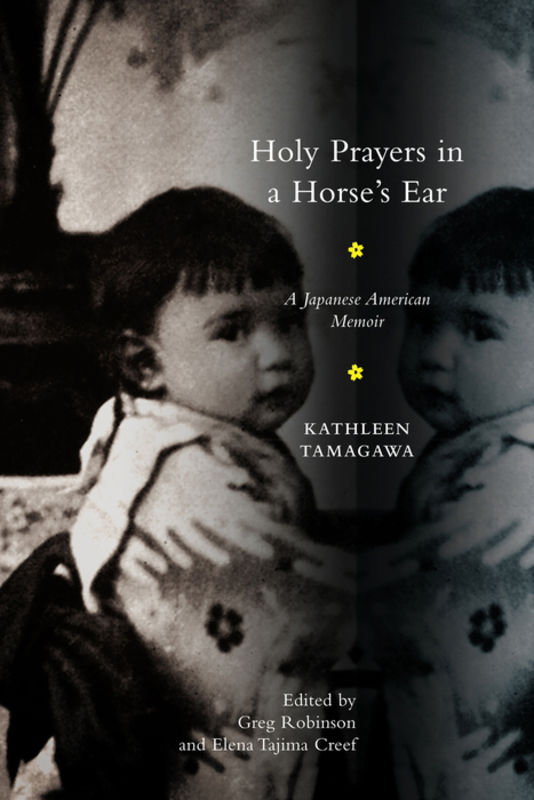
Holy Prayers in a Horse's Ear
Originally published in 1932, Kathleen Tamagawa's pioneering Asian American memoir is a sensitive and thoughtful look at the personal and social complexities of growing up racially mixed during the early twentieth century. Born in 1893 to an Irish American mother and a Japanese father and raised in Chicago and Japan, Tamagawa reflects on the difficulty she experienced fitting into either parent's native culture.
eBook

Social Identity and Preferences
Social identities prescribe behaviors for people. We identify the marginal behavioral effect of these norms on discount rates and risk aversion by measuring how laboratory subjects' choices change when an aspect of social identity is made salient. When we make ethnic identity salient to Asian-American subjects, they make more patient choices. When we make racial identity salient to black subjects, non-immigrant blacks (but not immigrant blacks) make more patient choices. Making gender identity salient has no effect on intertemporal or risk choices. (JEL D81, J15, J16, Z13)
Journal Article
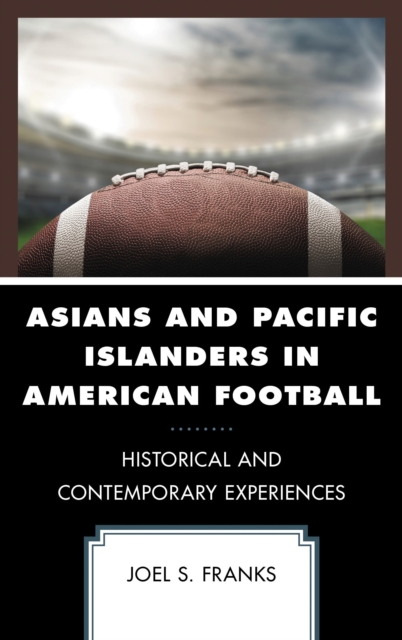
Asians and pacific islanders in American football
This book sheds light on experiences relatively underrepresented in academic and non-academic sport history. It examines how Asian and Pacific Islander peoples used American football to maintain a sense of community while encountering racial exclusion, labor exploitation, and colonialism. Through their participation and spectatorship in American football, Asian and Pacific Islander people crossed treacherous cultural frontiers to construct what sociologist Elijah Anderson has called a cosmopolitan canopy under which Asian Americans, Pacific Islanders, and people of diverse racial and ethnic identities interacted with at least a semblance of respect and equity. And perhaps a surprising number of Asian Americans and Pacific Islanders have excelled in college and even professional football before the 1960s. Finally, acknowledging the impressive influx of elite Pacific Islander gridders who surfaced in the late twentieth and early twenty-first century, it is vital to note as well the racialized nativism shadowing the lives of these athletes.
eBook

Making Asian American Film and Video
The words \"Asian American film\" might evoke a painfully earnest, low-budget documentary or family drama, destined to be seen only in small film festivals or on PBS (Public Broadcasting Service). In her groundbreaking study of the past fifty years of Asian American film and video, Jun Okada demonstrates that although this stereotype is not entirely unfounded, a remarkably diverse range of Asian American filmmaking has emerged. Yet Okada also reveals how the legacy of institutional funding and the \"PBS style\" unites these filmmakers, whether they are working within that system or setting themselves in opposition to its conventions.
Making Asian American Film and Videoexplores how the genre has served as a flashpoint for debates about what constitutes Asian American identity. Tracing a history of how Asian American film was initially conceived as a form of public-interest media, part of a broader effort to give voice to underrepresented American minorities, Okada shows why this seemingly well-intentioned project inspired deeply ambivalent responses. In addition, she considers a number of Asian American filmmakers who have opted out of producing state-funded films, from Wayne Wang to Gregg Araki to Justin Lin.
Okada gives us a unique behind-the-scenes look at the various institutions that have bankrolled and distributed Asian American films, revealing the dynamic interplay between commercial and state-run media. More than just a history of Asian Americans in film,Making Asian American Film and Videois an insightful meditation on both the achievements and the limitations of institutionalized multiculturalism.
eBook

Why are there so few ethnic minorities in ecology and evolutionary biology? Challenges to inclusion and the role of sense of belonging
African Americans and other ethnic minorities are severely underrepresented in both graduate education and among the professoriate in ecology and evolutionary biology (EEB). In the present research, we take a social psychological approach to studying inclusion by examining interrelationships among challenges to inclusion, the sense of belonging, and interest in pursuing graduate education in EEB. We conducted a survey of African American (N = 360), Latino/a/Hispanic (N = 313), White (N = 709), and Asian/Asian American (N = 524) college undergraduates majoring in science, technology, engineering, and math fields and used the results to test several interrelated hypotheses derived from our theoretical model. Compared to Whites, ethnic minorities were more likely to experience challenges to inclusion in EEB (e.g., less exposure to ecology, fewer same-race role models, discomfort in outdoor environments). Challenges to inclusion were associated with a decreased sense of belonging in EEB educational contexts. Finally, experiencing a low sense of belonging in EEB educational contexts was associated with lower interest in pursuing graduate education in EEB. Sense of belonging in EEB was especially low among African Americans relative to Whites. We discuss the implications of the study results for educational interventions.
Journal Article

Characterizing differences in outpatient dermatologic care utilization among disaggregated Asian American subgroups
Despite having significantly higher rates of atopic dermatitis, psoriasis, and pigmentary disorders compared to White patients, studies suggest that Asian Americans are underrepresented in outpatient dermatology clinics. In this study, we utilize the National Health Interview Survey (NHIS) and prioritize disaggregated analyses to evaluate differences between the most populous Asian American subgroups (Chinese, Filipino, Indian, and “Other”) in utilization of outpatient dermatologic care. We utilized multivariable logistic regression to compare outpatient dermatologic care use between each Asian American subgroup and Non-Hispanic Whites. Out of 96,559 adults, our study included 5264 self-identified Asian American and 91,295 non-Hispanic White adults. Most Asian participants were female, had health insurance, and had incomes > 2 times above the federal poverty line. We found that, compared to 21.4% for NH whites, lifetime prevalence of total body skin exam was highest among Filipino Americans (12.3%) and lowest among Indian Americans (7%). Additionally, all Asian American subgroups had a significantly lower odd than NH Whites of ever having a total body skin exam, with Indian Americans having the lowest odds. While the benefit of TBSEs in Indian Americans is unclear, it is possible that differing cultural perceptions about dermatologic needs, barriers to care, or immigration status may be contributing to the observed difference. Furthermore, the Indian diaspora encapsulates a range of skin tones, risk factors, and behaviors that may differentially influence dermatologic disease risk, similar to trends identified among Hispanic patients (Trepanowski et al. in J Am Acad Dermatol 88:1206–1209, 2023). Additional research utilizing the seven national databases that have been identified as providing disaggregated Asian racial information (Kamal et al. in J Am Acad Dermatol, 2023) may be useful to further illuminate avenues for intervention.
Journal Article


Postmenopausal Osteoporosis
To the Editor:
With regard to the Clinical Practice article on postmenopausal osteoporosis by Walker and Shane (Nov. 23 issue),
1
we believe that one additional topic merits emphasis — the systemic underuse of evidence-based antiosteoporosis medications after fragility fracture. This divergence between guideline recommendations and real-world practice is termed the “osteoporosis care gap.” Less than 30% of patients receive antiosteoporosis treatments after a fragility fracture in the United States.
2
This care gap decreases quality of life and increases the risks of a subsequent fracture, rehospitalization, future institutionalization, and death. It also costs U.S. health systems billions of dollars annually.
3
Drivers . . .
Journal Article
