
Catalogue Search | MBRL


Are you sure you want to remove the book from the shelf?

{{itemTitle}}
137,912
result(s) for
"assemblages"
Sort by:

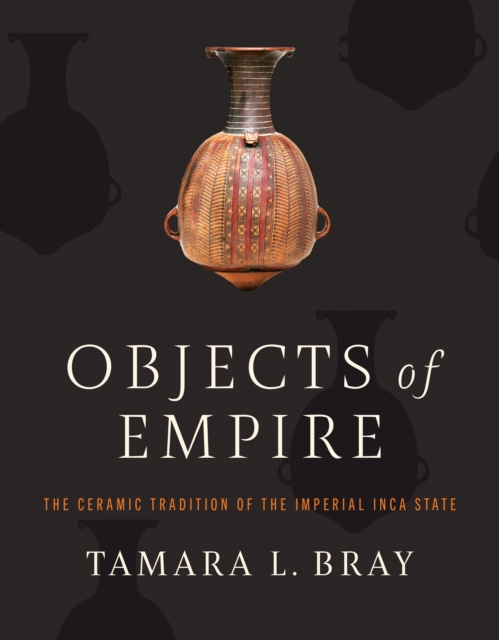
Objects of Empire
A comparative, empire-wide study of the ceramics associated with the imperial Inca state, theorizing the role of these highly recognizable vessel forms in legitimizing Inca rule and establishing imperial identities.
eBook

Mexican women in American factories : free trade and exploitation on the border
Prior to the millennium, economists and policy makers argued that free trade between the United States and Mexico would benefit both Americans and Mexicans. They believed that NAFTA would be a “win-win” proposition that would offer U.S. companies new markets for their products and Mexicans the hope of living in a more developed country with the modern conveniences of wealthier nations. Blending rigorous economic and statistical analysis with concern for the people affected, Mexican Women in American Factories offers the first assessment of whether NAFTA has fulfilled these expectations by examining its socioeconomic impact on workers in a Mexican border town. Carolyn Tuttle led a group that interviewed 620 women maquila workers in Nogales, Sonora, Mexico. The responses from this representative sample refute many of the hopeful predictions made by scholars before NAFTA and reveal instead that little has improved for maquila workers. The women’s stories make it plain that free trade has created more low-paying jobs in sweatshops where workers are exploited. Families of maquila workers live in one- or two-room houses with no running water, no drainage, and no heat. The multinational companies who operate the maquilas consistently break Mexican labor laws by requiring women to work more than nine hours a day, six days a week, without medical benefits, while the minimum wage they pay workers is insufficient to feed their families. These findings will make a crucial contribution to debates over free trade, CAFTA-DR, and the impact of globalization.
eBook

Crossing Bridges
Fournier and Alvarez (2019—this issue) and Batra (2019—this issue), respectively, offer interpretive and psychological perspectives on how brands acquire cultural meanings. In this commentary, we discuss the opportunities for leveraging these two perspectives, and use an assemblage theory lens to uncover the dynamics of how cultural models articulated through cultural myths, metaphors, ideologies, and cultural objects circulate through the brand assemblage and through the consumer assemblage. We offer a bridge-crossing approach to research opportunities bringing both a socio-historical-cultural approach and psychological approach to understand how cultural meanings are assembled into brands and how consumers assemble brands into their lives.
Journal Article

Trait-based inference of ecological network assembly
The study of ecological networks has progressively evolved from a mostly descriptive science to one that attempts to elucidate the processes governing the emerging structure of multitrophic communities. To move forward, we propose a conceptual framework using trait-based inference of ecological processes to improve our understanding of network assembly and our ability to predict network reassembly amid global change. The framework formalizes the view that network assembly is governed by processes shaping the composition of resource and consumer communities within trophic levels and those dictating species’ interactions between trophic levels. To illustrate the framework and show its applicability, we (1) use simulations to explore network structures emerging from the interactions of these assembly processes, (2) develop a null model approach to infer the processes underlying network assembly from observational data, and (3) use the null model approach to quantify the relative influence of bottom-up (resource-driven) and top-down (consumer-driven) assembly modes on plant–frugivore networks along an elevational gradient. Simulations suggest that assembly processes governing the formation of pairwise interactions have a greater influence on network structure than those governing the composition of communities within trophic levels. Our case study further shows that the mode of network assembly along the gradient is mainly bottom-up controlled, suggesting that the filtering of plant traits has a larger effect on network structure relative to the filtering of frugivore traits. Combined with increasingly available trait and interaction data, the framework provides a timely toolbox to infer assembly processes operating within and between trophic levels and to test competing hypotheses about the assembly mode of resource–consumer networks along environmental gradients and among biogeographic regions. It is a step toward a more process-based network ecology and complete integration of multitrophic interactions in the prediction of future biodiversity
Journal Article

Assembly systems in Industry 4.0 era: a road map to understand Assembly 4.0
The 4th industrial revolution (Industry 4.0, I4.0) is based upon the penetration of many new technologies to the industrial world. These technologies are posed to fundamentally change assembly lines around the world. Assembly systems transformed by I4.0 technology integration are referred to here as Assembly 4.0 (A4.0). While most I4.0 new technologies are known, and their integration into shop floors is ongoing or imminent, there is a gap between this knowledge and understanding the form and the impact of their full implementation in assembly systems. The path from the new technological abilities to improved productivity and profitability has not been well understood and has some missing parts. This paper strives to close a significant part of this gap by creating a road map to understand and explore the impact of typical I4.0 new technologies on A4.0 systems. In particular, the paper explores three impact levels: strategic, tactical, and operational. On the strategic level, we explore aspects related to the design of the product, process, and the assembly system. Additionally, the paper elaborates on likely changes in assembly design aspects, due to the flexibility and capabilities that these new technologies will bring. Strategic design also deals with planning and realizing the potential of interactions between sub-assembly lines, kitting lines, and the main assembly lines. On the tactical level, we explore the impact of policies and methodologies in planning assembly lines. Finally, on the operational level, we explore how these new capabilities may affect part routing and scheduling including cases of disruptions and machine failures. We qualitatively assess the impact on performance in terms of overall flow time and ability to handle a wide variety of end products. We point out the cases where clear performance improvement is expected due to the integration of the new technologies. We conclude by identifying research opportunities and challenges for advanced assembly systems.
Journal Article

Future geographic patterns of novel and disappearing assemblages across three dimensions of diversity: A case study with Ecuadorian hummingbirds
Aim: Under climate change, it is likely that as species reshuffle based on their environmental tolerances, novel assemblages will form and some current assemblages will disappear. It is important for future monitoring and conservation that we understand where these novel and disappearing assemblages occur and how they differ among dimensions (taxonomic, phylogenetic and functional) of diversity. Here we investigate the geographical and environmental patterns of novel and disappearing assemblages; whether these patterns hold across dimensions of diversity; and how these assemblages are characterized in trait space. Location: Ecuador. Methods: We used ensemble species distribution modelling to estimate the distributions of 151 hummingbird species into the projected climate for 2070. Using standard beta diversity measures, we identified novel and disappearing taxonomic, phylogenetic and functional assemblages. Results: We found that novel and disappearing hummingbird assemblages are likely under climate change, particularly in extreme environments and with novel assemblages replacing disappearing assemblages. Although the patterns of novel and disappearing assemblages were similar among dimensions of diversity, we found that there were fewest novel and disappearing functional assemblages. The future assemblages were characterized by an increase in functional space, which is counter to typical predictions of trait homogenization under climate change. Main conclusions: Novel and disappearing assemblages are likely to pose management challenges for future conservation. Here we present an approach to identify such assemblages. By considering the geographic and environmental context of novel and disappearing assemblages for different dimensions of diversity, we can start to identify the mechanisms behind these patterns.
Journal Article

Agricultural Effects on Streams and Rivers: A Western USA Focus
Globally, croplands and rangelands are major land uses and they have altered lands and waters for millennia. This continues to be the case throughout the USA, despite substantial improvements in treating wastewaters from point sources—versus non-point (diffuse) sources. Poor macroinvertebrate assemblage condition occurs in 30% of conterminous USA streams and rivers; poor fish assemblage condition occurs in 26%. The risk of poor fish assemblage condition was most strongly associated with excess nutrients, salinity and sedimentation and impaired riparian woody vegetation. Although the Clean Water Act was passed to restore and maintain the integrity of USA waters, that will be impossible without controlling agricultural pollution. Likewise, the Federal Land Policy and Management Act was enacted to protect the natural condition of public lands and waters, including fish habitat, but it has failed to curtail the sacred cows of livestock grazing. Although progress has been slow and spotty, promising results have been obtained from basin and watershed planning and riparian zone protections.
Journal Article

Origami tubes assembled into stiff, yet reconfigurable structures and metamaterials
Thin sheets have long been known to experience an increase in stiffness when they are bent, buckled, or assembled into smaller interlocking structures. We introduce a unique orientation for coupling rigidly foldable origami tubes in a “zipper” fashion that substantially increases the system stiffness and permits only one flexible deformation mode through which the structure can deploy. The flexible deployment of the tubular structures is permitted by localized bending of the origami along prescribed fold lines. All other deformation modes, such as global bending and twisting of the structural system, are substantially stiffer because the tubular assemblages are overconstrained and the thin sheets become engaged in tension and compression. The zipper-coupled tubes yield an unusually large eigenvalue bandgap that represents the unique difference in stiffness between deformation modes. Furthermore, we couple compatible origami tubes into a variety of cellular assemblages that can enhance mechanical characteristics and geometric versatility, leading to a potential design paradigm for structures and metamaterials that can be deployed, stiffened, and tuned. The enhanced mechanical properties, versatility, and adaptivity of these thin sheet systems can provide practical solutions of varying geometric scales in science and engineering.
Journal Article

Accurate long-read de novo assembly evaluation with Inspector
Long-read de novo genome assembly continues to advance rapidly. However, there is a lack of effective tools to accurately evaluate the assembly results, especially for structural errors. We present Inspector, a reference-free long-read de novo assembly evaluator which faithfully reports types of errors and their precise locations. Notably, Inspector can correct the assembly errors based on consensus sequences derived from raw reads covering erroneous regions. Based on in silico and long-read assembly results from multiple long-read data and assemblers, we demonstrate that in addition to providing generic metrics, Inspector can accurately identify both large-scale and small-scale assembly errors.
Journal Article