
Catalogue Search | MBRL


Are you sure you want to remove the book from the shelf?

{{itemTitle}}
114,541
result(s) for
"automatic"
Sort by:


Predictive Control of Power Converters and Electrical Drives
<p>The application Model Predictive Control (MPC) controls electrical energy with the use of power converters and offers a highly flexible alternative to the use of modulators and linear controllers. This new approach takes into account the discrete and nonlinear nature of the power converters and drives and promises to have a strong impact on control in power electronics in the coming decades.</p> <p><i>Predictive Control of Power Converters and Electrical Drives</i> provides a comprehensive overview of the general principles and current research into MPC and is ideal for engineers, specialists and researchers needing: </p> <ul> <li>a straightforward explanation of the theory and implementation of predictive control;</li> <li>analysis on classical converter control methods and electrical drives control methods;</li> <li>application examples and case studies demonstrating how control schemes have been implemented;</li> <li>practice in running their own MATLAB<sup>(R)</sup> simulations through the companion website.</li> </ul> <p>With the information provided, power electronics specialists will be able to start applying this new control technique. This book will help electrical, electronics and control engineers, R&D engineers, product development engineers working in power electronics and drives, and industry engineers of power conversions and motor drives. It is also a complete reference for university researchers, graduate and senior-level undergraduate students of electrical and electronics engineering, academic control specialists, and academics in electrical drives.</p> <p>URL: www.wiley.com/go/rodriguez_control</p>
eBook


Model Predictive Control of High Power Converters and Industrial Drives
In this original book on model predictive control (MPC) for power electronics, the focus is put on high-power applications with multilevel converters operating at switching frequencies well below 1 kHz, such as medium-voltage drives and modular multi-level converters. Consisting of two main parts, the first offers a detailed review of three-phase power electronics, electrical machines, carrier-based pulse width modulation, optimized pulse patterns, state-of-the art converter control methods and the principle of MPC. The second part is an in-depth treatment of MPC methods that fully exploit the performance potential of high-power converters. These control methods combine the fast control responses of deadbeat control with the optimal steady-state performance of optimized pulse patterns by resolving the antagonism between the two.
eBook


Automatic speech recognition for under-resourced languages: A survey
Speech processing for under-resourced languages is an active field of research, which has experienced significant progress during the past decade. We propose, in this paper, a survey that focuses on automatic speech recognition (ASR) for these languages. The definition of under-resourced languages and the challenges associated to them are first defined. The main part of the paper is a literature review of the recent (last 8 years) contributions made in ASR for under-resourced languages. Examples of past projects and future trends when dealing with under-resourced languages are also presented. We believe that this paper will be a good starting point for anyone interested to initiate research in (or operational development of) ASR for one or several under-resourced languages. It should be clear, however, that many of the issues and approaches presented here, apply to speech technology in general (text-to-speech synthesis for instance).
Journal Article


The Future of Work
Looking for ways to handle the transition to a digital economy
Robots, artificial intelligence, and driverless cars are no longer things of the distant future. They are with us today and will become increasingly common in coming years, along with virtual reality and digital personal assistants.
As these tools advance deeper into everyday use, they raise the question-how will they transform society, the economy, and politics? If companies need fewer workers due to automation and robotics, what happens to those who once held those jobs and don't have the skills for new jobs? And since many social benefits are delivered through jobs, how are people outside the workforce for a lengthy period of time going to earn a living and get health care and social benefits?
Looking past today's headlines, political scientist and cultural observer Darrell M. West argues that society needs to rethink the concept of jobs, reconfigure the social contract, move toward a system of lifetime learning, and develop a new kind of politics that can deal with economic dislocations. With the U.S. governance system in shambles because of political polarization and hyper-partisanship, dealing creatively with the transition to a fully digital economy will vex political leaders and complicate the adoption of remedies that could ease the transition pain. It is imperative that we make major adjustments in how we think about work and the social contract in order to prevent society from spiraling out of control.
This book presents a number of proposals to help people deal with the transition from an industrial to a digital economy. We must broaden the concept of employment to include volunteering and parenting and pay greater attention to the opportunities for leisure time. New forms of identity will be possible when the \"job\" no longer defines people's sense of personal meaning, and they engage in a broader range of activities. Workers will need help throughout their lifetimes to acquire new skills and develop new job capabilities. Political reforms will be necessary to reduce polarization and restore civility so there can be open and healthy debate about where responsibility lies for economic well-being.
This book is an important contribution to a discussion about tomorrow-one that needs to take place today.
eBook

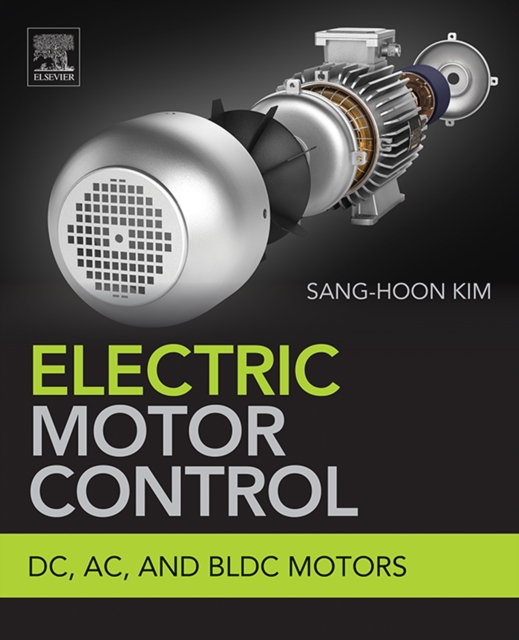
Electric motor control : DC, AC and BLDC motors
Electric Motor Control: DC, AC, and BLDC Motors introduces practical drive techniques of electric motors to enable stable and efficient control of many application systems, also covering basic principles of high-performance motor control techniques, driving methods, control theories and power converters.Electric motor drive systems play a critical.
eBook