
Catalogue Search | MBRL


Are you sure you want to remove the book from the shelf?

{{itemTitle}}
134
result(s) for
"bestiality"
Sort by:

Taming Lust
In 1796, as revolutionary fervor waned and the Age of Reason took hold, an eighty-five-year-old Massachusetts doctor was convicted of bestiality and sentenced to hang. Three years later and seventy miles away, an eighty-three-year-old Connecticut farmer was convicted of the same crime and sentenced to the same punishment. Prior to these criminal trials, neither Massachusetts nor Connecticut had executed anyone for bestiality in over a century. Though there are no overt connections between the two episodes, the similarities of their particulars are strange and striking. Historians Doron S. Ben-Atar and Richard D. Brown delve into the specifics to determine what larger social, political, or religious forces could have compelled New England courts to condemn two octogenarians for sexual misbehavior typically associated with much younger men.The stories of John Farrell and Gideon Washburn are less about the two old men than New England officials who, riding the rough waves of modernity, returned to the severity of their ancestors. The political upheaval of the Revolution and the new republic created new kinds of cultural experience-both exciting and frightening-at a moment when New England farmers and village elites were contesting long-standing assumptions about divine creation and the social order. Ben-Atar and Brown offer a rare and vivid perspective on anxieties about sexual and social deviance in the early republic.
eBook

Bestiality: Challenging the boundary of the Australian criminal law
This article analyses the statutory provisions and all case law on bestiality offending recorded throughout settler Australia's history. It identifies that while bestiality is an offence in every state and territory, the law does not disclose a clear rationale for a prohibition against sexual activity between humans and animals. It considers how Judeo-Christian attitudes toward non-procreative sex influenced bestiality's origins and development in English law, and whether progressive and conservative international views on animal rights provide guidance on its continued criminalisation. The article concludes that conflicting perspectives within modern academic and activist discourses do not provide guidance on maintaining the offence, and so the crime of bestiality challenges the boundary of the criminal law.
Journal Article

Bestiality Law in the United States: Evolving Legislation with Scientific Limitations
Societies have proscribed bestiality, or sex between humans and nonhuman animals, since the earliest recorded legal codes. In the early American colonies, religious prohibitions against bestiality provided the grounds for punishing those who engaged in such acts. In the 1800′s, Henry Bergh imported the animal welfare approach to the United States, which modernized the legislative treatment of animals in the country. Until recently, however, many laws in the U.S. have been outdated and vague and have utilized moralistic terminology. Since the 1960′s, a growing body of literature has developed suggesting that individuals who harm animals may also interpersonally offend. This concept, known as the Link, has served as a major motivation for advocates to promote new legislation criminalizing bestiality, to modernize old state statutes, and to expand penalties for individuals convicted of having sex with animals. Unfortunately, data supporting the Link between bestiality and interpersonal violence are limited and of questionable generalizability to the broad public. The Link’s weaknesses can assist in guiding further research. This article summarizes the history of bestiality law, the current state of bestiality legislation in the United States, the body of Link-related literature on bestiality and interpersonal violence and other problematic sexual behaviors, and the empirical weaknesses and needs revealed by this legislation.
Journal Article

An adolescent with bestiality behaviour: Psychological evaluation and community health concerns
Bestiality is a serious but less commonly reported form of animal cruelty occurring in a society. It is a punishable sexual offence in India. Bestiality has received little attention in recent psychiatric literature, and even though case reports have been published, an elaborate psychological assessment is often missing. This case report of 18 year old male presented here highlighted the importance of psychological assessment to emphasize on its implications for the further risk assessment of the person, family psycho-education and non-pharmacological intervention for bestialists. The overall assessment suggested of absence of any brain dysfunction and active psychopathology, average intelligence (IQ) and intact cognitive functioning. The findings portrayed physical and sexual inadequacies, emotional and sexual immaturity, difficulty in emotional attachment, internalized hostility, voyeuristic tendencies and infantile social behaviour, excitement seeker, inability to delay gratification of impulses, lacks empathy, poor self-discipline, less conscientiousness and less sensitive to criticism. The report also emphasized the role of child sexual abuse on sexual behavior later life. The importance of including the topic within the community health/sexual and reproductive health education programmes was highlighted.
Journal Article

Humans as Animals and Things in Pre-Buddhist China
This paper examines the way thinkers in the pre-Buddhist world in China viewed the animal-human divide. It argues that the boundaries between humans and animals were porous. The only unique capacities that human beings are credited with were first (widely) the ability to develop their unique potentials (chengren 成人), and, second (in a very few texts), the capacity to respond with greater sensitivity to the resonant world around them. In both contexts, the extant terms make use of two terms, ling 靈 and jingshen 精神. Part II of the essay then turns to examine the most influential Euro-American theories cited in today’s secondary literature regarding the animal-human divide. None of these seem remotely like the theories articulated in early China. In Part III, the essay examines vitalism, which is an unusual instance in early modern Europe where an important theory seems to approach the views of early China, with the express aim of reminding readers that we need not automatically posit an impassable gulf between East and West, but can, instead, profit from wider reading that yields more comparative insights.
Journal Article
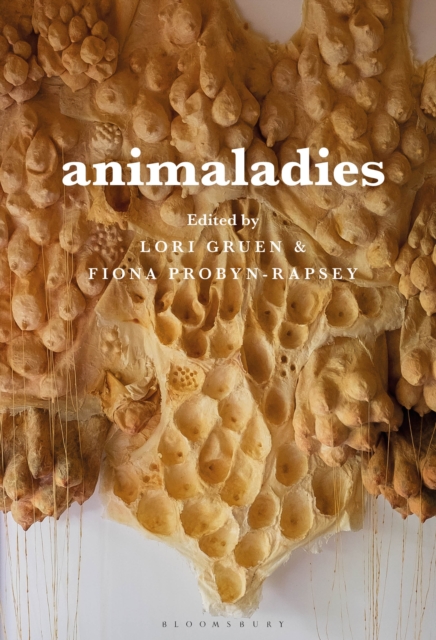
Animaladies
Do depictions of crazy cat ladies obscure more sinister structural violence against animals hoarded in factory farms? Highlighting the frequent pathologization of animal lovers and animal rights activists, this book examines how the “madness” of our relationships with animals intersects with the “madness” of taking animals seriously. The essays collected in this volume argue that “animaladies” are expressive of political and psychological discontent, and the characterization of animal advocacy as mad or “crazy” distracts attention from broader social unease regarding human exploitation of animal life. While allusions to madness are both subtle and overt, they are also very often gendered, thought to be overly sentimental with an added sense that emotions are being directed at the wrong species. Animaladies are obstacles for the political uptake of interest in animal issues—as the intersections between this volume and established feminist scholarship show, the fear of being labeled unreasonable or mad still has political currency.
eBook


Social Scientific Analysis of Human-Animal Sexual Interactions
An ontological shift has led to a revitalisation of the research area that, within the social sciences, deals with the interactions between humans and animals. However, there are topics which are still taboo: interspecies sexuality. Sexual practices between humans and animals have been fundamentally analysed from a medical perspective, failing to consider the influence of cultural context. Departing from a thorough bibliographical revision, here we revise the approaches that, both from sociology and anthropology, have been used to analyse this phenomenon from different perspectives, including bestiality, zoophilia, and zoosexuality.
Journal Article

Autism spectrum disorder, bestiality and zoophilia: a systematic PRISMA review
Purpose
There remains a lack of knowledge surrounding paraphilic or deviant arousal sexual behaviours in individuals with Autism spectrum disorder (ASD) (Kellaher, 2015). The purpose of this paper is to explore the literature for any empirical study, case study or discussion/review paper surrounding individuals with ASD and zoophilia or bestiality.
Design/methodology/approach
A systematic PRISMA review was conducted.
Findings
This systematic review highlighted only a small number of papers, which have looked at zoophilia or bestiality in individuals with ASD. Only one article was identified as being relevant in the present review, three further articles included a description of a case involving someone with ASD who engaged in zoophilia or bestiality and another paper, although not the focus of the study, found one person with Asperger’s disorder who had several paraphilias including olfactophilia, podophilia and zoophilia in a sample of 20 institutionalised, male adolescents and young adults with Autistic disorder and borderline/mild mental retardation. All the case studies clearly highlight some of the ASD symptomology that can contribute to engaging in bestiality or zoophilia.
Practical implications
It is important that individuals with ASD have access to appropriate and timely sex education and that parents are supported by healthcare professionals to engage with their children with ASD in such interactions across the autism spectrum irrespective of the parent’s expectations.
Originality/value
To the author’s knowledge, this is the first review of ASD in relation to bestiality and zoophilia.
Journal Article