
Catalogue Search | MBRL


Are you sure you want to remove the book from the shelf?

{{itemTitle}}
1,576
result(s) for
"birdwatching"
Sort by:

National Geographic angry birds : 50 true stories of the fed up, feathered, and furious /
\"This hilariously eye-popping book showcases real-world angry birds and 50 fantastic stories peppered with tips to avoid them, as well as fascinating facts about angry bird behavior. In addition to the funny and light-hearted real-life angry bird stories, National Geographic Angry Birds: Fed up, Feathered, and Furious will tell, for the first time ever, the story of the Angry Birds we all know and love from the hit game. Angry Bird fans will finally get to learn the personality, name, and all the details of each of the iconic Angry Birds.\"--Provided by publisher.
Book
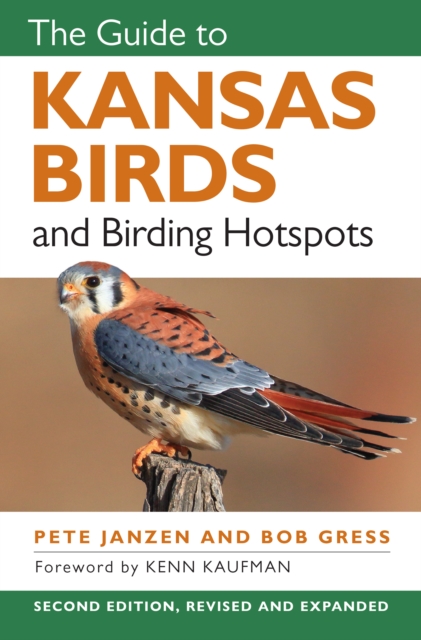
The Guide to Kansas Birds and Birding Hotspots
This definitive guide is an essential resource for Kansas
birders of all kinds!
Kansas is a bird-watcher’s paradise, boasting
exceptional habitat diversity and a key location at the hub of
the hemisphere’s migration corridors. An astounding 486
avian species have been documented in the state. In this greatly
expanded edition of their award-winning guide, renowned experts
Pete Janzen and Bob Gress have gathered a wealth of information
on 321 species and 100 birding hotspots in Kansas.
Janzen and
Gress offer beautiful photographs, useful identification
information, and field notes on habitat, seasonal occurrence, and
more. The guides to birding hotspots throughout the state
highlight the unique species and seasonal features of the most
diverse and exciting places Kansas has to offer and will help you
plan your next adventure. Additionally, Janzen and Gress have
included essays on topics like birding basics and the geography
and ecosystems of Kansas, along with a calendar of bird activity
in Kansas and a complete species checklist of Kansas birds.
This new edition is a must-have guide for every backyard
enthusiast and day-tripping birder.
eBook


The feathery tribe : Robert Ridgway and the modern study of birds
\"Amateurs and professionals studying birds at the end of the nineteenth century were a contentious, passionate group with goals that intersected, collided and occasionally merged in their writings and organizations. Driven by a desire to advance science, as well as by ego, pride, honor, insecurity, religion and other clashing sensibilities, they struggled to absorb the implications of evolution after Darwin. In the process, they dramatically reshaped the study of birds. Daniel Lewis here explores the professionalization of ornithology through one of its key figures: Robert Ridgway, the Smithsonian Institution's first curator of birds and one of North America's most important natural scientists. Exploring a world in which the uses of language, classification and accountability between amateurs and professionals played essential roles, Lewis offers a vivid introduction to Ridgway and shows how his work fundamentally influenced the direction of American and international ornithology. He explores the inner workings of the Smithsonian and the role of collectors working in the field and reveals previously unknown details of the ornithological journal The Auk and the untold story of the color dictionaries for which Ridgway is known\"-- Provided by publisher.
Book

Ospreys
A fascinating look at one of the greatest conservation success stories of the modern era: the wildly popular, unique, and thrilling raptor, the Osprey. Ospreys are one of the few bird species that are found throughout the world. From forests in Hokkaido to rivers in Oregon and islands off Australia, Ospreys steal the show as nature lovers easily watch them build their massive nests and tend to their young. The fact that the Osprey is one of the few large birds that can hover adds to its mystique, and to watch it plunge into the water, emerging with a fish clutched in its talons, is truly a sight one will remember. As widespread as Ospreys are, not long ago they were under threat of extinction. During the 1950s and '60s, scientists tied the decline of Osprey populations to the heavy use of DDT and other human pollutants. In the 1980s, Ospreys began a slow recovery due to the efforts of conservationists and through the resilience of the adaptable raptors themselves. Today they are again considered common in most parts of the world, although some populations remain threatened. In this gorgeously illustrated book, Alan F. Poole, one of America's premier Osprey experts, has written a lyrical exposé of these majestic creatures, describing their daily habits and exploring their relationship with the environment. Ospreys celebrates the species' miraculous recovery from contaminants and hunters, chronicles their spectacular long-distance migrations, and unveils their vital role in bringing life to coastal habitats. Few other birds have such a hold on the human imagination. This book shows us why.
eBook

The Individual Travel Cost Method with Consumer-Specific Values of Travel Time Savings
The treatment of the opportunity cost of travel time in travel cost models has been an area of research interest for many decades. Our analysis develops a methodology to combine the travel distance and travel time data with respondent-specific estimates of the value of travel time savings (VTTS). The individual VTTS are elicited with the use of discrete choice stated preference methods. The travel time valuation procedure is integrated into the travel cost valuation exercise to create a two-equation structural model of site valuation. Since the travel time equation of the structural model incorporates individual preference heterogeneity, the full structure model provides a travel cost site demand model based upon individualized values of time. The methodology is illustrated in a study of recreational birdwatching, more specifically, visits to a ‘stork village’ in Poland. We show that the usual practice of basing respondents’ VTTS on 1/3 of their wage rate is largely unfounded and propose alternatives—including a separate component of the travel cost survey aimed at valuation of respondents’ VTTS or, as a second best, asking if they wish if their journey was shorter and for those who do—use full hourly wage as an indicator of their VTTS.
Journal Article

migration ecology of birds
This book presents an up-to-date, detailed and thorough review of the most fascinating ecological findings of bird migration. It deals with all aspects of this absorbing subject, including the problems of navigation and vagrancy, the timing and physiological control of migration, the factors that limit their populations, and more. Author, Ian Newton, reveals the extraordinary adaptability of birds to the variable and changing conditions across the globe, including current climate change. This adventurous book places emphasis on ecological aspects, which have received only scant attention in previous publications. Overall, the book provides the most thorough and in-depth appraisal of current information available, with abundant tables, maps and diagrams, and many new insights. Written in a clear and readable style, this book appeals not only to migration researchers in the field and Ornithologists, but to anyone with an interest in this fascinating subject. * Hot ecological aspects include: various types of bird movements, including dispersal and nomadism, and how they relate to food supplies and other external conditions * Contains numerous tables, maps and diagrams, a glossary, and a bibliography of more than 2,700 references* Written by an active researcher with a distinguished career in avian ecology, including migration research
eBook

Parrots of the Wild
\"Parrots of the Wildis an exhaustive compendium of information about parrots, from their evolutionary history to their behavior to present-day conservation issues. A must-have for anyone interested in these amazing creatures.\" -Irene M. Pepperberg, Professor at Harvard University and author ofAlex & Me: How a Scientist and a Parrot Discovered a Hidden World of Animal Intelligence-and Formed a Deep Bond in the Process\"If you like parrots then you'll love this book. From their evolutionary past to their modern-day love lives,Parrots of the Wildpresents a suitably captivating read. I thought I knew a lot about parrots--until I delved into these pages.\" -Tony Juniper, author ofWhat Has Nature Ever Done for Us?andSpix's Macaw: The Race to Save the World's Rarest Bird
Parrots of the Wildexplores recent scientific discoveries and what they reveal about the lives of wild parrots, which are among the most intelligent and rarest of birds. Catherine A. Toft and Tim Wright discuss the evolutionary history of parrots and how this history affects perceptual and cognitive abilities, diet and foraging patterns, and mating and social behavior. The authors also discuss conservation status and the various ways different populations are adapting to a world that is rapidly changing. The book focuses on general patterns across the 350-odd species of parrots, as well as what can be learned from interesting exceptions to these generalities.A synthetic account of the diversity and ecology of wild parrots, this book distills knowledge from the authors' own research and from their review of more than 2,400 published scientific studies. The book is enhanced by an array of illustrations, including nearly ninety color photos of wild parrots represented in their natural habitats.Parrots of the Wildmelds scientific exploration with features directed at the parrot enthusiast to inform and delight a broad audience.
eBook

Human Actions Alter Tidal Marsh Seascapes and the Provision of Ecosystem Services
Tidal marshes are a key component of coastal seascape mosaics that support a suite of socially and economically valuable ecosystem services, including recreational opportunities (e.g., fishing, birdwatching), habitat for fisheries species, improved water quality, and shoreline protection. The capacity for tidal marshes to support these services is, however, threatened by increasingly widespread human impacts that reduce the extent and condition of tidal marshes across multiple spatial scales and that vary substantially through time. Climate change causes species redistribution at continental scales, changes in weather patterns (e.g., rainfall), and a worsening of the effect of coastal squeeze through sea level rise. Simultaneously, the effects of urbanization such as habitat loss, eutrophication, fishing, and the spread of invasive species interact with each other, and with climate change, to fundamentally change the structure and functioning of tidal marshes and their food webs. These changes affect tidal marshes at local scales through changes in plant community composition, complexity, and condition and at regional scales through changes in habitat extent, configuration, and connectivity. However, research into the full effects of these multi-scaled, interactive stressors on ecosystem service provision in tidal marshes is in its infancy and is somewhat geographically restricted. This hinders our capacity to quickly and effectively curb loss and degradation of both tidal marshes and the services they deliver with targeted management actions. We highlight ten priority research questions seeking to quantify the consequences and scales of human impacts on tidal marshes that should be answered to improve management and restoration plans.
Journal Article