
Catalogue Search | MBRL


Are you sure you want to remove the book from the shelf?

{{itemTitle}}
6,545
result(s) for
"bloch"
Sort by:


Topological singularities and the general classification of Floquet-Bloch systems
Recent works have demonstrated that the Floquet-Bloch bands of periodically-driven systems feature a richer topological structure than their non-driven counterparts. The additional structure in the driven case arises from the periodicity of quasienergy, the energy-like quantity that defines the spectrum of a periodically-driven system. Here we develop a new paradigm for the topological classification of Floquet-Bloch bands, based on the time-dependent spectrum of the driven system's evolution operator throughout one driving period. Specifically, we show that this spectrum may host topologically-protected degeneracies at intermediate times, which control the topology of the Floquet bands of the full driving cycle. This approach provides a natural framework for incorporating the role of symmetries, enabling a unified and complete classification of Floquet-Bloch bands and yielding new insight into the topological features that distinguish driven and non-driven systems.
Journal Article
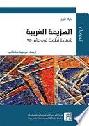
الهزيمة الغريبة : شهادة نظمت في عام 1940
كتاب \"الهزيمة الغريبة\" لمارك بلوخ من ترجمة عومرية سلطاني ومراجعة يوسف معوض يحتوي الكتاب على ثلاثة فصول بالإضافة إلى وصية مارك بلوخ وجاء في 184 صفحة من القطع المتوسط شاملا المراجع والفهرس العام، الفصل الأول جاء بعنوان \"تعريف الشاهد\"، ويبدأه بتساؤل مهم لمؤرخ وجندي يعيش فترة من أهم الفترات التحولية في العالم، الحرب، فلم يكن على يقين بأن ما سيكتبه سيتم نشره أم لا، وهو الذي تم إعدامه بعد أربعة أعوام على بداية تدوينه هذه الشهادة، \"شهادة مهزوم\" كان عنوان الفصل الثاني يفتتح بلوخ بجملة قاسية تقول \"منينا للتو بهزيمة لا تصدق\"، ويبدأ بلوم النظام البرلماني والقوات المسلحة والإنكليز حسب ما يقول جنرالات الحرب لكن سبب هذه الهزيمة بحسب بلوخ كان عجز القيادة العسكرية وعدم امتلاكها للمعدات والعقيدة لخوضها الفصل الثالث جاء بعنوان \"فرنسي يفحص ضميره\"، وفي بدايته نذكر عدم رضاه عن الحديث حول أسباب الهزيمة وانتقاد القيادة العسكرية وما ارتكبته، حيث يعتقد أنه قد يتغاضى عن بعض الأخطاء وسيصب تركيزه على أخطاء أخرى تم ارتكابها.
Book
Modulation-induced long-range magnon bound states in one-dimensional optical lattices
Magnon excitations play an important role in understanding quantum magnetism and magnon bound states observed with ultracold atoms in optical lattices. Here, we investigate how gradient magnetic field and periodically modulated spin-exchange strength affect the two-magnon excitations. In the Stark resonance where the driving frequency matches and smooths the potential bias, the system gains translational invariance in both space and time in the rotating frame, and thus we can develop a Floquet-Bloch band theory for two magnons. We find a new kind of bound states with relative distance no less than two sites, apart from the conventional bound states with relative distance at one site, which indicates the modulation-induced long-range interaction. We analytically derive an effective Hamiltonian via the many-body perturbation theory for a deeper understanding of such novel bound states and explore the interplay between these two types of bound states. Moreover, we propose to probe modulation-induced bound states via quantum walks. Our study not only provides a scheme to form long-range magnon bound states, but also lays a cornerstone for engineering exotic quantum states in multi-particle Floquet systems.
Journal Article


Non-Hermitian bulk–boundary correspondence in quantum dynamics
Bulk–boundary correspondence, a guiding principle in topological matter, relates robust edge states to bulk topological invariants. Its validity, however, has so far been established only in closed systems. Recent theoretical studies indicate that this principle requires fundamental revisions for a wide range of open systems with effective non-Hermitian Hamiltonians. Therein, the intriguing localization of nominal bulk states at boundaries, known as the non-Hermitian skin effect, suggests a non-Bloch band theory in which non-Bloch topological invariants are defined in generalized Brillouin zones, leading to a general bulk–boundary correspondence beyond the conventional framework. Here, we experimentally observe this fundamental non-Hermitian bulk–boundary correspondence in discrete-time non-unitary quantum-walk dynamics of single photons. We demonstrate pronounced photon localizations near boundaries even in the absence of topological edge states, thus confirming the non-Hermitian skin effect. Facilitated by our experimental scheme of edge-state reconstruction, we directly measure topological edge states, which are in excellent agreement with the non-Bloch topological invariants. Our work unequivocally establishes the non-Hermitian bulk–boundary correspondence as a general principle underlying non-Hermitian topological systems and paves the way for a complete understanding of topological matter in open systems.
Measurements of non-Hermitian photon dynamics show boundary-localized bulk eigenstates given by the non-Hermitian skin effect. A fundamental revision of the bulk–boundary correspondence in open systems is required to understand the underlying physics.
Journal Article


Acoustic non-Hermitian skin effect from twisted winding topology
The recently discovered non-Hermitian skin effect (NHSE) manifests the breakdown of current classification of topological phases in energy-nonconservative systems, and necessitates the introduction of non-Hermitian band topology. So far, all NHSE observations are based on one type of non-Hermitian band topology, in which the complex energy spectrum winds along a closed loop. As recently characterized along a synthetic dimension on a photonic platform, non-Hermitian band topology can exhibit almost arbitrary windings in momentum space, but their actual phenomena in real physical systems remain unclear. Here, we report the experimental realization of NHSE in a one-dimensional (1D) non-reciprocal acoustic crystal. With direct acoustic measurement, we demonstrate that a twisted winding, whose topology consists of two oppositely oriented loops in contact rather than a single loop, will dramatically change the NHSE, following previous predictions of unique features such as the bipolar localization and the Bloch point for a Bloch-wave-like extended state. This work reveals previously unnoticed features of NHSE, and provides the observation of physical phenomena originating from complex non-Hermitian winding topology.
Non-Hermitian skin effect fundamentally challenges the conventional topological description of a system. Here the authors demonstrate a bipolar non-Hermitian skin effect, where bulk eigenstates localize towards two directions, in a one-dimensional non-reciprocal acoustic crystal with twisted topology.
Journal Article

Experimental reconstruction of the Berry curvature in a Floquet Bloch band
Topological properties lie at the heart of many fascinating phenomena in solid-state systems such as quantum Hall systems or Chern insulators. The topology of the bands can be captured by the distribution of Berry curvature, which describes the geometry of the eigenstates across the Brillouin zone. Using fermionic ultracold atoms in a hexagonal optical lattice, we engineered the Berry curvature of the Bloch bands using resonant driving and show a full momentum-resolved measurement of the ensuing Berry curvature. Our results pave the way to explore intriguing phases of matter with interactions in topological band structures.
Journal Article

On the universality of the frequency spectrum and band-gap optimization of quasicrystalline-generated structured rods
The dynamical properties of periodic two-component phononic rods, whose elementary cells are generated adopting the Fibonacci substitution rules, are studied through the recently introduced method of the toroidal manifold. The method allows all band gaps and pass bands featuring the frequency spectrum to be represented in a compact form with a frequency-dependent flow line on the surface describing their ordered sequence. The flow lines on the torus can be either closed or open: in the former case, (i) the frequency spectrum is periodic and the elementary cell corresponds to a canonical configuration, (ii) the band gap density depends on the lengths of the two phases; in the latter, the flow lines cover ergodically the torus and the band gap density is independent of those lengths. It is then shown how the proposed compact description of the spectrum can be exploited (i) to find the widest band gap for a given configuration and (ii) to optimize the layout of the elementary cell in order to maximize the low-frequency band gap. The scaling property of the frequency spectrum, that is a distinctive feature of quasicrystalline-generated phononic media, is also confirmed by inspecting band-gap/pass-band regions on the torus for the elementary cells of different Fibonacci orders.
This article is part of the theme issue ‘Modelling of dynamic phenomena and localization in structured media (part 2)’.
Journal Article