
Catalogue Search | MBRL


Are you sure you want to remove the book from the shelf?

{{itemTitle}}
8,636
result(s) for
"border control"
Sort by:


Border Control Culture on the Polish-Belarusian Border in 2021-2023
In recent years, Poland has faced unprecedented immigration pressure. In addition to the massive influx of war refugees from Ukraine, irregular migrants have challenged the Polish border control. During 2021, the first year of the crisis, the number of unauthorized border crossings made on the Polish-Belarusian border increased by 12.5 times. This led to significant changes in state border policy and border control practices locally implemented by the Border Guard (BG). The assessment of the reaction of the Polish authorities and the BG as a leading actor in this challenge aroused several controversies. Researching legal sources, official media releases and scholarly literature, I argue for a multilayered explanation of how the BG coped with this task. I examine this issue in light of the border control culture (BCC) concept, which makes it possible to embed border control practices in a broader cultural-normative context. I propose a more comprehensive approach to the BCC to show that the main actors in these processes, i.e. BG officers, operate in a specific work environment. It has three components: material, normative, and symbolic. This approach shows that changes in the material artefacts and legal norms referring to border control and ideas and views about the purpose and meaning of the border and the BG service are integral elements of the BCC and can stimulate BG officers to take the desired actions.
Journal Article

THE CRIME AND PUNISHMENT OF SOMALI WOMEN'S EXTRA-LEGAL ARRIVAL IN MALTA
This article looks at Somali women's experiences of extra-legal border crossing of the European Union's southern border. Based on qualitative interviews with women who have travelled irregularly to Malta, and key state and non-government organization stakeholders, this article considers the layers of exile and vulnerability engendered by Malta's attempts to secure the EU border. The article traces the gendered and racialized processes of immobilizing irregular migrants through legal and administrative policies of mandatory detention and the Dublin II Regulation, and through social and economic policy in Malta. The article concludes that border control operating at the point of arrival both contains and punishes women, even when they are legally accepted and released, keeping women suspended in a constant 'state of arrival'.
Journal Article

Border Policing
An extensive history examining how North American nations have tried (and often failed) to police their borders, Border Policing presents diverse scholarly perspectives on attempts to regulate people and goods at borders, as well as on the ways that individuals and communities have navigated, contested, and evaded such regulation. The contributors explore these power dynamics though a series of case studies on subjects ranging from competing allegiances at the northeastern border during the War of 1812 to struggles over Indian sovereignty and from the effects of the Mexican Revolution to the experiences of smugglers along the Rio Grande during Prohibition. Later chapters stretch into the twenty-first century and consider immigration enforcement, drug trafficking, and representations of border policing in reality television. Together, the contributors explore the powerful ways in which federal authorities impose political agendas on borderlands and how local border residents and regions interact with, and push back against, such agendas. With its rich mix of political, legal, social, and cultural history, this collection provides new insights into the distinct realities that have shaped the international borders of North America.
eBook

Cracking AI secrecy: (beyond) EU migration law and governance
In core government and for public tasks hugely sensitive for citizens such as migration governance in Europe, the use of AI systems developed and provided under contract gives migration authorities and private providers the power to keep their deployment secret and to refuse access to their key components. This article explores the complex interplay between public and private drivers of secrecy surrounding procured AI technologies in European migration governance, demonstrating how these forces converge and reinforce one another. It examines AI secrecy as an institutional framework shaped by both public and private law forms of secrecy, applying the spectrum of secrecy from deep (unknown unknowns) to shallow secrecy (known unknowns). Specifically, the paper looks into the sources of ‘political secrecy’ in migration and security authorities, highlighting how migration agencies and authorities keep the existence and use of AI systems from civil society and affected persons (such as third country nationals). Next, it analyses the legal frameworks that sustain AI vendors’ private secrecy, such as trade secrecy, secrecy in procurement procedures and agreements. In examining the various secrecy points, it scrutinises the limited impact of the AI Act in addressing the entrenched secrecy of AI deployment and development in governing migration. Finally, we condense the main takeaways and examine the broader repercussions of AI secrecy beyond the context of border control, touching upon its implications for a new equilibrium transcending the conventional public/private divide.
Journal Article
POLICING HUMANITARIAN BORDERLANDS: FRONTEX, HUMAN RIGHTS AND THE PRECARIOUSNESS OF LIFE
The article critically examines the peculiar co-existence of the securitization of the border and the growing presence and prominence of human rights and humanitarian ideals in border policing practices. Concretely, it focuses on Frontex, the agency tasked with management of EU's external borders. Based on interviews with Frontex officials and border guard officers, and on the analysis of relevant policy documents and official reports, the article explores what may come across as a discrepancy between the organization's activities and its public self presentation. The objective is to provide an insight into the complex and volatile relationship between policing and human rights, which marks contemporary migration control as well as mundane forms of professional and personal self-understanding
Journal Article

Border Corruption: A Unique Form of Law Enforcement Corruption
Aim: Border corruption is a distinctive form of corruption conducted by law enforcement officers. It happens at the border, in a specific area between nation-states, making its spatial characteristics particularly interesting. The organizational features related to the law enforcement agencies involved in border corruption, as well as the organizational environment and the social context within which it occurs, also make it different from other forms of corruption. Synthesizing the relevant interdisciplinary literature, this paper aims to offer a general conceptual framework for border corruption. It discusses the unique characteristics of the phenomenon as well as the key factors enabling law enforcement corruption in border security agencies. Methodology: Critical literature on border corruption was selected and integrated into a coherent framework. Findings: Border corruption may involve different actors (individuals, firms, and informal groups) on the bribe-giver client side; each indicates a different type of corrupt transaction. Corruption at the border can be based on collusion, voluntary and mutually beneficial participation, or coercion, when one party is forced by the other to participate. The opportunity aspects enabling this corruption can be classified as macro, regional, and organizational level factors. The motivation of law enforcement officers to engage in border corruption can be explained by utilitarian, normative, and relational perspectives. Value: Although border control agencies are especially prone to corruption, this type of corruption is relatively understudied in the academic literature. Revealing the key features and the phenomenon's main explanatory factors is crucial to fighting against it. This article provides an essential framework for scholars and practitioners to understand border corruption better. Aim: Border corruption is a distinctive form of corruption conducted by law enforcement officers. It happens at the border, in a specific area between nation-states, making its spatial characteristics particularly interesting. The organizational features related to the law enforcement agencies involved in border corruption, as well as the organizational environment and the social context within which it occurs, also make it different from other forms of corruption. Synthesizing the relevant interdisciplinary literature, this paper aims to offer a general conceptual framework for border corruption. It discusses the unique characteristics of the phenomenon as well as the key factors enabling law enforcement corruption in border security agencies. Methodology: Critical literature on border corruption was selected and integrated into a coherent framework. Findings: Border corruption may involve different actors (individuals, firms, and informal groups) on the bribe-giver client side; each indicates a different type of corrupt transaction. Corruption at the border can be based on collusion, voluntary and mutually beneficial participation, or coercion, when one party is forced by the other to participate. The opportunity aspects enabling this corruption can be classified as macro, regional, and organizational level factors. The motivation of law enforcement officers to engage in border corruption can be explained by utilitarian, normative, and relational perspectives. Value: Although border control agencies are especially prone to corruption, this type of corruption is relatively understudied in the academic literature. Revealing the key features and the phenomenon's main explanatory factors is crucial to fighting against it. This article provides an essential framework for scholars and practitioners to understand border corruption better.
Journal Article
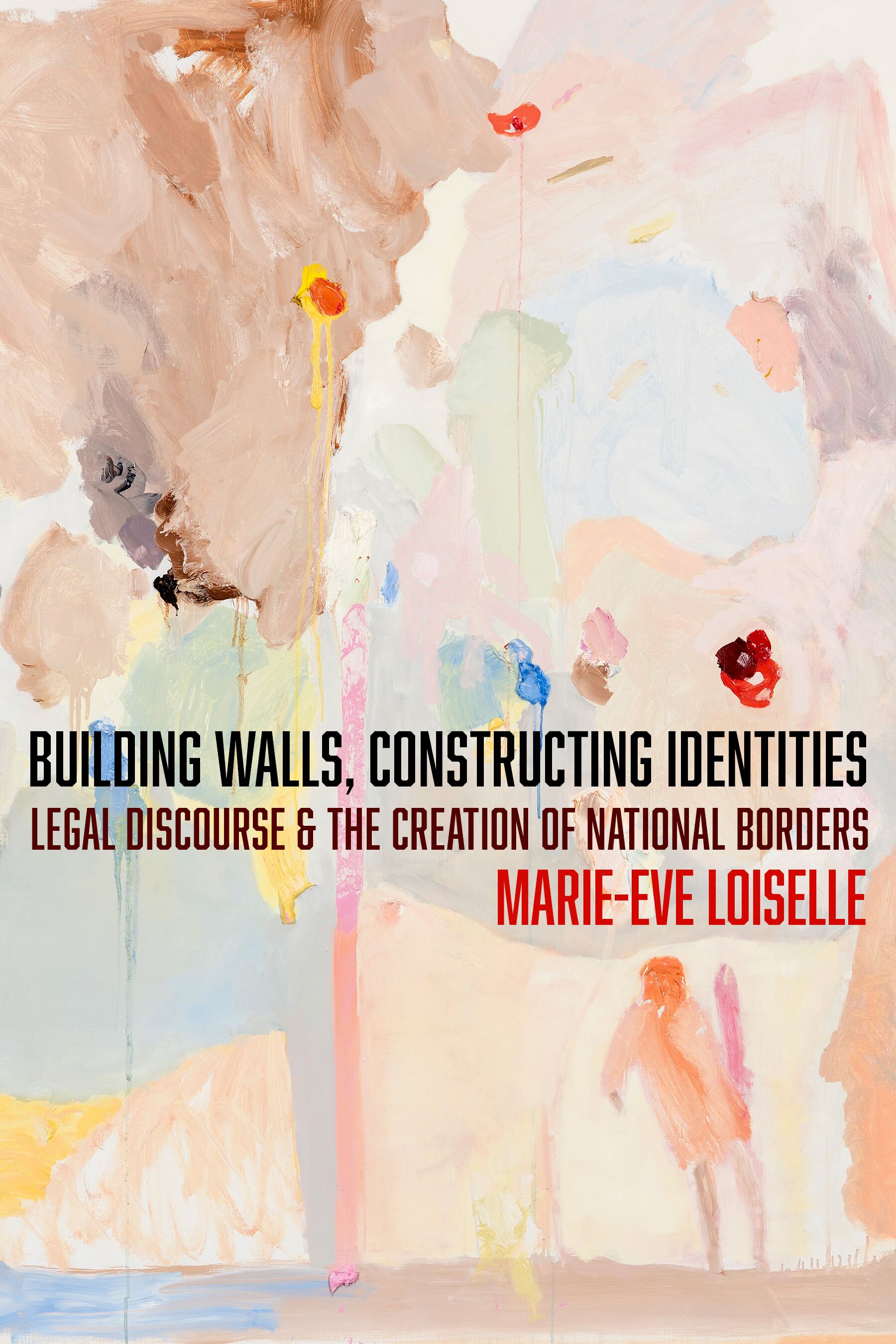
Building Walls, Constructing Identities
States are erecting walls at their borders at a pace unmatched in history, and the wall between the United States and Mexico stands as an icon among these dividing structures. Much has been said about the US-Mexico border wall in the last few decades, yet American walling projects have a much longer history, dating back almost a century. Building Walls, Constructing Identities offers a rich account of this legal history, informed by two episodes of wall-building—the Act of August 19, 1935, and the Secure Fence Act of 2006. These two legislative periods illustrate that today's wall imprints onto the landscape a grammar of racial inequality underpinned by a settler colonial rationality. Marie-Eve Loiselle argues in favor of an account of the law that considers its material translation into space and identifies discursive processes by which the law and the wall come together to communicate legal knowledge about territory and identity.
eBook

The Impossible Border
Between 1914 and 1922, millions of Europeans left their homes as a result of war, postwar settlements, and revolution. After 1918, the immense movement of people across Germany's eastern border posed a sharp challenge to the new Weimar Republic. Ethnic Germans flooded over the border from the new Polish state, Russian émigrés poured into the German capital, and East European Jews sought protection in Germany from the upheaval in their homelands. Nor was the movement in one direction only: German Freikorps sought to found a soldiers' colony in Latvia, and a group of German socialists planned to settle in a Soviet factory town.
In The Impossible Border, Annemarie H. Sammartino explores these waves of migration and their consequences for Germany. Migration became a flashpoint for such controversies as the relative importance of ethnic and cultural belonging, the interaction of nationalism and political ideologies, and whether or not Germany could serve as a place of refuge for those seeking asylum. Sammartino shows the significance of migration for understanding the difficulties confronting the Weimar Republic and the growing appeal of political extremism.
Sammartino demonstrates that the moderation of the state in confronting migration was not merely by default, but also by design. However, the ability of a republican nation-state to control its borders became a barometer for its overall success or failure. Meanwhile, debates about migration were a forum for political extremists to develop increasingly radical understandings of the relationship between the state, its citizens, and its frontiers. The widespread conviction that the democratic republic could not control its \"impossible\" Eastern borders fostered the ideologies of those on the radical right who sought to resolve the issue by force and for all time.
eBook

Frontex and the convergence of humanitarianism, human rights and security
While there has been growing scholarly interest in the convergence of humanitarianism and security in contemporary EUropean border governance, much of the existing literature has neglected the role of human rights in this process. Drawing on in-depth interviews with Frontex officials, this article takes the simultaneous portrayal of the agency as rescuer of migrants at sea, promoter of fundamental rights and defender of EUropean citizens against migrant threats as a starting point to rethink the relationship of humanitarianism, human rights and security in the governing of EUropean borders. Conceptualizing them as discourses of protection that render their subjects vulnerable in various ways, the article contributes to a deeper understanding of the connections and combined effects of humanitarianism, human rights and security in EUropean border governance. Finally, it shows that Frontex’s positioning in humanitarian, human rights and security terms has strengthened the agency in three ways. First, it has allowed Frontex to cooperate with a range of actors in ‘managing’ EUropean borders. Second, it has enabled the agency to become a ‘go-to’ solution to diverse crises in border governance. Third, it has allowed Frontex officials to shift blame for human rights abuses to member-states.
Journal Article